
TL;DR

Play games on Amazon Luna for your game nights, included with Prime
- A rotating selection of games, no download needed
- Play on TV, laptop or phone
- Fast, free delivery for your gear, too
A developer has published a technical report on decompiling the 2001 business simulator Fast Food Tycoon 2, focusing on how it draws the game world. The report describes its isometric rendering passes, limited repainting of changed screen regions, day-night lighting and sprite animations; it does not announce a game update or remake.
A developer has published a technical breakdown of how Fast Food Tycoon 2, a 2001 business simulator, draws its isometric city, in a report based on decompiling the game’s executable. The account describes how the renderer handles city scenery, lighting and moving sprites, offering a view into the systems behind a game the author says they have revisited since childhood.
In the report on healeycodes.com, the author says they used Ghidra to decompile 4,046 functions from fastfood2.exe, producing about 9.5 megabytes of C-like text. They indexed that output in SQLite to search for related functions, then compared code with values observed in the running game. The report says Windows’ ReadProcessMemory API helped inspect values such as cash and camera position. A patched Windows message handler let commands run on the game’s UI thread, allowing the agent to interact with the interface without changing the executable on disk.
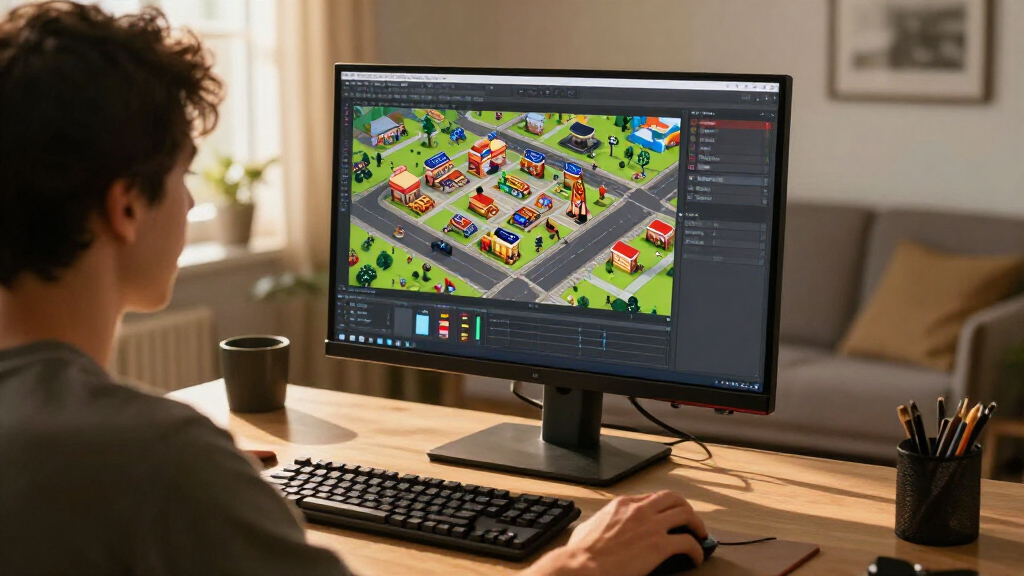
The city’s base map is stored in a TGA file, which the author says contains streets and plots but not the buildings, people or cars seen during play. The renderer paints the scene into a memory buffer, repainting only screen regions that have changed before drawing objects in multiple passes. It visits map cells in diagonal order to manage which objects appear in front of others. Temporary pixel markings also let it draw outlines around people and thought icons obscured by buildings, before filling in visible portions.
The report also describes a 16-bit colour buffer paired with a separate lighting value for each pixel. A final conversion combines them, using a repeating dither pattern to produce intermediate shades. For animation, the author says moving objects are stored in .ani files containing sprite sheets and named sequences. The report notes that much of the internal text they encountered was in German, the developers’ language.
The Rendering Tricks Behind the City
The report matters as a technical account of how a detailed-looking city can be produced from relatively static map art and layered objects. Its description of a dirty-region system—repainting areas affected by movement or camera changes rather than redrawing every pixel—shows how the game limits its work between frames. That is relevant to readers interested in older game engines, where rendering systems had to manage visual complexity within the constraints of their era.
The lighting details also explain a visual effect players may notice without knowing how it is made. The game keeps colour and brightness data separate until the final display step, letting windows and signs remain lit as surrounding buildings darken. These findings are the author’s account of the game’s implementation, not an official technical document from its developers. The report does not establish how the game performs on current hardware or announce any changes to the game itself.
Products Worth Considering

Amazon Kindle Paperwhite Signature Edition (12th Generation, 2024), 32 GB, Metallic Black

DJI Osmo Pocket 3 Filter Bundle – Vlogging Camera with 1 CMOS Sensor and 4K/120fps

Sonos Era 100 SL Compact Microphone-Free Speaker, Black
As an affiliate, we earn on qualifying purchases.
From Simulator to Code Study
Fast Food Tycoon 2 is a business simulator in which players build a food business across a city. The author describes renting restaurants and warehouses, hiring staff, designing pizzas and managing supply chains, while customers respond to food, service and reputation. Rival companies can use advertising, political influence and organized crime, according to the report.
The author says they chose the game after finding it among discounted titles in a mall in 2004. Their reverse-engineering process combined static analysis of the executable with observations from a running copy. They also used a crawler to click through the interface and identify controls. The article’s title, “Drawing the World,” signals its focus: the supplied material details rendering, light and animation, rather than a full audit of every game system.
“A city is a painting plus a few hundred sprites.”
— The report’s author
Limits of the Reverse Engineering
The report is an individual reverse-engineering project, and the supplied source does not include confirmation from the game’s original developers. It is not clear whether the described findings cover every renderer path, map type or lighting configuration in the game. The source material also ends partway through its discussion of the cast, so further details about animation and character behavior are not available here.
No publication date is given in the supplied material, and it does not state whether the author plans to release tools, code or additional technical findings. The account describes how the author’s agent-assisted workflow was set up, but does not provide a separate evaluation of the agent’s accuracy or the time saved.
Further Findings Remain Open
The published report gives readers a look at the author’s findings so far, but the supplied source does not name a follow-up article, release or developer response. Any further work would depend on whether the author continues exploring the executable and chooses to publish more of the results.
For now, the confirmed development is the publication of a technical account of the game’s rendering process. Readers should treat claims about additional systems, forthcoming tools or broader performance implications as unconfirmed unless the author provides further evidence.
Key Questions
What is the news about Fast Food Tycoon 2?
A developer published a report describing how they decompiled the game and investigated its city renderer, lighting and sprite animations. It is a technical report, not an announcement of a game update.
How did the author examine the game?
The author says they used Ghidra to decompile the executable, indexed the output in SQLite and compared code with values observed while the game was running. They also used Windows memory-reading tools and a way to send commands to the game’s UI thread.
How does the game draw its city?
According to the report, the renderer combines a map containing streets and plots with separately drawn objects. It redraws changed screen regions, uses multiple passes to handle overlapping objects and applies lighting during the final display step.
Does the report describe a remake or new release?
No. The supplied report discusses reverse engineering the existing 2001 game; it does not announce a remake, new version or official development plans.
What remains unknown?
The supplied source does not give a publication date, include a response from the original developers or specify whether the author plans to publish code or continue the investigation. It also does not provide a complete account of every game system.
Source: healeycodes.com