
TL;DR

Play games on Amazon Luna for your game nights, included with Prime
- A rotating selection of games, no download needed
- Play on TV, laptop or phone
- Fast, free delivery for your gear, too
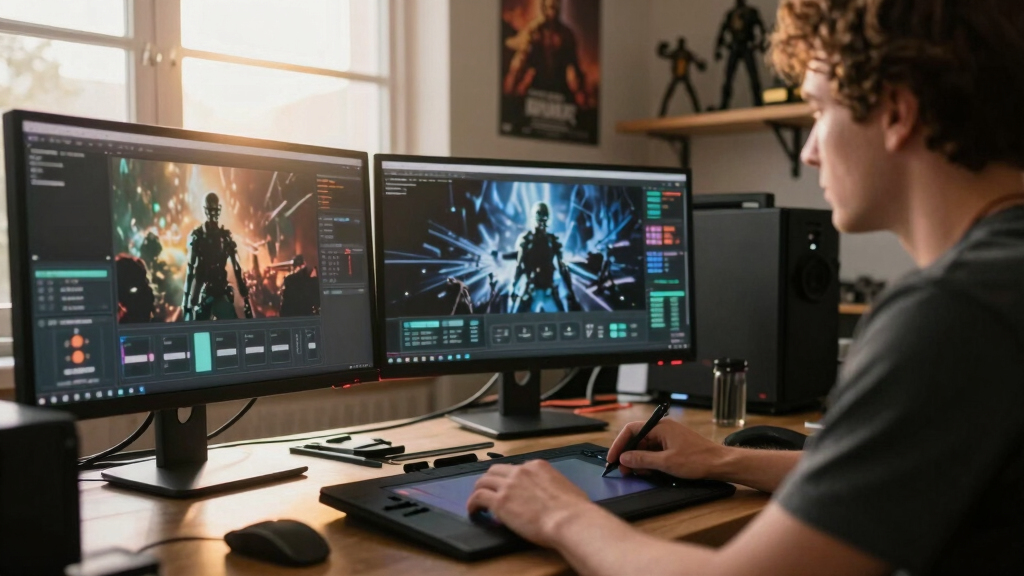
An oral history from 2017 reveals how ‘Terminator 2’ pioneered visual effects technology, notably CGI and animatronics. This development marked a major leap in film effects, influencing future movies.
‘Terminator 2: Judgment Day’ revolutionized film effects with groundbreaking use of CGI and animatronics, according to an oral history published in 2017. The detailed account features interviews with the creators and technicians behind the film’s visual effects, confirming its role as a technological milestone that influenced the industry.
The oral history, conducted in 2017, features insights from key figures such as director James Cameron, visual effects supervisor Stan Winston, and CGI pioneer Mark Dippé. It confirms that the film’s use of computer-generated imagery (CGI) for the T-1000’s liquid-metal transformations was a pioneering effort, involving complex software and hardware innovations at the time.
It is also confirmed that the film’s animatronic models, especially the endoskeleton and other practical effects, were among the most advanced of their era. These techniques were combined seamlessly to create a realistic and terrifying antagonist that set new standards for visual storytelling.
While some claims about the development process are detailed, the oral history clarifies that the integration of CGI and practical effects was a collaborative effort that pushed the limits of technology available in the early 1990s. The interviewees emphasize the importance of innovation and experimentation in achieving the film’s visual realism.
Impact of ‘Terminator 2’ on Visual Effects Industry
This development matters because it marked a turning point in filmmaking, demonstrating how CGI could be used for complex character transformations and realistic effects. It influenced countless subsequent films and established new standards for visual storytelling and technological innovation. Understanding this history highlights the film’s role in shaping modern CGI applications and special effects design, which remain essential in the industry today.As an affiliate, we earn on qualifying purchases.
Technological Innovations Behind ‘Terminator 2’ Effect Breakthroughs
Prior to ‘Terminator 2,’ practical effects and stop-motion animation dominated the industry. The film’s use of CGI for the T-1000 was revolutionary, involving the development of new software, hardware, and techniques. The collaboration between James Cameron, Stan Winston, and early CGI specialists resulted in a seamless integration of digital and practical effects, setting a new standard. This was part of a broader trend in the early 1990s toward digital effects, driven by advances in computer technology and the desire for more realistic visuals.“We wanted to push the boundaries of what was possible with visual effects, and the T-1000 was our test case.”
— James Cameron
As an affiliate, we earn on qualifying purchases.
Unresolved Aspects of ‘Terminator 2’ Visual Effects Development
While the oral history confirms the importance of CGI and animatronics, specific details about the software algorithms, hardware configurations, and the full scope of technical challenges remain unclear. Some aspects of the early CGI development process are still proprietary or were not fully documented, leaving gaps in the historical record.As an affiliate, we earn on qualifying purchases.
Future Research and Technological Legacy of ‘Terminator 2’
Further analysis of the original production archives and interviews could provide deeper insights into the technical innovations. Additionally, examining how ‘Terminator 2’s’ effects influenced subsequent films will help understand its legacy. Industry experts may also explore how these early breakthroughs paved the way for current CGI technologies used in blockbuster filmmaking today.special effects software for movies
As an affiliate, we earn on qualifying purchases.
As an affiliate, we earn on qualifying purchases.
Key Questions
What specific CGI techniques were used in ‘Terminator 2’?
The film used pioneering CGI for the T-1000’s liquid-metal effects, involving complex software and hardware innovations that allowed for realistic transformations and reflections, which were groundbreaking at the time.
Who were the main contributors to the visual effects of ‘Terminator 2’?
Key figures included director James Cameron, visual effects supervisor Stan Winston, and CGI pioneer Mark Dippé, among others who collaborated to develop and implement the effects.
How did ‘Terminator 2’ influence future movies?
The film set new standards for CGI and practical effects, inspiring subsequent filmmakers to incorporate digital effects for more realistic and complex visuals, thus transforming the industry.
Are there any unreleased details about the effects development?
Yes, some technical specifics, such as proprietary software algorithms and hardware configurations used during production, remain undisclosed or are not fully documented, leaving some aspects of the development process uncertain.
Source: hn
Halloween Picks
halloween
As an affiliate, we earn on qualifying purchases.