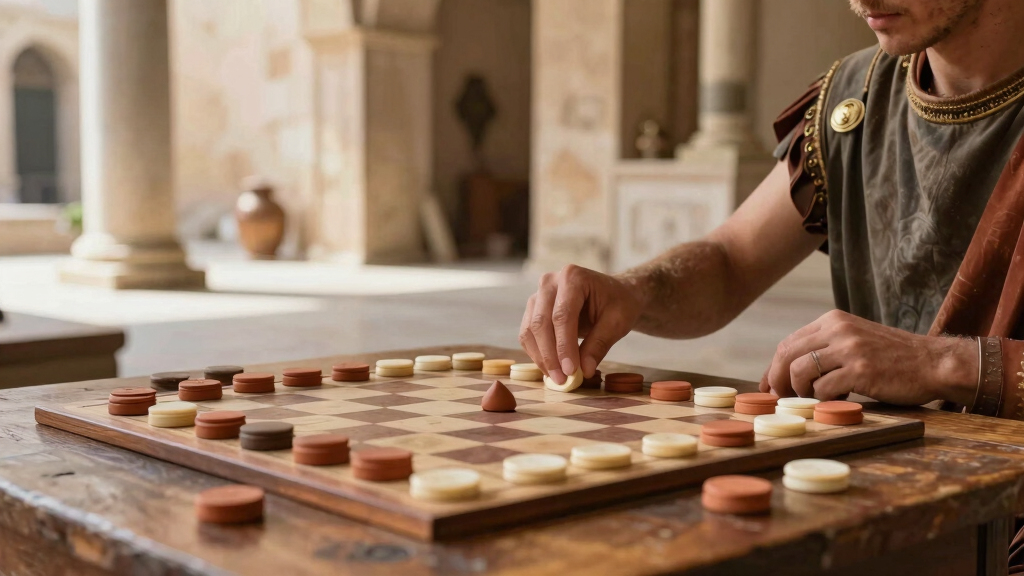

Searching for the best ancient Roman board games means exploring options that capture the grandeur and strategy of ancient Rome. The Nova Roma stands out for its deep empire-building mechanics, making it ideal for history buffs and strategy enthusiasts. Meanwhile, Caesar & Cleopatra offers a quick, tactical experience perfect for two players, but it sacrifices some depth. The main tradeoffs involve balancing historical authenticity with gameplay complexity and player count. Continue reading for a detailed breakdown of each game’s strengths and where they fit best.
Complete the kit



Key Takeaways
- The top picks excel in either strategic depth or historical authenticity, often making a tradeoff with complexity or accessibility.
- Most games vary in player count, with some tailored for two players and others suited for larger groups, influencing which is best for your gaming style.
- The highest-rated titles often incorporate unique mechanics inspired by Roman politics, warfare, and empire-building, setting them apart from more generic historical games.
- Price and production quality vary widely; premium options tend to offer more immersive components but come at a higher cost.
- Many games emphasize different aspects of Roman history—some focus on military conquest, others on political intrigue—so aligning the game theme with your interests is key.


| ancient Roman board game | Playtime |
|---|---|
| Kingsbridge: The Pillars of Th | — |
| Caesar & Cleopatra Tactical Tw | 40 minutes |
| Catan Board Game | 60-90 minutes |
| Pantheum: Demigods of Olympia | 45-60 minutes |
| Alley Cat Games Rome in a Day | — |
| Devir Quorum Board Game | 45 minutes |
| Nova Roma: Emperor Constantine | — |
More Details on Our Top Picks
Kingsbridge: The Pillars of The Earth Board Game
This game stands out for its accessible approach to ancient themes, offering a simplified experience that appeals to newcomers. Unlike more complex strategy titles like Catan 6th Edition, it prioritizes storytelling and thematic immersion over depth, making it ideal for players unfamiliar with heavy mechanics. However, its limited complexity means it may not satisfy experienced gamers seeking strategic challenge. The game’s focus on the popular novel enhances engagement for fans, but may alienate those looking for a pure historical simulation. This pick makes the most sense for families or casual players who want a quick, thematic introduction to Roman-inspired settings without the steep learning curve.
Pros:- Based on a popular novel, offering a compelling theme
- Easy to learn, making it suitable for beginners
- Suitable for 2-4 players with a 90-minute gameplay
Cons:- Limited to beginner skill level, may bore experienced gamers
- Narrow appeal—primarily fans of the novel or story-based games
Best for: Families or casual gamers seeking an engaging, story-based game with simple mechanics
Not ideal for: Hardcore strategy enthusiasts or players craving a deep, complex Roman simulation
- Number of Players:2 to 4
- Playing Time:90 minutes
- Skill Level:Beginner
Our verdict“A charming introductory game perfect for newcomers and fans of storytelling, but not for those seeking deep strategy.”
Caesar & Cleopatra Tactical Two-Player Game
This game excels at engaging two players with its sharp focus on tactical maneuvering, distinct from the more family-friendly Kingsbridge. It taps into the historical rivalry between Caesar and Cleopatra, requiring players to influence factions and make critical decisions. Its modern illustrations elevate the visual appeal, appealing to players who appreciate aesthetic detail. However, its two-player limitation makes it less suitable for larger groups or casual family game nights. Compared to Pantheum, which offers more mythology-themed depth, this game emphasizes quick, strategic duels, making it ideal for players who prefer head-to-head competition rather than group play. Its design balances accessibility and complexity, but younger children may find it too intricate.
Pros:- Engages strategic thinking and tactical skill
- Beautiful modern illustrations enhance thematic immersion
- Relatively quick gameplay of around 40 minutes
Cons:- Limited to two players, restricting group play
- May be too complex for children under 10
Best for: Two players seeking a quick, strategic, and visually engaging head-to-head game
Not ideal for: Groups or families wanting multiplayer experiences or lighter gameplay
- Ages:10 and up
- Playtime:40 minutes
- Theme:Historical
Our verdict“An excellent choice for two players who enjoy tactical battles with rich historical themes, but not suited for larger gaming groups.”
Catan Board Game (6th Edition)
While not explicitly Roman-themed, Catan offers strategic resource management and territorial expansion that can evoke Roman settlement-building. Compared with Pantheum, which emphasizes mythological themes, Catan’s modular board and trading mechanics provide a flexible experience that keeps gameplay fresh across multiple sessions. It suits players who enjoy economic strategy and negotiation, but the learning curve can be steep for newcomers, and it requires 3-4 players for full enjoyment. Its broad appeal makes it ideal for families and groups who enjoy a mix of strategy and social interaction, but it may not satisfy those seeking a direct historical or Roman-specific experience. It’s well-suited for players aged 10 and up who want a longer, more involved game.
Pros:- Engaging strategy with a modular, replayable board
- Suitable for 3-4 players, fostering social interaction
- Educational and fun for ages 10+
Cons:- Requires time to learn, which may frustrate some players
- Dependent on multiple players to reach full potential
Best for: Groups or families interested in resource management and strategic expansion, willing to learn complex rules
Not ideal for: Casual players or those seeking quick, simple games without a learning curve
- Players:3-4
- Ages:10+
- Playtime:60-90 minutes
- Edition:6th
Our verdict“A versatile and strategic game perfect for groups ready to invest time and enjoy negotiation-driven gameplay, even if it isn’t ancient Roman-specific.”
Pantheum: Demigods of Olympia Board Game
This game distinguishes itself with a rich Greek mythology theme and a focus on strategic depth in a compact format, making it much more thematic than Alley Cat Games Rome in a Day. Its 1-4 player range offers flexibility, and the rules are straightforward enough for players with some experience, but it provides meaningful tactical decisions that challenge even seasoned gamers. The high-quality components and artwork add to the immersive experience, though some may find the component quality inconsistent depending on the edition. Compared to Caesar & Cleopatra, which is more focused on tactical head-to-head play, Pantheum offers a more expansive, mythologically themed experience suitable for varied player counts but less complex mechanically. It’s best for those who want a quick yet deep mythology-themed game.
Pros:- Engaging Greek mythology theme with immersive artwork
- Suitable for a wide range of players and group sizes
- Easy to learn but offers strategic depth
Cons:- May be too simple for hardcore strategy gamers
- Limited to 4 players, restricting larger groups
- Component quality may vary across editions
Best for: Fans of Greek mythology and strategic gameplay looking for a game with thematic richness and tactical depth
Not ideal for: Players seeking highly complex mechanics or large group gameplay over 4 players
- Players:1-4
- Ages:12+
- Playtime:45-60 minutes
- Components:High-quality cards, standees, tiles, tokens
Our verdict“A beautifully themed game for mythology enthusiasts who enjoy strategic decisions in a compact format, but not ideal for large groups or those seeking complex mechanics.”
Alley Cat Games Rome in a Day, Strategy Board Game for 2 to 5 Players, Ages 12+, Red
This game introduces a highly interactive, territory-dividing mechanic reminiscent of Kingdomino and Akropolis, making it stand out among the more traditional strategy titles. Unlike Pantheum or Catan, which focus on resource management or mythological themes, Rome in a Day emphasizes social interaction and negotiation, with a ‘split and choose’ approach that demands cunning and deal-making. Its mechanics promote lively player engagement, but the reliance on player interaction can slow down gameplay and lead to conflicts. It’s best suited for players who enjoy direct negotiation and strategic manipulation, but less ideal for those preferring straightforward rules or solo play. The game’s scoring system adds a layer of depth, rewarding shrewd decision-making.
Pros:- Highly interactive with a strong negotiation element
- Involves strategic splitting and claiming of territories
- Suitable for 2-5 players, fostering lively group play
Cons:- Gameplay can become slow due to negotiation delays
- May lead to conflicts, less suitable for sensitive players
Best for: Players who thrive on negotiation, social interaction, and territory control in a competitive environment
Not ideal for: Casual players or those preferring less interactive, more streamlined gameplay
Our verdict“An engaging, negotiation-heavy game perfect for social players who enjoy territory control, but it might frustrate those seeking a more straightforward experience.”
Devir Quorum Board Game – Roman Empire Strategy Card Game for Teens and Adults
This game stands out for its straightforward rules and engaging card drafting, making it a strong choice for players looking for a quick yet strategic experience. Compared to Nova Roma, which offers a more complex and longer gameplay, Devir Quorum emphasizes fast turns and easy-to-grasp mechanics that appeal to teens and casual strategy fans. However, its limited player count and potential complexity for less experienced players mean it isn’t ideal for large groups or newcomers. The game’s focus on set collection and political maneuvering captures the essence of Roman influence without overwhelming beginners. Its quick setup and replayability make it perfect for short game nights or introducing new players to Roman-themed strategy without requiring a significant time investment.
Pros:- Easy to learn with quick setup
- Strategic depth through card drafting and set collection
- High replayability for strategy enthusiasts
- Suitable for teens and adults
Cons:- Limited to 2-4 players, restricting group size
- May be too complex for casual players unfamiliar with strategy games
Best for: Teens and adults who want a quick, engaging Roman-themed game with strategic depth but limited time commitment
Not ideal for: Players seeking a longer, more immersive experience like Nova Roma or those who prefer multiplayer games with more than 4 participants
- Players:2–4
- Recommended Age:14+
- Playtime:45 minutes
- Learning Time:20 minutes
- Teaching Time:10 minutes
- Languages:Spanish, Portuguese/Brazilian, Italian, English, Catalan
Our verdict“This pick is ideal for players who want a fast, strategic glimpse into Roman influence without the complexity of longer games like Nova Roma.”
Nova Roma: Emperor Constantine Builds the New Roman Empire – Euro Strategy Board Game
Nova Roma offers a richly themed experience set in 324 AD, appealing strongly to players interested in detailed Roman history and complex strategic planning. Unlike Devir Quorum, which favors quick decision-making, Nova Roma demands a significant time investment, often up to two hours, and a steep learning curve that can challenge new players. Its focus on deploying family members, constructing buildings, and controlling sea routes mirrors real Roman political and military ambitions, making it ideal for history aficionados. However, this depth comes with tradeoffs: the game can feel overwhelming for casual players or those with limited gaming time. Still, for those seeking an immersive, historically grounded strategy game, Nova Roma offers a layered, rewarding experience that rewards careful planning and strategic foresight.
Pros:- Engages players with detailed Roman themes and historical context
- Offers a variety of objectives and complex gameplay options
- Suitable for players interested in long-term strategic planning
- Provides an immersive experience with multiple paths to victory
Cons:- Steep learning curve for beginners
- Requires a significant time commitment
- Limited to 2-4 players, which may restrict group size
Best for: History-oriented players and experienced strategists willing to commit time to a detailed Roman simulation
Not ideal for: Casual gamers or newcomers who prefer shorter, simpler games like Devir Quorum, or groups looking for quick fun
- Theme:Ancient Rome
- Number of Players:2–4
- Play Time:60-120 minutes
- Age Range:14+
- Game Type:Euro Strategy
Our verdict“This game is best suited for serious strategy enthusiasts who want a deep, historically rich Roman experience and are prepared for a longer play session.”
How We Picked
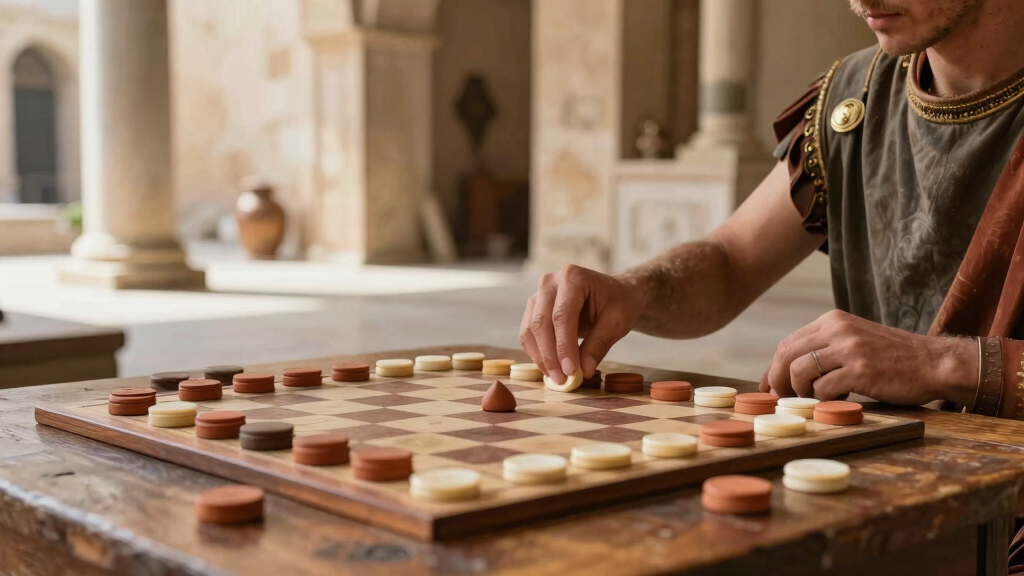
In selecting the best ancient Roman board games, I prioritized those that offer a compelling blend of historical accuracy, engaging gameplay, and replayability. Performance factors like game mechanics, strategic depth, and ease of understanding played a central role, alongside build quality and component design. I also considered versatility in player count and how well each game captures the essence of Roman history. To ensure broad appeal, I included options for different experience levels and price points. The ranking reflects a balance between these criteria, highlighting games that stand out for their innovation, thematic fidelity, and overall value.Factors to Consider When Choosing Best Ancient Roman Board Games
Choosing the right ancient Roman board game depends on several key factors. Beyond thematic appeal, consider gameplay complexity, player count, and replayability to find a game that matches your experience level and social setting. Budget also plays a role; some titles offer more immersive experiences at higher prices, while others provide quick, accessible fun for less. Understanding these elements can help you avoid common pitfalls, such as overestimating your group’s interest in complex rules or buying a game that doesn’t suit your preferred number of players.Gameplay Complexity and Length
Some Roman-themed games feature straightforward mechanics suitable for casual players, while others are deeply strategic and require a significant time investment. Consider how much time you want to dedicate to each session and whether your group prefers light or heavy gameplay. Overly complex games might deter new players or casual gamers, whereas simpler titles might lack the depth sought by seasoned strategists. Finding a balance that matches your group’s experience ensures more enjoyable sessions.
Player Count and Interaction
Roman board games vary from two-player duels to larger group engagements. If you primarily play with a partner, look for titles like Caesar & Cleopatra that excel in head-to-head tactical play. For larger gatherings, games like Pantheum or Nova Roma accommodate multiple players and foster group decision-making. Misjudging this can lead to underwhelming experiences—picking a game designed for four players when only two are present diminishes the fun.
Theme Fidelity and Mechanics
Authentic Roman mechanics—such as political intrigue, military conquest, or empire management—enhance immersion. However, highly thematic games might introduce complex rules that slow gameplay. Conversely, games with simpler mechanics may sacrifice some historical detail. Decide whether thematic fidelity or streamlined gameplay is more important for your enjoyment, especially if you’re a history enthusiast or prefer quick sessions.
Price and Components
Budget options can still deliver enjoyable gameplay, but higher-priced titles often feature detailed miniatures, high-quality artwork, and durable materials. Consider how much you’re willing to invest in your gaming experience. Cheaper games might lack longevity or visual appeal, which could impact long-term enjoyment. Conversely, premium games come with a higher initial cost but may provide more immersive and durable components.
Replayability and Expansion Potential
Games that offer multiple scenarios, variable setups, or expansion packs tend to stay fresh longer. Look for titles with scalable complexity or modular components if you want longevity. Avoid games with overly static mechanics, as they can become repetitive quickly. This is especially relevant if you plan to build a collection or host frequent game nights.
Frequently Asked Questions
Are there any ancient Roman board games suitable for beginners?
Yes, some titles like Alley Cat Games Rome in a Day are designed for newcomers with straightforward rules and quick setup times. These games tend to focus on accessible mechanics while still providing thematic intrigue. They are ideal if you want to introduce friends or family to Roman history through gaming without overwhelming them with complex strategies. Keep in mind that simplicity often comes at the expense of depth, so choose accordingly based on your group’s experience level.
Which Roman-themed game offers the best strategic depth?
Nova Roma stands out for its intricate empire-building mechanics and strategic complexity, making it ideal for experienced gamers who enjoy planning long-term missions. It simulates political negotiations, military campaigns, and resource management, providing a comprehensive Roman experience. However, this depth means a steeper learning curve and longer setup time, so it’s best suited for dedicated hobbyists rather than casual players.
Can I find a Roman game that supports more than four players?
While many Roman-themed games are designed for two to four players, some, like Pantheum or Devir Quorum, support up to five or more, making them suitable for larger groups. These games often include mechanics that encourage negotiation and group strategy, adding to the social fun. Be aware that larger player counts might extend game duration or complicate gameplay, so consider your typical gaming group’s preferences before making a choice.
Are the components of premium Roman board games worth the extra cost?
Premium titles usually feature high-quality artwork, detailed miniatures, and durable materials that enhance immersion and longevity. If you value aesthetics and tactile experience, these components justify the higher price. However, if your main interest is gameplay mechanics and theme, a mid-range option might provide better value. It’s worth considering how much you prioritize visual and tactile quality versus gameplay features.
What should I consider when choosing a Roman game for family game night?
For family settings, look for games with simple rules, shorter playtimes, and engaging themes that appeal to a broad age range. Titles like Alley Cat Games Rome in a Day fit these criteria, offering approachable mechanics and quick rounds. Avoid overly complex or lengthy games, which can lead to frustration or boredom. The goal is to find a game that balances thematic interest with accessible gameplay for all participants.
Conclusion
For dedicated strategy fans and history buffs, Nova Roma provides the richest experience, making it the best overall choice despite its complexity. If you want a quick, tactical duel, Caesar & Cleopatra suits two players well. Budget-conscious buyers should consider Alley Cat Games Rome in a Day for fun without a hefty price. Those seeking an immersive, premium experience may find Pantheum or Devir Quorum worth the investment. Beginners and casual players are best served by straightforward titles that introduce Roman themes without overwhelming rules. Your ideal pick depends on your preferred gameplay style and group size, but this list offers options for every type of Roman game enthusiast.