
TL;DR

Play games on Amazon Luna for your game nights, included with Prime
- A rotating selection of games, no download needed
- Play on TV, laptop or phone
- Fast, free delivery for your gear, too
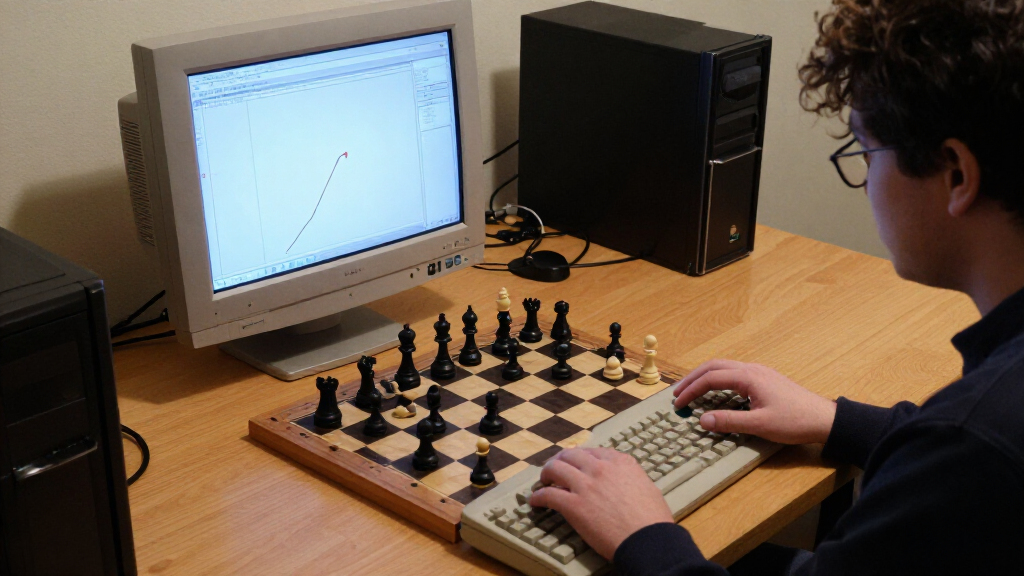
A 2026 report tested modern chess-engine methods on a 200 MHz Pentium Pro and estimated the tuned Stockfish port at 3,180 Elo at 30 seconds per move. That suggests a modern engine adapted to 1996 hardware could have been far stronger than contemporary chess software, but Kasparov did not play this machine and the result is an engine-rating estimate, not a match outcome.
A 2026 experiment found that a modern chess engine adapted to a 200 MHz Pentium Pro could reach an estimated 3,180 Elo at 30 seconds per move—far above Garry Kasparov’s rating of just under 2,800 in 1996. The result supports the argument that advances in chess-engine software, not only faster processors, could have made a 1996 desktop formidable, but it does not show that this specific machine played or beat Kasparov.
The report, published by Nicholas Carlini, describes porting Stockfish to a 32-bit Pentium Pro system with 64 MB of RAM and tuning the engine for the older processor. The author estimates its strength at 2,846 Elo at one second per move, 3,109 at 10 seconds and 3,180 at 30 seconds. These are results from the author’s testing, not ratings assigned through a match against Kasparov.
To compare software generations, Carlini also tested Crafty version 11.13, a competitive engine from 1996. It scored an estimated 2,383 Elo on the Pentium Pro at 10 seconds per move. On modern hardware, the same older engine reached 2,614 Elo at one second per move, according to the report. The gap illustrates that faster hardware helped older software, while newer search and evaluation methods could improve play even on the Pentium.
In a 100-game engine match reported by Carlini, the tuned Stockfish running on the Pentium Pro scored 78 wins, 17 draws and five losses against 1996 Crafty running on modern hardware. That match compares two engines under the report’s test setup; it was not a match against a human or a direct recreation of the 1996 Kasparov contest.
Software Progress on 1996 Hardware
The experiment challenges the assumption that Deep Blue’s custom hardware was the only route to a computer capable of challenging the world champion. It suggests that algorithmic improvements—including modern search techniques and neural-network-based evaluation—account for a large share of the strength gap between engines of different eras.
That distinction matters when interpreting the famous 1996 match. A suitably engineered modern program may have run strongly on a period desktop, but a rating estimate cannot establish how it would have performed in a particular match. Match conditions, time controls, hardware behavior and Kasparov’s responses all matter. The report provides evidence about engine capability, not a settled historical result.
Products Worth Considering

Apple AirPods Pro 3 Wireless Earbuds with Active Noise Cancellation

Apple MacBook Air 13.6-inch with M5 Chip, 16GB Memory, 512GB SSD, Sky Blue

Bose QuietComfort Headphones (2nd Gen), Wireless Over-Ear Noise-Cancelling Headphones, Black
As an affiliate, we earn on qualifying purchases.
Deep Blue and the 1996 Match
On February 10, 1996, IBM’s Deep Blue became the first computer program to defeat reigning world champion Garry Kasparov in an individual game. Kasparov won the six-game match, 4–2. An upgraded Deep Blue later won a 1997 rematch, 3.5–2.5.
The victorious 1997 system used 30 IBM P2SC processors and 480 custom chess co-processors, and could examine more than 200 million positions per second, according to Carlini’s report. The new experiment asks a different question: how much strength could software developed decades later bring to ordinary hardware from the 1990s? The author’s figures put the strongest engines available on commodity 1996 hardware at about 2,300 Elo, while modern Stockfish is estimated near 3,700.
No Kasparov Match Was Tested
The report does not describe a match between Kasparov and the Pentium Pro engine, so the question in the headline remains counterfactual. The Elo figures are estimates from the author’s testing, with stated uncertainty ranges for several results, and do not guarantee a particular outcome against a human in a tournament match.
The supplied report excerpt also does not specify enough about every testing detail—such as the full match conditions and rating-calculation method—to independently assess all comparisons. It is not clear from the material whether the estimate that the engine would have beaten Kasparov refers to a particular time control, match format or level of preparation. The evidence supports a claim about potential engine strength, not certainty about an unplayed contest.
Further Testing Would Clarify the Claim
The immediate next step for readers evaluating the claim is to examine the report’s full methods, including its engine builds, test positions, time controls and rating calculations. Replication by independent testers could show whether the reported performance holds across different hardware and setups.
Until a direct match or a more specific historical simulation is presented, the careful conclusion is that modern chess software could be made exceptionally strong on a Pentium Pro by the report’s tests. Whether it would have defeated Kasparov in 1996 remains an inference, not a recorded result.
Key Questions
Did a Pentium Pro computer actually play Kasparov?
No. The report tests a modern engine on a Pentium Pro and compares it with another engine. It does not report a Kasparov match.
How strong was the tuned engine estimated to be?
The author estimated the Pentium Pro version of Stockfish at 2,846 Elo at one second per move, 3,109 at 10 seconds and 3,180 at 30 seconds.
What did Deep Blue achieve in 1996?
Deep Blue beat Kasparov in one game on February 10, 1996, but Kasparov won their six-game match, 4–2. IBM’s upgraded system won their 1997 rematch.
Does the experiment prove a Pentium would have beaten Kasparov?
No. The results suggest a modern, tuned engine could have been very strong on period hardware, but no match against Kasparov was played. Elo estimates do not establish the result of a specific unplayed match.
Source: nicholas.carlini.com