
TL;DR

Play games on Amazon Luna for your game nights, included with Prime
- A rotating selection of games, no download needed
- Play on TV, laptop or phone
- Fast, free delivery for your gear, too
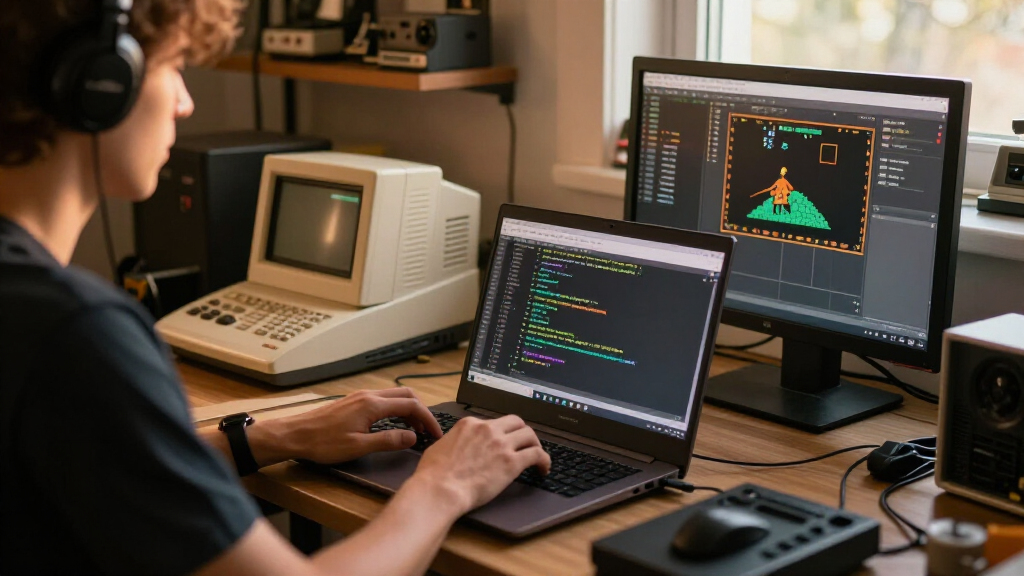
A developer has ported a classic 1993 Amiga game to the Godot engine using an AI language model that reads 68000 assembly code. The process was completed in a single evening, demonstrating new possibilities for retro game preservation and development.
A developer has successfully ported a 1993 Amiga game to the Godot engine by employing an AI language model capable of reading and interpreting 68000 assembly code. The process was completed within a single evening, highlighting emerging tools for retro game preservation and modernization.
The project involved taking an original game built in MC68000 assembly—the primary processor of the Amiga platform—and translating its code into a form compatible with Godot. The developer used Claude Fable 5, an advanced language model, during last July’s holiday to assist in reading and understanding the assembly code. This approach allowed the developer to bypass traditional, labor-intensive reverse engineering and manual porting methods, completing the process remarkably quickly.
According to the developer’s notes, the entire porting effort took approximately one evening. The process involved feeding snippets of the original assembly code into the LLM, which then generated higher-level representations suitable for translation into GDScript, Godot’s scripting language. The result is a playable version of the classic game running on modern hardware and the Godot engine, with minimal manual intervention.
While the developer emphasizes that this was a proof-of-concept experiment, it demonstrates the potential for AI-assisted porting of vintage software, especially for platforms with complex, low-level code like the Amiga. The success suggests that similar approaches could be used for other retro titles, aiding preservation efforts and enabling new audiences to experience classic games with modern tools.
Potential Impact on Retro Game Preservation
This development signifies a possible shift in how retro games are preserved and modernized. Traditionally, porting old titles requires extensive manual reverse engineering, which is time-consuming and requires specialized expertise. The use of an LLM capable of reading assembly code could dramatically reduce this barrier, making it faster and more accessible to bring vintage games to modern platforms.
Moreover, this approach could open new avenues for independent developers and hobbyists to maintain, update, or modify classic titles without needing deep knowledge of legacy hardware or assembly language. It also raises questions about the future of automated code translation and the role of AI in software preservation, development, and adaptation.
As an affiliate, we earn on qualifying purchases.
Historical and Technical Background of Amiga Porting
The Amiga was a popular home computer in the early 1990s, known for its advanced graphics and sound capabilities. Its games, often written in MC68000 assembly, are considered classics today. Porting these titles to modern platforms has historically involved detailed reverse engineering, often requiring extensive manual effort and expertise in legacy assembly language.
Recent years have seen increased interest in retro gaming and preservation, with enthusiasts seeking ways to run old titles on current hardware and engines. However, the complexity of translating assembly code remains a significant obstacle. The recent use of AI models for code interpretation is an emerging trend, but its application to assembly language porting is still in early stages and largely experimental.
The developer’s approach during last July’s holiday, employing Claude Fable 5 to read and interpret the assembly code, represents one of the first documented cases of AI-assisted porting at this scale. While still a proof-of-concept, it highlights potential pathways for future efforts in this domain.
As an affiliate, we earn on qualifying purchases.
Limitations and Unanswered Questions About AI-Assisted Porting
While the porting process was completed quickly and successfully in this case, it is not yet clear how reliably an LLM can interpret complex or poorly documented assembly code across different titles or platforms. The developer’s experiment was a proof of concept; scalability, accuracy, and robustness remain untested at larger or more complex projects. Additionally, the long-term stability and performance of the ported game are still to be evaluated, and whether this method can be widely adopted is uncertain.
As an affiliate, we earn on qualifying purchases.
Next Steps for AI-Driven Retro Game Porting
Further testing is needed to assess how well AI-assisted translation performs across various titles and coding styles. Developers and researchers are likely to explore more cases, refine models, and develop dedicated tools for assembly code interpretation. There is also potential for community-driven projects to leverage this approach for preservation and modernization efforts. Meanwhile, the developer plans to release a playable version of the ported game for public testing and feedback, which could inform future developments in this emerging field.
AI-assisted code translation software
As an affiliate, we earn on qualifying purchases.
As an affiliate, we earn on qualifying purchases.
Key Questions
Can AI fully replace manual porting of vintage games?
Currently, AI can assist but not fully replace manual efforts. It can significantly reduce the workload, but expert oversight remains necessary to ensure accuracy and performance.
What are the technical challenges of AI reading assembly code?
Assembly language is low-level and platform-specific, making it difficult for AI models to interpret without extensive training. Complex or poorly documented code increases the difficulty.
Will this method work for other platforms besides Amiga?
Potentially yes, but success depends on the quality of the assembly code and the AI model’s training. Further experimentation is required to confirm applicability across different architectures.
Is the ported game playable now?
The developer has indicated that a playable version has been created, but it is still in testing and refinement stages before full release.
Could this approach be used for commercial game development?
While promising, AI-assisted porting is currently experimental. Its use in commercial projects would require thorough validation and quality assurance.
Source: hn
Halloween Picks
halloween
As an affiliate, we earn on qualifying purchases.