
TL;DR

Play games on Amazon Luna for your game nights, included with Prime
- A rotating selection of games, no download needed
- Play on TV, laptop or phone
- Fast, free delivery for your gear, too
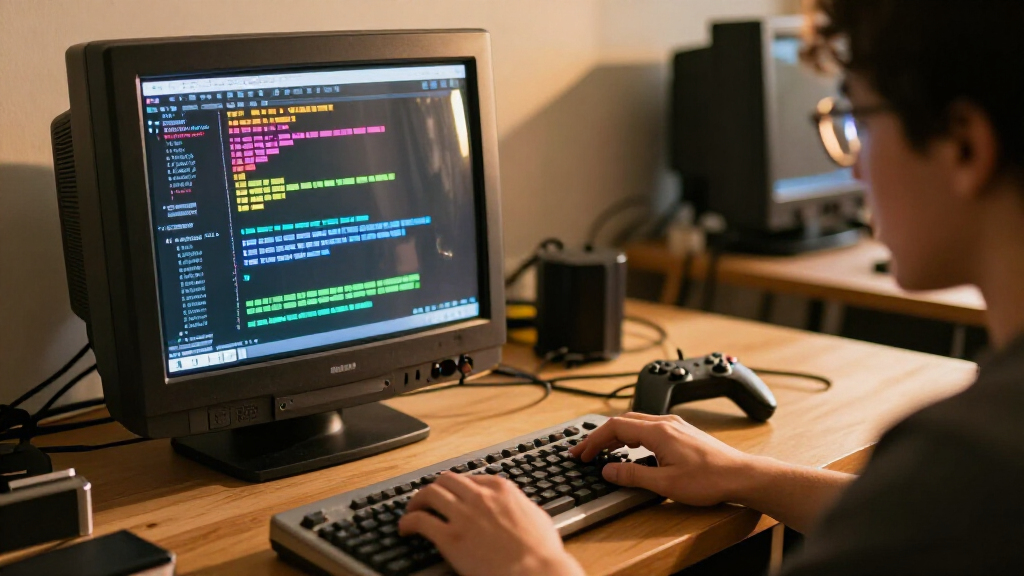
A report updated October 12, 2026, details the creation of a hand-coded demoscene intro that runs on a stock 128K ZX Spectrum. The production includes scrolling text, AY music, bouncing VU meters and a parallax starfield; its author says the code is 10,287 bytes and the tape image is 19,552 bytes.
Mark Round has published a technical report on a hand-coded demoscene intro designed to run on a stock 128K ZX Spectrum, describing the assembly techniques and obstacles behind a production built around scrolling text, music and visual effects. The project brings a familiar style of late-1980s computer intro to the Spectrum and offers a practical account of developing for its hardware.
Round’s report says the intro contains a smooth text scroller using a custom font, a three-channel soundtrack played through the Spectrum’s AY sound chip, bouncing VU meters and a parallax starfield. The Z80 assembly code totals 10,287 bytes; the complete cassette tape image is 19,552 bytes. Those are the author’s stated file sizes, not performance comparisons.
Round writes that work began on December 13 of the previous year and describes the project as a long-running side project, with periods of frustration as well as satisfaction. The post is framed as a technical overview of the tools, techniques and lessons involved, including material he had to relearn about the Spectrum and Z80 assembly.
The author says readers can download the finished production as a .tap cassette image for use in an emulator. The post also points to a YouTube capture, a listing on pouet.net and an option to run it through Round’s TNFS site portal. The source does not independently verify compatibility across hardware or emulators.
Classic Intro Effects on the Spectrum
The project matters to retro-computing readers because it turns a familiar set of demo-scene conventions into a concrete example of what one developer has built for an unexpanded 128K Spectrum. Scrolling text, animated graphics and chip music are presented together in a compact production, while the report explains the implementation challenges rather than treating the finished effect as a black box.
It also connects the home-computer scene’s early crack intros with later demoscene work. Round describes the visual style as an influence dating to his childhood, when he saw Amiga intros that combined logos, messages, music and effects. His Spectrum project is a personal homage and technical exercise; the report does not claim it sets a new benchmark for the platform.
ZX Spectrum 128K tape image emulator
As an affiliate, we earn on qualifying purchases.
As an affiliate, we earn on qualifying purchases.
From Cracktros to Spectrum Code
Round recalls trying to imitate Amiga intros on his Spectrum as a teenager, using Sinclair BASIC and rudimentary assembler routines copied from magazines. In the report, he describes those intros as short productions associated with software cracking groups, often featuring a logo, scrolling messages and effects such as starfields. The demoscene later developed into a broader culture of independent audiovisual productions and technical showcases.
His present-day project builds on a continuing interest in Spectrum programming, including work on a TNFS site intended to provide a BBS-like experience for the computer. Round says he had previously worked with Z80 and 68k assembly but had forgotten much of that experience. The new intro therefore combines a nostalgic aim with relearning low-level programming for older hardware.
ZX Spectrum assembly programming book
As an affiliate, we earn on qualifying purchases.
As an affiliate, we earn on qualifying purchases.
Compatibility and Technical Detail
The supplied report says the .tap file should load into any emulator, but it does not provide independent compatibility testing or document a range of emulator versions and physical Spectrum models. It also does not give full technical specifications for each effect in the source material provided here. The stated file sizes and feature list are attributed to Round.
The project is a personal production, not a reported release from a demoscene group or a claim of a platform-wide technical milestone. The source does not identify a formal competition entry, release date separate from the report update, or future development plans.
As an affiliate, we earn on qualifying purchases.
Where Readers Can Try It
Readers can follow the report’s links to download the .tap image, view the captured video or visit the pouet.net entry. Round also points to a browser-accessible TNFS portal as another way to run the production. The source gives no scheduled follow-up or announcement of additional versions, so any further release plans remain unknown.
ZX Spectrum demoscene effects software
As an affiliate, we earn on qualifying purchases.
As an affiliate, we earn on qualifying purchases.
Key Questions
What is the ZX Spectrum intro?
It is a hand-coded demoscene-style production by Mark Round for a stock 128K ZX Spectrum, featuring text, music and animated effects.
What effects and sound does it include?
Round lists a custom-font text scroller, three-channel AY music, bouncing VU meters and a parallax starfield.
How large is the production?
Round reports 10,287 bytes of code and a complete tape image of 19,552 bytes.
How can it be watched or run?
The report links to a downloadable .tap cassette image, a YouTube capture, a pouet.net listing and a TNFS portal. Round says the tape image should load in an emulator; broad compatibility has not been independently established in the material provided.
Source: hn
Halloween Picks
halloween
As an affiliate, we earn on qualifying purchases.