
For card game streaming, I’d choose a laptop that can run the game, broadcast software, and browser or chat tools smoothly without paying for graphics power the game may not need. My best overall pick is the Acer Nitro V 16S AI, whose RTX 5060, 32GB of memory, and 1TB SSD offer a well-balanced setup for streaming and multitasking. The ASUS ROG Strix G16 (2025) stands out for its powerful processor, while the Acer Nitro V 15 with an i7 and RTX 4050 is a more measured option with 16GB of memory and a 1TB drive. The main tradeoffs are memory capacity, screen size, portability, and whether a stronger GPU or processor is worth prioritizing for your stream. Read on for my full comparison, selection criteria, and advice on matching a laptop to your streaming setup.

Play games on Amazon Luna for your game nights, included with Prime
- A rotating selection of games, no download needed
- Play on TV, laptop or phone
- Fast, free delivery for your gear, too
Complete the kit

Key Takeaways
- The Acer Nitro V 16S AI leads on ready-to-stream balance: its 32GB of RAM and RTX 5060 provide more room for a game, broadcast software, and other open apps than the 16GB configurations that dominate this list.
- The MSI Crosshair 18 HX AI is the performance-heavy choice: its RTX 5070, 32GB RAM, and 2TB SSD offer the strongest listed hardware, but its 18-inch chassis is a poor fit for buyers who value easy portability.
- Several RTX 4050 and RTX 5060 laptops should be enough for card games: the game itself may not demand high-end graphics, so memory, cooling, and stream setup can matter more than moving to the fastest GPU.
- Entry configurations need closer scrutiny: the Acer Nitro V 15 with 8GB RAM is the least ready for simultaneous streaming and multitasking; it makes more sense if a memory upgrade is part of the plan.
- Screen size changes the daily experience: 17- and 18-inch models offer more room for game, chat, and broadcast controls, while 15- and 16-inch options are easier to carry and use in tighter spaces.
| ASUS ROG Strix G16 Gaming Laptop, 16-inch FHD+ 165Hz Display, Intel Core i7-14650HX, NVIDIA GeForce RTX 5060, 16GB DDR5, 1TB PCIe 4.0 SSD, Wi-Fi 7, Windows 11 Home |  | Best Overall for Cooling and Streaming Headroom | Processor: Intel Core i7-14650HX | Graphics: NVIDIA GeForce RTX 5060 Laptop GPU, 8GB | Memory: 16GB DDR5-5600MHz | VIEW LATEST PRICE | See Our Full Breakdown |
| ASUS ROG Strix G16 (2025) 16-Inch Gaming Laptop, Intel Core Ultra 9 275HX, NVIDIA GeForce RTX 5060, 16GB DDR5, 1TB SSD |  | Best Premium Display | Processor: Intel Core Ultra 9 275HX | Graphics: NVIDIA GeForce RTX 5060 Laptop GPU, 8GB | Memory: 16GB DDR5-5600 | VIEW LATEST PRICE | See Our Full Breakdown |
| Acer Nitro V 15 Gaming Laptop, Intel Core i5-13420H, NVIDIA GeForce RTX 4050, 15.6-inch FHD 165Hz IPS Display, 8GB DDR5, 512GB SSD |  | Best Entry-Level Streaming Setup | Processor: Intel Core i5-13420H | Graphics: NVIDIA GeForce RTX 4050 Laptop GPU, 6GB GDDR6 | Memory: 8GB DDR5; maximum 32GB | VIEW LATEST PRICE | See Our Full Breakdown |
| Acer Nitro V 15 Gaming Laptop, Intel Core i7-13620H, NVIDIA GeForce RTX 4050, 15.6-inch FHD 165Hz IPS Display, 16GB DDR5, 1TB PCIe Gen 4 SSD |  | Best Value for a Ready-to-Stream Setup | Processor: Intel Core i7-13620H | Graphics: NVIDIA GeForce RTX 4050 Laptop GPU, 6GB GDDR6 | Memory: 16GB DDR5; maximum 32GB | VIEW LATEST PRICE | See Our Full Breakdown |
| MSI Cyborg 17 17.3-Inch FHD 144Hz Gaming Laptop, Intel Core 7-240H, NVIDIA GeForce RTX 5060, 16GB DDR5, 1TB NVMe SSD, Windows 11 Home, Translucent Black (B2RWFKG-074US) |  | Best for a Large Gaming Display | Processor: Intel Core 7-240H | Graphics: NVIDIA GeForce RTX 5060, 8GB GDDR7 | Memory: 16GB DDR5 | VIEW LATEST PRICE | See Our Full Breakdown |
| MSI Crosshair 18 HX AI Gaming Laptop |  | Best for a Dedicated Streaming Desk | Processor: Intel Core Ultra 9 275HX, 24 cores, up to 5.4 GHz | Graphics: NVIDIA GeForce RTX 5070, 8GB GDDR7 | Memory: 32GB DDR5 5600MHz | VIEW LATEST PRICE | See Our Full Breakdown |
| ASUS TUF Dash 15 (2022) Gaming Laptop |  | Best for a Portable Streaming Setup | Model: FX517ZM-AS73 | Processor: Intel Core i7-12650H, 10 cores, up to 4.7 GHz | Graphics: NVIDIA GeForce RTX 3060, 6GB GDDR6 | VIEW LATEST PRICE | See Our Full Breakdown |
| ASUS TUF Gaming F15 Laptop |  | Best for a Rugged, Upgradeable Starter Setup | Model: FX506HEB-IS73 | Processor: Intel Core i7-11800H, 8 cores, up to 4.6 GHz | Graphics: NVIDIA GeForce RTX 3050 Ti, 4GB GDDR6 | VIEW LATEST PRICE | See Our Full Breakdown |
| Acer Nitro 5 AN517-54-79L1 Gaming Laptop |  | Best for a Larger Screen and Recording Space | Model: AN517-54-79L1 | Processor: Intel Core i7-11800H, 8 cores, 16 threads, up to 4.6 GHz | Graphics: NVIDIA GeForce RTX 3050 Ti, 4GB GDDR6 | VIEW LATEST PRICE | See Our Full Breakdown |
| Alienware 16 Aurora Gaming Laptop |  | Best for a Sharper, More Modern Display | Processor: Intel Core 7 240H | Graphics: NVIDIA GeForce RTX 5050 Laptop GPU | Memory: 16GB DDR5 5600MHz, maximum 32GB | VIEW LATEST PRICE | See Our Full Breakdown |
| Acer Nitro V 16S AI Gaming Laptop, AMD Ryzen 7 260, NVIDIA GeForce RTX 5060, 16-inch WUXGA 180Hz Display, 32GB DDR5, 1TB SSD |  | Best Overall for Card Game Streaming | Processor: AMD Ryzen 7 260 | Graphics: NVIDIA GeForce RTX 5060 Laptop GPU, 8GB GDDR7 | Display: 16-inch WUXGA LCD, 1920 × 1200, 180Hz, 100% sRGB | VIEW LATEST PRICE | See Our Full Breakdown |
| HP Victus 15.6-Inch FHD 144Hz Gaming Laptop, Intel Core i5-12450H, RTX 3050, 16GB RAM, 512GB SSD, Windows 11 Pro, Blue |  | Best for Budget-Conscious Beginners | Processor: Intel Core i5-12450H, up to 4.4GHz | Graphics: NVIDIA GeForce RTX 3050, 6GB GDDR6 | Display: 15.6-inch IPS, 1920 × 1080, 144Hz, anti-glare | VIEW LATEST PRICE | See Our Full Breakdown |
| Alienware 15 Gaming Laptop, RTX 4050, Intel Core 7 240H, 16GB RAM, 1TB SSD |  | Best for Quiet-Mode Streaming | Processor: Intel Core 7 240H, 10 cores, up to 5.2GHz | Graphics: NVIDIA GeForce RTX 4050 | Display: 15.3-inch WUXGA, 1920 × 1200, 16:10, 165Hz | VIEW LATEST PRICE | See Our Full Breakdown |
| gaming laptops for card game streaming | Processor | Graphics | Memory | Storage |
|---|---|---|---|---|
| ASUS ROG Strix G16 Gaming Lapt | Intel Core i7-14650HX | NVIDIA GeForce RTX 5060 Laptop GPU, 8GB | 16GB DDR5-5600MHz | 1TB PCIe Gen 4 SSD |
| ASUS ROG Strix G16 | Intel Core Ultra 9 275HX | NVIDIA GeForce RTX 5060 Laptop GPU, 8GB | 16GB DDR5-5600 | 1TB PCIe Gen 4 SSD |
| Acer Nitro V 15 Gaming Laptop | Intel Core i5-13420H | NVIDIA GeForce RTX 4050 Laptop GPU, 6GB GDDR6 | 8GB DDR5; maximum 32GB | 512GB PCIe Gen 4 SSD |
| Acer Nitro V 15 Gaming Laptop | Intel Core i7-13620H | NVIDIA GeForce RTX 4050 Laptop GPU, 6GB GDDR6 | 16GB DDR5; maximum 32GB | 1TB PCIe Gen 4 SSD |
| MSI Cyborg 17 17.3-Inch FHD 14 | Intel Core 7-240H | NVIDIA GeForce RTX 5060, 8GB GDDR7 | 16GB DDR5 | 1TB NVMe SSD |
| MSI Crosshair 18 HX AI Gaming | Intel Core Ultra 9 275HX, 24 cores, up to 5.4 GHz | NVIDIA GeForce RTX 5070, 8GB GDDR7 | 32GB DDR5 5600MHz | 2TB NVMe SSD |
| ASUS TUF Dash 15 | Intel Core i7-12650H, 10 cores, up to 4.7 GHz | NVIDIA GeForce RTX 3060, 6GB GDDR6 | 16GB DDR5 4800MHz | 512GB PCIe NVMe M.2 SSD |
| ASUS TUF Gaming F15 Laptop | Intel Core i7-11800H, 8 cores, up to 4.6 GHz | NVIDIA GeForce RTX 3050 Ti, 4GB GDDR6 | 16GB DDR4 3200MHz | 512GB PCIe NVMe M.2 SSD |
| Acer Nitro 5 AN517-54-79L1 Gam | Intel Core i7-11800H, 8 cores, 16 threads, up to 4.6 GHz | NVIDIA GeForce RTX 3050 Ti, 4GB GDDR6 | 16GB DDR4 3200MHz, maximum 32GB | 1TB NVMe SSD |
| Alienware 16 Aurora Gaming Lap | Intel Core 7 240H | NVIDIA GeForce RTX 5050 Laptop GPU | 16GB DDR5 5600MHz, maximum 32GB | 1TB SSD |
| Acer Nitro V 16S AI Gaming Lap | AMD Ryzen 7 260 | NVIDIA GeForce RTX 5060 Laptop GPU, 8GB GDDR7 | 32GB DDR5 5600MHz | 1TB PCIe Gen 4 SSD |
| HP Victus 15.6-Inch FHD 144Hz | Intel Core i5-12450H, up to 4.4GHz | NVIDIA GeForce RTX 3050, 6GB GDDR6 | 16GB DDR4-3200; supports up to 64GB | 512GB PCIe SSD |
| Alienware 15 Gaming Laptop | Intel Core 7 240H, 10 cores, up to 5.2GHz | NVIDIA GeForce RTX 4050 | 16GB DDR5 5600MHz; supports up to 32GB | 1TB SSD |
More Details on Our Top Picks
ASUS ROG Strix G16 Gaming Laptop, 16-inch FHD+ 165Hz Display, Intel Core i7-14650HX, NVIDIA GeForce RTX 5060, 16GB DDR5, 1TB PCIe 4.0 SSD, Wi-Fi 7, Windows 11 Home
For card-game streams with gameplay, chat, and broadcast software open together, I rank this Strix G16 first for its i7-14650HX, RTX 5060, and 16GB of memory. Its 1TB SSD leaves room for game installs and recordings, while the vapor chamber, three fans, and liquid metal cooling are designed for sustained gaming workloads. Compared with the Acer Nitro V 15 i5 model, it has twice the listed memory and a larger SSD, reducing the chance that multitasking or storage becomes an early limitation. The 165Hz screen is smooth, though card games do not need such a high refresh rate to stream well. Its 1920 x 1200 display specification conflicts with the FHD+ wording in the title, so verify the exact panel details; the listed two-hour battery life also makes plugged-in streaming the sensible plan.
Pros:- RTX 5060 and Core i7-14650HX provide a capable foundation for gaming alongside streaming software.
- 16GB DDR5 and a 1TB PCIe 4.0 SSD offer more multitasking and recording room than the Acer Nitro V 15 i5 configuration.
- Vapor chamber, tri-fan cooling, and liquid metal are built to manage heat during extended use.
- Tool-free RAM and SSD access makes future upgrades more accessible.
Cons:- Listed battery life is only two hours, so streaming away from an outlet is impractical.
- The display resolution is described inconsistently in the supplied product details.
- At 2.65 kg, it is not a particularly light laptop to carry regularly.
Best for: Card-game streamers who want an RTX 5060 system, 16GB RAM, and cooling features for longer plugged-in sessions.
Not ideal for: Streamers who need long battery-powered broadcasts, a lightweight daily carry, or certainty about the display resolution before buying.
- Processor:Intel Core i7-14650HX
- Graphics:NVIDIA GeForce RTX 5060 Laptop GPU, 8GB
- Memory:16GB DDR5-5600MHz
- Storage:1TB PCIe Gen 4 SSD
- Display:16-inch, 1920 x 1200, 165Hz, 3ms
- Wireless:Wi-Fi 7
- Battery:90Wh; listed battery life is 2 hours
- Weight:2.65 kg
Our verdict“Choose this Strix G16 for a well-equipped, cooling-focused card-game streaming setup, provided you plan to stream near an outlet.”
ASUS ROG Strix G16 (2025) 16-Inch Gaming Laptop, Intel Core Ultra 9 275HX, NVIDIA GeForce RTX 5060, 16GB DDR5, 1TB SSD
I’d pick the 2025 Strix G16 when the stream setup benefits from a sharp, spacious-feeling display as much as gaming performance. Its 2560 x 1600, 240Hz panel adds detail beyond the 165Hz, 1920 x 1200 screen on the other ASUS ROG Strix G16, while anti-glare treatment can help under bright room lighting. The Core Ultra 9 275HX and RTX 5060 give it a strong hardware base for running a game and streaming tools together, and the cooling design uses a vapor chamber, three fans, and liquid metal. For card games, though, a 240Hz refresh rate is a luxury rather than a streaming requirement. Both Strix models have just 16GB of RAM and a 1TB SSD; buyers running heavier creative workloads may want more memory, and the thick chassis is less convenient to move around.
Pros:- 2560 x 1600 anti-glare display provides more workspace and detail than the other Strix G16’s listed 1920 x 1200 panel.
- 240Hz refresh rate and Dolby Vision HDR make the display a strong feature for gaming and video viewing.
- Core Ultra 9 275HX and RTX 5060 suit gaming while streaming applications run alongside.
- Wi-Fi 7 and 2.5 Gigabit Ethernet provide modern wireless and wired connection options.
Cons:- 16GB of memory may constrain demanding multitasking or video-editing work.
- The 0.9-inch-thick chassis is less convenient to carry than a slimmer laptop.
- The 240Hz panel is more screen capability than card-game streaming requires.
Best for: Streamers who want a high-resolution screen for gameplay, chat, and broadcast controls on one laptop display.
Not ideal for: Buyers prioritizing easy portability or those who need more than 16GB of memory for a demanding streaming and editing workflow.
- Processor:Intel Core Ultra 9 275HX
- Graphics:NVIDIA GeForce RTX 5060 Laptop GPU, 8GB
- Memory:16GB DDR5-5600
- Storage:1TB PCIe Gen 4 SSD
- Display:16-inch, 2560 x 1600, 240Hz, anti-glare, Dolby Vision HDR
- Wireless:Wi-Fi 7 and Bluetooth
- Ethernet:2.5 Gigabit Ethernet
- Battery:90Wh lithium-ion, 4 cells
Our verdict“Choose this Strix G16 if you value its sharper 240Hz display and premium hardware more than portability or extra memory.”
Acer Nitro V 15 Gaming Laptop, Intel Core i5-13420H, NVIDIA GeForce RTX 4050, 15.6-inch FHD 165Hz IPS Display, 8GB DDR5, 512GB SSD
The Acer Nitro V 15 is the straightforward choice for a first card-game streaming setup, with a dedicated RTX 4050, wired Ethernet, and a 165Hz matte screen. Its 15.6-inch Full HD display is a practical size for a desk or occasional travel, and the Thunderbolt 4 port gives room to connect compatible accessories. The tradeoff is its 8GB of RAM: compared with the 16GB Acer Nitro V 15 i7 configuration, this model has less breathing room for a game, streaming software, browser tabs, and chat at once. It supports up to 32GB across two memory slots, which offers an upgrade path, but the supplied configuration may need attention sooner. The 512GB SSD is also smaller than the 1TB drives in both Strix G16 models, so local recordings can fill it faster.
Pros:- RTX 4050 provides dedicated graphics for gaming and streaming workloads.
- 165Hz matte Full HD IPS display offers smooth gameplay and helps limit distracting reflections.
- Thunderbolt 4, HDMI, and Gigabit Ethernet support useful desk and streaming connections.
- Two DDR5 memory slots allow expansion up to 32GB.
Cons:- The included 8GB RAM is less suited to running a game, broadcast software, and browser tools together.
- 512GB storage offers less room for games and recorded streams than the 1TB Acer Nitro V 15 i7 model.
- Full HD resolution provides less desktop workspace than the 16-inch, 2560 x 1600 Strix G16.
Best for: New streamers seeking a dedicated graphics laptop with Ethernet and a clear path to upgrade memory later.
Not ideal for: Buyers who want to stream and multitask immediately without upgrading, or who keep large libraries of local recordings.
- Processor:Intel Core i5-13420H
- Graphics:NVIDIA GeForce RTX 4050 Laptop GPU, 6GB GDDR6
- Memory:8GB DDR5; maximum 32GB
- Memory slots:2 DDR5 slots
- Storage:512GB PCIe Gen 4 SSD
- Display:15.6-inch Full HD IPS, 1920 x 1080, 165Hz
- Connectivity:Wi-Fi 6, Bluetooth, Killer Gigabit Ethernet
- Ports:4 USB, Thunderbolt 4, HDMI, Ethernet
Our verdict“Pick this Nitro V 15 as an entry point if you are comfortable upgrading its 8GB RAM and keeping recordings under control.”
Acer Nitro V 15 Gaming Laptop, Intel Core i7-13620H, NVIDIA GeForce RTX 4050, 15.6-inch FHD 165Hz IPS Display, 16GB DDR5, 1TB PCIe Gen 4 SSD
Among the two Acer Nitro V 15 configurations here, I’d choose this one for buyers who want to begin streaming without first addressing memory or storage. It pairs an i7-13620H with an RTX 4050, 16GB DDR5, and a 1TB SSD, giving game, broadcast software, and saved clips more room than the i5 model’s 8GB and 512GB configuration. The 15.6-inch, 165Hz matte display is well suited to gaming, while Gigabit Ethernet can provide a wired alternative to Wi-Fi. Compared with either ROG Strix G16, however, this Nitro has an RTX 4050 rather than an RTX 5060 and a lower-resolution Full HD screen. That makes it a more modest choice for graphics-heavy games, but card-game streams generally do not need the Strix models’ premium display specifications. Memory tops out at 32GB.
Pros:- 16GB DDR5 is a better starting point for running streaming tools alongside a game than the other Nitro V 15’s 8GB.
- 1TB PCIe Gen 4 SSD provides more space for games and recordings than the other Nitro V 15’s 512GB drive.
- RTX 4050 dedicated graphics and a 165Hz matte IPS display suit gaming-focused streams.
- Thunderbolt 4, HDMI, and Gigabit Ethernet offer flexible peripheral and network connections.
Cons:- RTX 4050 is a step below the RTX 5060 graphics in both ASUS ROG Strix G16 models.
- The 1920 x 1080 display offers less workspace than the 2560 x 1600 Strix G16 screen.
- Memory expansion is limited to a maximum of 32GB.
Best for: Card-game streamers who want a balanced, ready-to-use configuration with 16GB RAM, 1TB storage, and wired networking.
Not ideal for: Buyers seeking a high-resolution display, RTX 5060 graphics, or more than 32GB of memory.
- Processor:Intel Core i7-13620H
- Graphics:NVIDIA GeForce RTX 4050 Laptop GPU, 6GB GDDR6
- Memory:16GB DDR5; maximum 32GB
- Storage:1TB PCIe Gen 4 SSD
- Display:15.6-inch Full HD IPS, 1920 x 1080, 165Hz
- Wireless:Wi-Fi 6 and Bluetooth
- Ports:4 USB, Thunderbolt 4, HDMI, Gigabit Ethernet
- Weight:4.7 pounds
Our verdict“Choose this Nitro V 15 for a practical out-of-the-box streaming configuration if you do not need the Strix G16’s stronger graphics or higher-resolution display.”
MSI Cyborg 17 17.3-Inch FHD 144Hz Gaming Laptop, Intel Core 7-240H, NVIDIA GeForce RTX 5060, 16GB DDR5, 1TB NVMe SSD, Windows 11 Home, Translucent Black (B2RWFKG-074US)
The Cyborg 17 makes sense when I’d rather keep the game large and easy to follow on the laptop itself than choose a smaller, more portable screen. Its 17.3-inch Full HD panel gives card-game boards and interface elements generous physical space, while the RTX 5060, 16GB DDR5, and 1TB SSD make it more ready for streaming than the Acer Nitro V 15 i5 model, which starts with 8GB and half the storage. The 144Hz refresh rate is lower than the 165Hz Acer and Strix screens, but that difference is unlikely to matter much for card games. Its main compromise is the 5.3-pound size: it is the least convenient option here for frequent travel. The 1080p resolution also offers less detail and desktop space than the 2025 Strix G16’s 2560 x 1600 display.
Pros:- 17.3-inch screen provides a larger view of game boards and interface elements than the 15.6-inch Nitro V 15.
- RTX 5060 graphics, 16GB DDR5, and a 1TB SSD form a capable streaming-ready configuration.
- HDMI, USB-C, USB-A, and RJ45 support external displays, accessories, and wired networking.
- Wi-Fi 6E and Bluetooth 5.3 provide current wireless connectivity.
Cons:- At 5.3 pounds, it is heavier and less convenient to carry than either Acer Nitro V 15.
- Full HD resolution provides less detail and workspace than the 2025 ASUS ROG Strix G16’s 2560 x 1600 display.
- Its 144Hz refresh rate is below the 165Hz screens on the Acer Nitro V 15 models.
Best for: Streamers who mostly play at a desk and want a larger built-in screen with RTX 5060 graphics and 1TB storage.
Not ideal for: Frequent travelers or buyers who want a high-resolution panel or a lighter laptop for carrying between streaming locations.
- Processor:Intel Core 7-240H
- Graphics:NVIDIA GeForce RTX 5060, 8GB GDDR7
- Memory:16GB DDR5
- Storage:1TB NVMe SSD
- Display:17.3-inch, 1920 x 1080, 144Hz
- Wireless:Wi-Fi 6E and Bluetooth 5.3
- Ports:USB-C, USB-A, HDMI, RJ45
- Weight:5.3 pounds
Our verdict“Choose the Cyborg 17 if a large built-in screen matters more to your mostly desk-based stream than portability or higher resolution.”
MSI Crosshair 18 HX AI Gaming Laptop
For a card-game stream built around multiple windows, the 18-inch QHD+ screen gives the table, chat, and streaming controls room to stay visible without feeling cramped. Its Core Ultra 9 275HX, RTX 5070, and 32GB RAM also leave more headroom for encoding and other creative work than the older ASUS TUF Dash 15, which has an RTX 3060 and 16GB RAM. The 2TB SSD is useful if you keep recordings or game assets on the laptop. That capacity and performance come with a clear desk-first tradeoff: at 6.83 pounds, this is much less convenient to carry than the Dash 15. The 240Hz panel is generous for card games, where a faster refresh rate is rarely the deciding factor, and the listed webcam is only 720p. I’d choose it for a fixed streaming setup, not frequent travel.
Pros:- 18-inch QHD+ display offers ample space for the game, chat, and streaming software.
- Core Ultra 9 processor, RTX 5070, and 32GB RAM provide substantial multitasking headroom.
- 2TB NVMe SSD gives recordings and games more local storage space.
- Thunderbolt 4, HDMI 2.1, and RJ45 support a range of wired streaming peripherals and network setups.
Cons:- At 6.83 pounds, it is notably less portable than the ASUS TUF Dash 15.
- The 240Hz refresh rate is more screen speed than most card-game streams need.
- The listed webcam is 720p, which may not suit streamers relying on the built-in camera.
Best for: Card-game streamers who keep their laptop mostly at one desk and want a large screen, plentiful memory, and room for recordings.
Not ideal for: Streamers who travel often, need a compact machine, or expect a high-resolution built-in webcam.
- Processor:Intel Core Ultra 9 275HX, 24 cores, up to 5.4 GHz
- Graphics:NVIDIA GeForce RTX 5070, 8GB GDDR7
- Memory:32GB DDR5 5600MHz
- Storage:2TB NVMe SSD
- Display:18-inch QHD+ IPS, 2560 x 1600, 240Hz, 100% DCI-P3
- Connectivity:Wi-Fi 6E, Bluetooth 5.3, Thunderbolt 4, HDMI 2.1, RJ45
- Battery:90Wh Li-Ion
- Weight:6.83 lbs
Our verdict“Choose the Crosshair 18 if your card-game stream needs a large, powerful desk-based hub and portability comes second.”
ASUS TUF Dash 15 (2022) Gaming Laptop
The 4.4-pound chassis makes the TUF Dash 15 the easiest choice here for a streamer who carries a laptop between rooms, events, or classes. Its RTX 3060 and MUX switch offer more graphics flexibility than the RTX 3050 Ti in the ASUS TUF Gaming F15, while the 144Hz matte Full HD display keeps card tables and interface text clear. For a card-game setup, the 16GB RAM and 512GB SSD are a workable starting point, though they leave less space for recordings and simultaneous apps than the MSI Crosshair 18’s 32GB and 2TB. Thunderbolt 4 and Ethernet add useful connection options. The tradeoff is an older platform and a smaller, lower-resolution display than the Alienware 16 Aurora. I’d pick this for mobility and practical gaming features, not for a spacious streaming workspace.
Pros:- At 4.4 pounds, it is lighter than the other laptops in this batch.
- RTX 3060 graphics and a MUX switch give it an advantage over the ASUS TUF Gaming F15’s RTX 3050 Ti.
- Matte 144Hz display reduces reflections in varied room lighting.
- Thunderbolt 4, Ethernet, and upgradeable memory and storage support a flexible setup.
Cons:- The 512GB SSD leaves limited room for locally stored stream recordings.
- Full HD resolution offers less workspace than the Alienware 16 Aurora’s 2560 x 1600 display.
- Its 2022-era processor and graphics platform are older than the newer options in the roundup.
Best for: Students and traveling card-game streamers who want a lighter laptop with a dedicated GPU, Ethernet, and upgradeable memory and storage.
Not ideal for: Streamers who want a large high-resolution canvas or ample built-in storage for long-term recording archives.
- Model:FX517ZM-AS73
- Processor:Intel Core i7-12650H, 10 cores, up to 4.7 GHz
- Graphics:NVIDIA GeForce RTX 3060, 6GB GDDR6
- Memory:16GB DDR5 4800MHz
- Storage:512GB PCIe NVMe M.2 SSD
- Display:15.6-inch Full HD IPS, 1920 x 1080, 144Hz, matte
- Ports:Thunderbolt 4, USB-C, 2 USB-A, HDMI 2.0b, 3.5mm audio, LAN
- Weight:4.4 pounds
Our verdict“Choose the TUF Dash 15 if carrying your stream setup matters more than a large screen or generous storage.”
ASUS TUF Gaming F15 Laptop
The TUF Gaming F15 makes sense for someone starting a card-game stream with a straightforward 15.6-inch matte 144Hz display and components that can be upgraded later. Its eight-core Core i7-11800H and RTX 3050 Ti can handle gaming and typical streaming tasks, but the 4GB graphics memory and 16GB DDR4 RAM give it less headroom than the ASUS TUF Dash 15, whose RTX 3060 has 6GB GDDR6. It also weighs 5.1 pounds, so it is not as easy to carry as that Dash model. The anti-dust cooling and MIL-STD-810H construction make it a practical pick for a shared or frequently moved setup, while its 512GB SSD may fill quickly if you save broadcasts locally. This is a sensible upgradeable entry point, not the strongest long-term streaming platform here.
Pros:- Matte 144Hz display helps limit glare while keeping game movement smooth.
- Eight-core Intel processor and dedicated RTX 3050 Ti support gaming alongside streaming tools.
- Memory and storage can be added or replaced as needs change.
- MIL-STD-810H construction and self-cleaning dual fans suit a laptop that gets regular use or movement.
Cons:- RTX 3050 Ti has 4GB GDDR6, less graphics memory than the ASUS TUF Dash 15’s RTX 3060.
- The 512GB SSD may constrain a streamer who keeps local recordings.
- At 5.1 pounds, it is heavier than the Dash 15.
Best for: New streamers who want a durable Full HD gaming laptop and plan to add memory or storage as their setup grows.
Not ideal for: Streamers who need more graphics headroom, a large recording drive, or a lightweight laptop for frequent travel.
- Model:FX506HEB-IS73
- Processor:Intel Core i7-11800H, 8 cores, up to 4.6 GHz
- Graphics:NVIDIA GeForce RTX 3050 Ti, 4GB GDDR6
- Memory:16GB DDR4 3200MHz
- Storage:512GB PCIe NVMe M.2 SSD
- Display:15.6-inch IPS-type LED, 1920 x 1080, 144Hz, matte/anti-glare
- Connectivity:Wi-Fi 6, Bluetooth 5.2, 3 USB ports, HDMI
- Weight:5.1 pounds
Our verdict“Choose the TUF Gaming F15 as an upgradeable starter if durability matters more than graphics headroom and portability.”
Acer Nitro 5 AN517-54-79L1 Gaming Laptop
If the card table and stream controls need to be readable at a glance, the Nitro 5’s 17.3-inch Full HD display gives more physical screen area than the 15.6-inch ASUS TUF Gaming F15. Its 1TB SSD also doubles the listed storage of that ASUS, offering more room for game installs and saved broadcasts. The Core i7-11800H, RTX 3050 Ti, and 16GB RAM make this a capable midrange choice for card-game streaming, but its 4GB GPU memory and DDR4 system memory are less generous than the newer MSI Crosshair 18. At 5.95 pounds, it is a desk-oriented option rather than an easy carry, and its listed battery life can vary with use. I’d favor it over the smaller TUF F15 for screen and storage, not for portability or graphics headroom.
Pros:- 17.3-inch 144Hz IPS display offers more room than the ASUS TUF Gaming F15’s 15.6-inch panel.
- 1TB NVMe SSD provides more local space than the 512GB drives in both ASUS TUF models.
- HDMI 2.1, Ethernet, and multiple USB ports support a wired setup and external peripherals.
- Memory is upgradeable to a listed maximum of 32GB.
Cons:- At 5.95 pounds, it is cumbersome compared with the ASUS TUF Dash 15.
- RTX 3050 Ti graphics with 4GB memory offer less headroom than the MSI Crosshair 18’s RTX 5070.
- The 1920 x 1080 resolution gives less workspace detail than the Alienware 16 Aurora’s WQXGA screen.
Best for: Card-game streamers who want a larger built-in display and more local recording space without stepping up to the premium MSI Crosshair 18.
Not ideal for: Frequent travelers or streamers who prioritize newer graphics hardware, higher-resolution screens, or lighter carry weight.
- Model:AN517-54-79L1
- Processor:Intel Core i7-11800H, 8 cores, 16 threads, up to 4.6 GHz
- Graphics:NVIDIA GeForce RTX 3050 Ti, 4GB GDDR6
- Memory:16GB DDR4 3200MHz, maximum 32GB
- Storage:1TB NVMe SSD
- Display:17.3-inch Full HD IPS, 1920 x 1080, 144Hz
- Ports:USB-C with DisplayPort, USB-A, HDMI 2.1, Ethernet, headphone jack
- Weight:5.95 lbs
Our verdict“Choose the Nitro 5 if a larger screen and 1TB of storage matter more than a lighter chassis or newer graphics.”
Alienware 16 Aurora Gaming Laptop
The Alienware 16 Aurora pairs a 2560 x 1600, 16:10 display with a 120Hz refresh rate, giving streamers more vertical room for a card table, chat, and controls than the Full HD Acer Nitro 5. That sharper workspace is a better fit for managing a broadcast than chasing an especially high refresh rate. Its RTX 5050 GPU, 16GB DDR5 RAM, and 1TB SSD form a newer-feeling balance than the RTX 3050 Ti and DDR4 memory in the Nitro, while the Core Ultra 9 MSI Crosshair 18 remains the stronger pick for heavy multitasking and storage capacity. Cryo-Chamber airflow and a 300-nit anti-glare panel suit a regular gaming setup, but 5.5 pounds still makes it a substantial carry. I’d choose it for screen clarity, not for the lightest travel kit.
Pros:- WQXGA 16:10 display offers sharper detail and more vertical workspace than the Acer Nitro 5’s Full HD panel.
- RTX 5050 graphics and 16GB DDR5 memory pair with a 1TB SSD for gaming and stream multitasking.
- Wi-Fi 7 and Ethernet provide both modern wireless and wired network options.
- Cryo-Chamber airflow design directs cooling toward core components.
Cons:- At 5.5 pounds, it is heavier than the ASUS TUF Dash 15 for frequent carrying.
- Its 120Hz refresh rate is lower than the 144Hz panels on the ASUS TUF and Acer Nitro 5 models.
- The 16GB RAM and 1TB storage fall short of the MSI Crosshair 18’s 32GB and 2TB.
Best for: Streamers who want a high-resolution 16-inch display for game, chat, and broadcast tools, plus current-generation connectivity.
Not ideal for: Buyers seeking the largest display, a light travel laptop, or the highest memory and storage capacity in this batch.
- Processor:Intel Core 7 240H
- Graphics:NVIDIA GeForce RTX 5050 Laptop GPU
- Memory:16GB DDR5 5600MHz, maximum 32GB
- Storage:1TB SSD
- Display:16-inch WQXGA LED, 2560 x 1600, 120Hz, 16:10, 300 nits
- Connectivity:Wi-Fi 7, Bluetooth, Ethernet, HDMI, USB-A, USB-C
- Cooling:Cryo-Chamber airflow design
- Weight:5.5 pounds
Our verdict“Choose the Alienware 16 Aurora if a sharper, taller display matters more than maximum refresh rate or portability.”
Acer Nitro V 16S AI Gaming Laptop, AMD Ryzen 7 260, NVIDIA GeForce RTX 5060, 16-inch WUXGA 180Hz Display, 32GB DDR5, 1TB SSD
For a card-game stream that may also include overlays, chat, browser tabs, and occasional heavier games, I’d put the Acer Nitro V 16S AI first in this group. Its 32GB of DDR5 memory gives multitasking more breathing room than the 16GB Alienware 15 and HP Victus, while the RTX 5060 offers more graphics headroom than their RTX 4050 and RTX 3050 options. The 16-inch 16:10 WUXGA screen and 100% sRGB coverage make card text and stream controls easier to lay out and read. At 4.6 pounds, it is also lighter than the Victus, though not as compact as a conventional thin notebook. Its non-touch display and 32GB memory ceiling limit flexibility; for a simple card-game setup, its graphics power may be more than needed.
Pros:- 32GB DDR5 memory supports streaming software and multitasking without the 16GB configuration of the Alienware 15 or HP Victus.
- RTX 5060 graphics provide more headroom for demanding games and graphics workloads than the RTX 4050 and RTX 3050 models here.
- 16-inch 1920 × 1200 display combines a 180Hz refresh rate with 100% sRGB coverage.
- Slim 4.6-pound design is easier to carry than the 7-pound HP Victus.
Cons:- Memory is limited to a maximum of 32GB, reducing room for future expansion.
- The display is non-touch, which may disappoint buyers who want direct on-screen control.
- Its RTX 5060 capability may be unnecessary for viewers who only play lightweight card games.
Best for: Streamers who keep chat, capture software, overlays, and several browser tabs open while playing, and want a clear, color-rich screen with more memory headroom.
Not ideal for: Buyers focused only on basic card games and a single stream app, or those who want touch input or a memory ceiling above 32GB.
- Processor:AMD Ryzen 7 260
- Graphics:NVIDIA GeForce RTX 5060 Laptop GPU, 8GB GDDR7
- Display:16-inch WUXGA LCD, 1920 × 1200, 180Hz, 100% sRGB
- Memory:32GB DDR5 5600MHz
- Storage:1TB PCIe Gen 4 SSD
- Operating system:Windows 11 Home
- Weight:4.6 pounds
- Cooling:Quad-intake cooling
Our verdict“I’d choose the Nitro V 16S AI for card-game streamers who want the strongest blend here of multitasking memory, screen space, and graphics headroom.”
HP Victus 15.6-Inch FHD 144Hz Gaming Laptop, Intel Core i5-12450H, RTX 3050, 16GB RAM, 512GB SSD, Windows 11 Pro, Blue
The HP Victus is the straightforward pick for a new streamer who wants dedicated graphics and a high-refresh screen without prioritizing premium display coverage or large storage. Its RTX 3050 and 16GB of RAM can suit a card game, streaming software, and routine multitasking, while the matte, anti-glare 15.6-inch screen helps reduce reflections in a bright room. Compared with the Acer Nitro V 16S AI, it has less memory, a smaller SSD, and less graphics headroom; compared with the Alienware 15, it offers a similar 16GB memory starting point but a lower refresh rate. The Victus does include Windows 11 Pro and useful HDMI and Ethernet connections. Its listed 250-nit brightness may be limiting in bright spaces, and its 7-pound weight makes it the least appealing choice here for frequent travel.
Pros:- RTX 3050 with 6GB GDDR6 provides dedicated graphics for gameplay and streaming workloads.
- 15.6-inch Full HD IPS display has a 144Hz refresh rate and matte anti-glare finish.
- Windows 11 Pro, Wi-Fi 6, HDMI, Ethernet, and USB Type-C offer useful connectivity.
- Memory can be upgraded to a stated maximum of 64GB.
Cons:- The 512GB SSD is smaller than the 1TB drives in the Acer Nitro V 16S AI and Alienware 15.
- Listed brightness of 250 nits may make the display harder to see in bright rooms.
- At 7 pounds, it is considerably heavier than the Acer Nitro V 16S AI and Alienware 15.
Best for: First-time streamers who mainly play card games, want a dedicated NVIDIA GPU and anti-glare display, and expect to keep the laptop on a desk.
Not ideal for: Frequent travelers, streamers who need a bright screen in sunlit rooms, or buyers who want a larger SSD and more headroom for demanding games.
- Processor:Intel Core i5-12450H, up to 4.4GHz
- Graphics:NVIDIA GeForce RTX 3050, 6GB GDDR6
- Display:15.6-inch IPS, 1920 × 1080, 144Hz, anti-glare
- Memory:16GB DDR4-3200; supports up to 64GB
- Storage:512GB PCIe SSD
- Operating system:Windows 11 Pro
- Wireless:Wi-Fi 6 and Bluetooth 5
- Weight:7 pounds
Our verdict“I’d pick the HP Victus for a desk-based beginner whose card-game stream needs dedicated graphics and anti-glare viewing more than portability or extra storage.”
Alienware 15 Gaming Laptop, RTX 4050, Intel Core 7 240H, 16GB RAM, 1TB SSD
The Alienware 15 earns a distinct spot for streamers who value a quieter setup and a polished gaming laptop, rather than the most memory or graphics power in this group. Its Stealth mode offers a quieter operating option, while Cryo-tech cooling is designed to manage heat during play. The 15.3-inch WUXGA 16:10 display provides more vertical room than the HP Victus’s 1080p screen, and its 1TB SSD doubles the Victus’s listed capacity. But the configured 16GB of RAM is less generous than the Acer Nitro V 16S AI’s 32GB, and the RTX 4050 sits below that Acer’s RTX 5060. The Alienware supports up to 32GB, giving some upgrade room, but buyers should account for that if their stream setup grows. At 4.9 pounds, it is portable, though not especially light.
Pros:- Stealth mode provides a quieter operating option for a streaming setup.
- 15.3-inch 1920 × 1200 display uses a 16:10 aspect ratio and 165Hz refresh rate.
- 1TB SSD offers more capacity than the HP Victus’s 512GB drive.
- Memory can be expanded from 16GB to a stated maximum of 32GB.
Cons:- The 16GB configured memory is less than the Acer Nitro V 16S AI’s 32GB.
- RTX 4050 graphics offer less headroom than the Acer’s RTX 5060.
- At 4.9 pounds, it is heavier than the Acer Nitro V 16S AI.
Best for: Streamers who want a gaming-focused laptop with a quieter mode, a 16:10 screen, and 1TB of storage for games and recordings.
Not ideal for: Streamers who run many demanding apps at once and want 32GB of memory from the start, or buyers seeking the greatest graphics headroom in this batch.
- Processor:Intel Core 7 240H, 10 cores, up to 5.2GHz
- Graphics:NVIDIA GeForce RTX 4050
- Display:15.3-inch WUXGA, 1920 × 1200, 16:10, 165Hz
- Memory:16GB DDR5 5600MHz; supports up to 32GB
- Storage:1TB SSD
- Cooling:Alienware Cryo-tech
- Operating system:Windows 11 Home
- Weight:4.9 pounds
Our verdict“I’d choose the Alienware 15 if quieter operation and a 1TB drive matter more to your stream setup than having 32GB of memory or RTX 5060 graphics.”
How We Picked
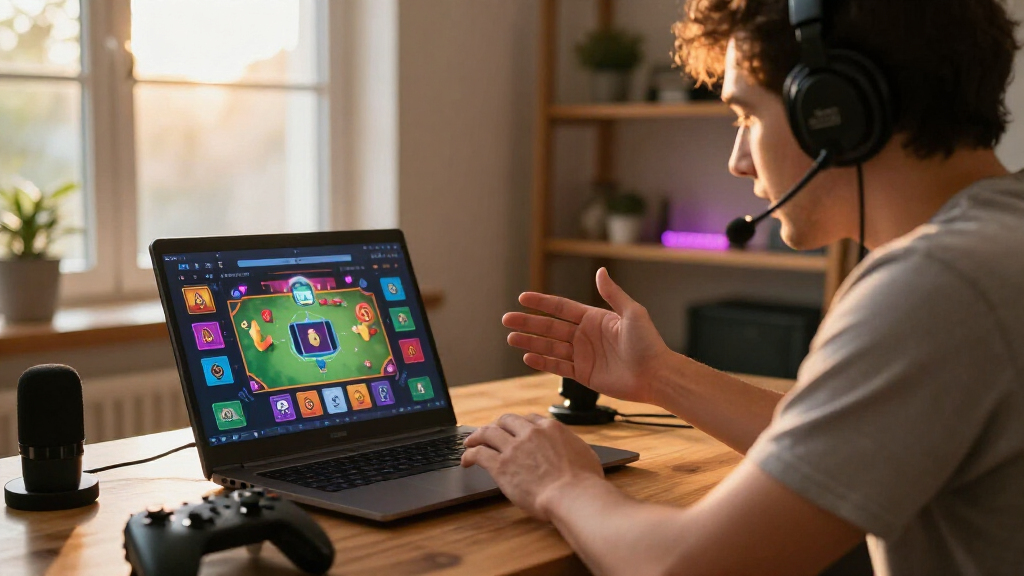
I ranked these gaming laptops for card game streaming by how well their listed hardware can handle a game alongside broadcast software, chat, browser tabs, and other routine streaming tasks. I gave extra weight to 16GB or more of RAM, capable modern processors, a dedicated GPU, and storage that leaves room for games and recordings. Screen resolution, refresh rate, and size also mattered, but I treated gaming performance as a means to a stable stream—not a reason to reward the most powerful GPU automatically.
The order reflects the balance between streaming headroom and practical tradeoffs. The Acer Nitro V 16S AI ranks first for its 32GB of RAM and RTX 5060, while the MSI Crosshair 18 HX AI offers more raw performance but demands more space and is less portable. Laptops with 16GB and RTX 4050-class graphics remain sensible for this use, while older GPUs, smaller SSDs, or 8GB of RAM lower a model’s fit for a multi-app stream. The supplied specifications do not state every detail, such as upgrade access, webcam quality, battery life, or cooling behavior, so I avoid treating those as confirmed advantages.
Factors to Consider When Choosing Gaming Laptops For Card Game Streaming
For a card game stream, laptop choice is less about chasing the highest frame rate and more about avoiding bottlenecks across the whole setup. I’d use these factors to decide where extra hardware will make a noticeable difference and where it may go unused.
Prioritize Memory for a Multi-App Stream
Broadcast software, a browser with deck lists or chat, and the game all compete for memory. Sixteen gigabytes is a practical starting point, while 32GB leaves more room for busy layouts and background apps. The 8GB Acer Nitro V 15 configuration is the clearest example of a spec that may look acceptable for gaming but can feel restrictive once streaming tools are open. Before buying a lower-memory model, check whether its RAM can be upgraded and whether the upgrade would void any coverage. Don’t assume a fast processor compensates for insufficient memory; slowdowns often come from running out of space for active tasks, not from the game’s graphics load.
Match the GPU to Your Stream, Not a Benchmark
Card games generally place less demand on graphics hardware than modern action games, though stream resolution, overlays, and other games on the channel can raise the load. An RTX 4050 or RTX 5060 class GPU may offer a more balanced fit than paying for the strongest graphics option in this group. A higher-tier GPU can make sense if you also stream demanding games, use heavier visual effects, or want more room for future software demands. Check which encoding options your streaming software supports and test the settings you plan to broadcast at. The goal is a clean, steady stream while leaving enough system capacity for the game and production tools.
Choose a Screen That Fits Your Layout and Routine
A larger built-in screen can make it easier to keep the game visible alongside controls, but a laptop display is still limited for a full broadcast dashboard. Fifteen- and 16-inch models are easier to carry, while 17- and 18-inch systems offer more viewing area at the cost of a larger footprint. Refresh rate matters most if you play fast games beyond cards; a 144Hz or 165Hz panel is not automatically a streaming advantage for a turn-based title. If you plan to use an external monitor, prioritize the ports and desk setup you need rather than selecting a laptop solely for its built-in screen size. Also check display resolution against your intended stream output so you are not paying for pixels you rarely use.
Plan Storage Around Recordings and Game Libraries
A 512GB SSD can be workable for a small game library, but recordings, clips, and editing files can fill it faster than expected. One terabyte offers more breathing room, while the MSI Crosshair 18 HX AI’s 2TB drive suits creators who keep substantial footage on the laptop. Decide whether you archive finished streams, edit locally, or move files to external storage; each habit changes how much internal capacity you need. Check whether the model has an accessible second drive slot or an easy SSD replacement path rather than assuming storage can be expanded. A laptop with a smaller drive may still be a good fit if your workflow regularly moves footage elsewhere.
Account for Noise, Heat, and Desk Placement
Streaming sessions can last for hours, so fan noise and heat affect comfort even when the game is not graphically demanding. Powerful components need effective cooling, and a compact chassis has less room for airflow than a larger gaming laptop. Product specifications alone do not establish how loud a particular model gets under load, so look for independent measurements before buying if the microphone will sit near the laptop. Leave clear space around vents and avoid using the machine on soft bedding or fabric. If you stream from a quiet room, a headset mic or a separate microphone with suitable noise control can reduce how much fan sound reaches your audience.
Check the Whole Streaming Setup Before Paying for More
The laptop is only one part of a stream: a stable internet connection, webcam, microphone, lighting, and a comfortable way to monitor chat all shape the result. Spend according to the weakest part of your setup rather than choosing a premium GPU while relying on unreliable Wi-Fi or poor audio. Wi-Fi 7 appears in one listed configuration, but a supported router and strong connection are still needed to benefit from newer wireless standards. If you stream from a fixed desk, an Ethernet connection and external monitor may improve the experience more than a larger built-in display. For travel, weigh total system size and power needs against the convenience of carrying the laptop between locations.
Frequently Asked Questions
Is 8GB of RAM enough for streaming a card game?
It may run a card game, but 8GB leaves little room for streaming software and browser tools at the same time. That can make switching between apps less comfortable and restrict how much you can keep open during a broadcast. In this lineup, the 8GB Acer Nitro V 15 is best viewed as an upgrade candidate rather than the most ready-to-stream choice. Check the laptop’s memory layout and upgrade rules before purchase, since some configurations are easier to expand than others. If you want to stream without planning a hardware change, I’d start with a model listing at least 16GB.
Should I choose the RTX 5070 laptop if I only stream card games?
Not automatically. The MSI Crosshair 18 HX AI has the strongest listed graphics hardware, but a card game alone may not use that extra GPU capacity. The upgrade has more value if you also play demanding games on stream, run graphics-heavy production effects, or want the listed 32GB RAM and 2TB SSD in a large-screen system. Its 18-inch size also makes it less convenient to carry than the 15- or 16-inch choices. If your channel centers on card games at a desk, memory, storage, cooling, and your audio setup may matter more than selecting the highest GPU tier.
Can I stream smoothly with an RTX 4050 laptop?
An RTX 4050 configuration can be a reasonable match for streaming a card game, especially when paired with 16GB of RAM and a capable processor. The Acer Nitro V 15 with an i7, 16GB RAM, and 1TB SSD is better equipped for multitasking than the similar 8GB configuration. Actual results depend on the broadcast resolution, encoding settings, other apps, and the game you run alongside the stream. If you plan to stream graphically demanding games too, a stronger GPU may give you more headroom. I’d check the encoder options in your streaming software and tune settings before paying for a major GPU upgrade.
Is a 17- or 18-inch laptop better for streaming than a 15- or 16-inch one?
A larger display can make game controls, chat, and broadcast panels easier to view, but it does not replace a second monitor for a complex layout. Large laptops are less portable and take up more desk space, so their advantage is strongest for buyers who stream from one location. A 15- or 16-inch model is easier to move and can still connect to an external display when you are home. The MSI Crosshair 18 HX AI combines a large screen with high-end components, while smaller options better suit travel or compact desks. Choose based on where you stream and how you arrange your controls, not screen size alone.
What should I upgrade or add before my first stream?
Start by checking whether your chosen laptop has enough memory for the game and streaming apps, then plan storage for recordings. Audio and a reliable connection often improve a stream more than extra graphics power, so a suitable microphone and stable Ethernet or Wi-Fi deserve attention. A webcam, lighting, and a second display can help with presentation and monitoring, but you can add them as your workflow grows. If you are considering the 8GB Acer Nitro V 15, investigate a memory upgrade before setting it up for regular broadcasts. Leave room in your setup for testing a private broadcast and adjusting sound, image, and encoder settings before going live.
Conclusion
For most buyers, I’d choose the Acer Nitro V 16S AI as the best overall: its 32GB of RAM, RTX 5060, and 1TB SSD form a balanced base for gaming and streaming together. The Acer Nitro V 15 with an i7 and RTX 4050 is my best-value fit for a more modest stream setup, while the MSI Crosshair 18 HX AI is the best premium choice for buyers who want the strongest listed GPU, 32GB RAM, and a 2TB drive and can accept a large chassis. For beginners, I’d favor a straightforward 16GB configuration such as the ASUS TUF Dash 15 or Acer Nitro V 15 i7 model over the 8GB Nitro configuration. If your priority is a bigger built-in workspace, consider the MSI Cyborg 17 or Crosshair 18; if portability matters more, stick with a 15- or 16-inch option. Match the laptop to your stream’s workload, then reserve some of your setup budget for audio, connectivity, and storage.