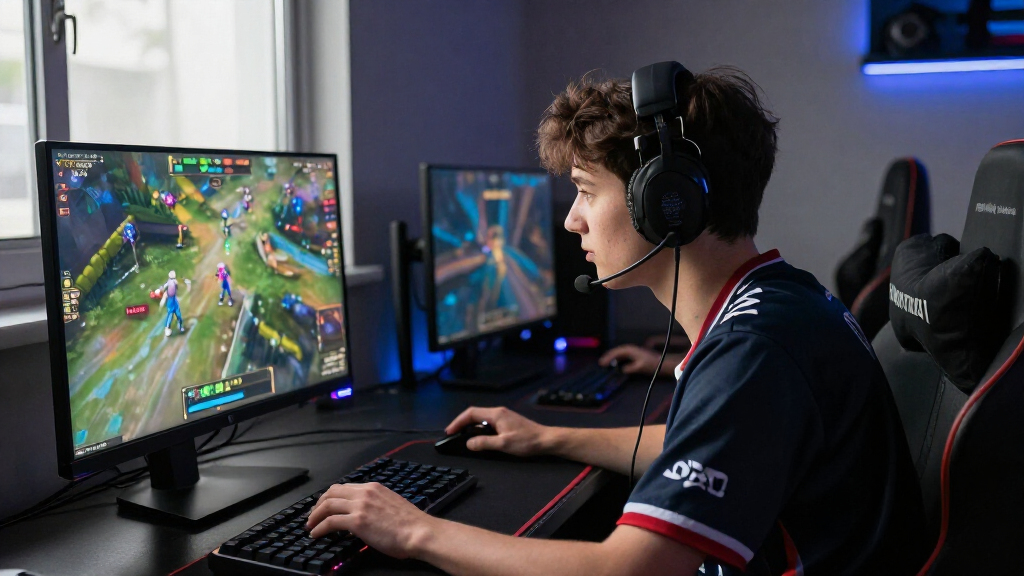

The best competitive gaming monitors balance clear motion, responsive controls, and a size and resolution your PC can drive. My best overall pick is the Alienware AW2525HM, whose 24.5-inch FHD format and 320Hz refresh rate suit players who prioritize speed and focus. For higher refresh rates, the BenQ Zowie XL2566X+ reaches 400Hz, while the ASUS ROG Strix XG27ACDNG pairs 360Hz with QHD QD-OLED contrast. The tradeoff is straightforward: FHD high-refresh screens favor frame rates, while QHD and OLED options offer sharper or richer images with greater demands on your graphics card and budget. Read on for the full breakdown, ranking logic, and guidance on choosing the right competitive gaming monitor for your setup.

Play games on Amazon Luna for your game nights, included with Prime
- A rotating selection of games, no download needed
- Play on TV, laptop or phone
- Fast, free delivery for your gear, too
Complete the kit

Key Takeaways
- The Alienware AW2525HM leads as the balanced speed-first pick: its 24.5-inch FHD display and 320Hz refresh rate fit competitive play without the added pixel load of QHD.
- The BenQ Zowie XL2566X+ has the highest stated refresh rate in this group at 400Hz, but its Fast TN panel prioritizes motion-focused play over the richer contrast and color of OLED.
- The ASUS ROG Strix XG27ACDNG stands apart for combining QHD, 360Hz, and QD-OLED; that mix is appealing for players who want both speed and image quality, provided their PC can drive it.
- QHD choices range from 180Hz IPS models to 240Hz IPS and 360Hz OLED, showing that resolution alone does not tell you how well a monitor fits competitive gaming.
- The 22-inch Sceptre and 34-inch Samsung Odyssey G5 serve specialized needs, while most speed-focused picks cluster around 24 to 27 inches.
| Alienware AW2525HM 24.5-Inch FHD 320Hz Gaming Monitor |  | Best for High-Refresh Competitive Play | Screen size: 24.5 inches | Resolution: 1920 × 1080 (FHD) | Panel type: IPS | VIEW LATEST PRICE | See Our Full Breakdown |
| ASUS TUF Gaming VG259QM5A 24.5-Inch Full HD 240Hz Gaming Monitor |  | Best for Sync and Motion-Blur Controls | Screen size: 24.5 inches | Resolution: 1920 × 1080 (Full HD) | Panel type: Fast IPS | VIEW LATEST PRICE | See Our Full Breakdown |
| Acer Nitro XV272U 27-Inch QHD 240Hz IPS Gaming Monitor |  | Best QHD Balance for Competitive Play | Screen size: 27 inches | Resolution: 2560 × 1440 (QHD) | Panel type: IPS | VIEW LATEST PRICE | See Our Full Breakdown |
| ASUS ROG Strix XG27ACDNG 26.5-Inch QHD 360Hz QD-OLED Gaming Monitor |  | Best Premium Competitive Display | Screen size: 26.5 inches | Resolution: 2560 × 1440 (QHD) | Panel type: QD-OLED | VIEW LATEST PRICE | See Our Full Breakdown |
| Samsung Odyssey G4 25-inch FHD Gaming Monitor |  | Best Adjustable 300Hz FHD Pick | Screen size: 25 inches | Resolution: 1920 × 1080 (FHD) | Panel type: Fast IPS | VIEW LATEST PRICE | See Our Full Breakdown |
| Acer Nitro KG271U 27-inch QHD 180Hz IPS Gaming Monitor | 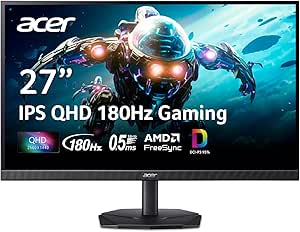 | Best Balanced QHD Pick | Screen size: 27 inches | Panel type: IPS | Resolution: 2560 × 1440 (QHD) | VIEW LATEST PRICE | See Our Full Breakdown |
| BenQ Zowie XL2566X+ 24.1-Inch 400Hz Fast TN Gaming Monitor |  | Best for Maximum Motion Clarity | Screen size: 24.1 inches | Panel type: Fast TN LCD | Resolution: 1920 × 1080 (FHD) | VIEW LATEST PRICE | See Our Full Breakdown |
| Samsung 27-inch Odyssey G5 QHD Gaming Monitor (G51F) |  | Best for Adjustable Ergonomics | Screen size: 27 inches | Display technology: VA LCD | Resolution: 2560 × 1440 (QHD) | VIEW LATEST PRICE | See Our Full Breakdown |
| AOC Q27G41ZE 27-Inch QHD 240Hz IPS Gaming Monitor |  | Best High-Refresh QHD Pick | Screen size: 27 inches | Panel type: IPS | Resolution: 2560 × 1440 (QHD) | VIEW LATEST PRICE | See Our Full Breakdown |
| Sceptre 22-Inch FHD 144Hz Gaming Monitor with Built-In Speakers |  | Best Compact Starter Pick | Screen size: 22 inches | Resolution: 1920 × 1080 (FHD) | Refresh rate: Up to 144Hz | VIEW LATEST PRICE | See Our Full Breakdown |
| Dell SE2426HG 24-Inch FHD 240Hz Gaming Monitor |  | Best for Eye Comfort | Screen size: 23.8 inches | Resolution: 1920 × 1080 | Refresh rate: 240Hz | VIEW LATEST PRICE | See Our Full Breakdown |
| Samsung 34-Inch Odyssey G5 Ultra-Wide Curved Gaming Monitor |  | Best for Ultrawide Immersion | Screen size: 34 inches | Aspect ratio: 21:9 | Resolution: 3440 × 1440 | VIEW LATEST PRICE | See Our Full Breakdown |
| ASUS TUF VG279QM5A 27-Inch 1080p 240Hz Fast IPS Gaming Monitor |  | Best for Large-Screen 240Hz Play | Screen size: 27 inches | Resolution: 1920 × 1080 | Panel: Fast IPS | VIEW LATEST PRICE | See Our Full Breakdown |
| Acer Nitro KG251Q 24.5-Inch FHD 280Hz Gaming Monitor |  | Best for High-Refresh Esports | Screen size: 24.5 inches | Resolution: 1920 × 1080 | Refresh rate: 280Hz | VIEW LATEST PRICE | See Our Full Breakdown |
| Samsung 27-Inch Odyssey OLED G5 QHD Gaming Monitor |  | Best for OLED Image Quality | Screen size: 27 inches | Resolution: 2560 × 1440 (QHD) | Display type: QD-OLED | VIEW LATEST PRICE | See Our Full Breakdown |
| competitive gaming monitor | Screen size | Resolution | Refresh rate | Response time |
|---|---|---|---|---|
| Alienware AW2525HM 24.5-Inch F | 24.5 inches | 1920 × 1080 (FHD) | 320Hz | 0.5ms minimum; 1ms most observed |
| ASUS TUF Gaming VG259QM5A 24.5 | 24.5 inches | 1920 × 1080 (Full HD) | 240Hz | 0.3ms GTG minimum |
| Acer Nitro XV272U 27-Inch QHD | 27 inches | 2560 × 1440 (QHD) | 240Hz via DisplayPort; 144Hz via HDMI | Up to 0.5ms G-to-G |
| ASUS ROG Strix XG27ACDNG 26.5- | 26.5 inches | 2560 × 1440 (QHD) | 360Hz | 0.03ms GTG |
| Samsung Odyssey G4 25-inch FHD | 25 inches | 1920 × 1080 (FHD) | 300Hz | 1ms |
| Acer Nitro KG271U 27-inch QHD | 27 inches | 2560 × 1440 (QHD) | Up to 180Hz | Up to 0.5ms GTG |
| BenQ Zowie XL2566X+ 24.1-Inch | 24.1 inches | 1920 × 1080 (FHD) | 400Hz | 1ms |
| Samsung 27-inch Odyssey G5 QHD | 27 inches | 2560 × 1440 (QHD) | 180Hz | 1ms MPRT |
| AOC Q27G41ZE 27-Inch QHD 240Hz | 27 inches | 2560 × 1440 (QHD) | 240Hz native; 260Hz overclocked as stated in title | 0.3ms MPRT |
| Sceptre 22-Inch FHD 144Hz Gami | 22 inches | 1920 × 1080 (FHD) | Up to 144Hz | 1ms |
| Dell SE2426HG 24-Inch FHD 240H | 23.8 inches | 1920 × 1080 | 240Hz | — |
| Samsung 34-Inch Odyssey G5 Ult | 34 inches | 3440 × 1440 | 165Hz | — |
| ASUS TUF VG279QM5A 27-Inch 108 | 27 inches | 1920 × 1080 | 240Hz | 0.3ms minimum |
| Acer Nitro KG251Q 24.5-Inch FH | 24.5 inches | 1920 × 1080 | 280Hz | 1ms |
| Samsung 27-Inch Odyssey OLED G | 27 inches | 2560 × 1440 (QHD) | 180Hz | 0.03ms GTG |
More Details on Our Top Picks
Alienware AW2525HM 24.5-Inch FHD 320Hz Gaming Monitor
The Alienware AW2525HM is the strongest fit here for players who prioritize motion clarity and high frame rates over resolution. Its 320Hz refresh rate exceeds the Samsung Odyssey G4’s 300Hz and the ASUS TUF VG259QM5A’s 240Hz, giving a compatible PC more frequent opportunities to show new frames. The 24.5-inch FHD IPS panel also keeps the familiar compact format favored for focused competitive play, while adaptive sync support covers both major GPU ecosystems.
The tradeoff is that 1920 × 1080 is less detailed than the Acer Nitro XV272U’s QHD image, and reaching 320Hz calls for a system capable of producing very high frame rates. The stated 0.5ms minimum applies in Extreme mode; its listed most-observed response time is 1ms. This is a fast, flexible pick, not a resolution-first upgrade.
Pros:- 320Hz refresh rate is the highest among these FHD IPS picks.
- Supports NVIDIA G-SYNC Compatible, AMD FreeSync Premium, and VESA AdaptiveSync.
- Height, tilt, swivel, and pivot adjustments help fit different desk setups.
- 99% sRGB coverage and 400-nit brightness support a versatile picture.
Cons:- FHD resolution is less sharp than the Acer Nitro XV272U’s QHD display.
- The 0.5ms figure is a minimum in Extreme mode; the most-observed response time is 1ms.
- Its high refresh rate is most useful with a PC capable of delivering very high frame rates.
Best for: Competitive shooter players with a high-frame-rate PC who want a compact FHD screen and broad adaptive-sync support.
Not ideal for: Players who favor detailed QHD visuals or whose hardware cannot drive games at very high frame rates.
- Screen size:24.5 inches
- Resolution:1920 × 1080 (FHD)
- Panel type:IPS
- Refresh rate:320Hz
- Response time:0.5ms minimum; 1ms most observed
- Adaptive sync:NVIDIA G-SYNC Compatible, AMD FreeSync Premium, VESA AdaptiveSync
- Brightness:400 nits
- Color coverage:99% sRGB
Our verdict“Choose the AW2525HM if competitive speed matters more to you than QHD detail and your PC can make use of 320Hz.”
ASUS TUF Gaming VG259QM5A 24.5-Inch Full HD 240Hz Gaming Monitor
The ASUS TUF VG259QM5A suits players who want competitive refresh rates plus extra control over motion presentation. Its 240Hz Fast IPS panel is a step below the Alienware AW2525HM’s 320Hz, but remains a high-refresh option for fast PC play. ASUS adds ELMB Sync, which combines motion-blur reduction with adaptive sync, and support for both FreeSync Premium and G-SYNC compatibility gives it broad GPU flexibility.
Compared with the Samsung Odyssey G4’s 300Hz, this model gives up some maximum refresh headroom; its appeal is the feature mix rather than leading speed. The 0.3ms response-time figure is a minimum, not a guarantee across settings, and FHD has less detail than the Acer Nitro XV272U’s QHD panel. The built-in speakers are convenient for basic audio, but their 2W-per-channel rating is not a substitute for a dedicated headset or speakers.
Pros:- 240Hz Fast IPS panel suits fast competitive games.
- ELMB Sync adds a motion-blur reduction option alongside adaptive sync.
- FreeSync Premium and G-SYNC compatibility support a range of graphics cards.
- Includes DisplayWidget Center and basic built-in speakers.
Cons:- 240Hz is below the Alienware AW2525HM’s 320Hz and Samsung Odyssey G4’s 300Hz.
- The 0.3ms response time is a stated minimum rather than a typical-use figure.
- FHD offers less image detail than the Acer Nitro XV272U’s QHD resolution.
Best for: PC players seeking a 24.5-inch 240Hz IPS monitor with adaptive sync and a motion-blur reduction mode.
Not ideal for: Players chasing the highest refresh rate in this group or those prioritizing QHD sharpness and strong built-in audio.
- Screen size:24.5 inches
- Resolution:1920 × 1080 (Full HD)
- Panel type:Fast IPS
- Refresh rate:240Hz
- Response time:0.3ms GTG minimum
- Adaptive sync:AMD FreeSync Premium; G-SYNC compatible
- Brightness:300 cd/m²
- Warranty:3 years
Our verdict“Pick the VG259QM5A if you want a feature-rich 240Hz FHD monitor and value ELMB Sync more than maximum refresh rate.”
Acer Nitro XV272U 27-Inch QHD 240Hz IPS Gaming Monitor
The Acer Nitro XV272U is the clearest choice for players unwilling to trade QHD detail for a high refresh rate. Its 2560 × 1440 IPS panel gives a sharper 27-inch image than the FHD Alienware AW2525HM, while its 240Hz DisplayPort mode still supports fast competitive play. The stand’s height, swivel, tilt, and pivot adjustments also make it easier to set a comfortable viewing position than a basic fixed stand.
There is a meaningful connection caveat: 240Hz is available over DisplayPort, while HDMI is limited to 144Hz. That makes cable and device choice more consequential than with the ASUS ROG Strix XG27ACDNG, which pairs QHD with 360Hz and a QD-OLED panel, though the Acer avoids making OLED its central tradeoff. Its built-in speakers are modest 2W units, and HDR DisplayHDR 400 should not be mistaken for high-end HDR performance.
Pros:- QHD resolution provides more detail than the FHD Alienware AW2525HM.
- Supports up to 240Hz through DisplayPort.
- AMD FreeSync Premium helps reduce tearing during variable frame rates.
- Stand offers height, tilt, swivel, and pivot adjustment.
Cons:- HDMI refresh rate is limited to 144Hz.
- The 2W built-in speakers are suited to basic audio rather than immersive play.
- Its 240Hz ceiling is below the ASUS ROG Strix XG27ACDNG’s 360Hz.
Best for: Competitive players who want a sharp 27-inch QHD image without giving up a 240Hz DisplayPort refresh rate.
Not ideal for: Console or HDMI-first users who expect 240Hz, or players seeking the highest refresh rates and OLED contrast.
- Screen size:27 inches
- Resolution:2560 × 1440 (QHD)
- Panel type:IPS
- Refresh rate:240Hz via DisplayPort; 144Hz via HDMI
- Response time:Up to 0.5ms G-to-G
- Adaptive sync:AMD FreeSync Premium
- Brightness:400
- Stand adjustments:Tilt, 4.7-inch height adjustment, 360° swivel, ±90° pivot
Our verdict“Choose the Nitro XV272U if you want QHD detail and 240Hz competitive play through DisplayPort in one monitor.”
ASUS ROG Strix XG27ACDNG 26.5-Inch QHD 360Hz QD-OLED Gaming Monitor
The ASUS ROG Strix XG27ACDNG is the premium choice for players who want both very high refresh and QHD image quality. Its 360Hz QHD QD-OLED panel outpaces the Acer Nitro XV272U’s 240Hz and adds OLED contrast, a 0.03ms stated response time, and 99% DCI-P3 coverage. For fast games, that combination means rapid refresh without settling for the FHD resolution used by the Alienware AW2525HM and Samsung Odyssey G4.
That advantage comes with OLED ownership considerations. ASUS includes a custom heatsink and OLED Care+ tools to reduce burn-in risk, plus a three-year warranty listing burn-in coverage, but these measures do not make static desktop elements irrelevant. The monitor’s headline speed also calls for powerful hardware to feed it. Buyers seeking a straightforward competitive screen may prefer the Acer’s IPS panel; this model makes more sense when premium contrast and color matter alongside speed.
Pros:- 360Hz QHD refresh combines high speed with more detail than FHD models.
- QD-OLED panel offers high contrast and 99% DCI-P3 color coverage.
- 0.03ms stated response time is exceptionally low.
- OLED Care+, a custom heatsink, and listed burn-in warranty coverage address OLED upkeep concerns.
Cons:- OLED still requires attention to prolonged static content despite its protection features.
- A powerful PC is needed to make practical use of 360Hz at QHD.
- It is a more specialized premium display than the IPS Acer Nitro XV272U.
Best for: Enthusiast PC gamers who want QHD detail, OLED contrast, and a 360Hz refresh rate for competitive and visually rich games.
Not ideal for: Budget-conscious players, users with static on-screen elements for long sessions, or systems unable to produce high frame rates at QHD.
- Screen size:26.5 inches
- Resolution:2560 × 1440 (QHD)
- Panel type:QD-OLED
- Refresh rate:360Hz
- Response time:0.03ms GTG
- Color gamut:99% DCI-P3
- Adaptive sync:FreeSync Premium Pro; G-SYNC Compatible
- Warranty:3 years, with burn-in coverage stated in product details
Our verdict“Choose the XG27ACDNG if you want premium QD-OLED image quality without giving up 360Hz competitive performance.”
Samsung Odyssey G4 25-inch FHD Gaming Monitor
The Samsung Odyssey G4 lands between the ASUS TUF VG259QM5A and Alienware AW2525HM on refresh rate, offering 300Hz in a familiar 25-inch FHD format. Its Fast IPS panel, 1ms response time, and support for both G-SYNC compatibility and FreeSync Premium make it a practical fit for players who want a fast screen without committing to a QHD resolution. The adjustable stand is a particular plus: height, tilt, swivel, and pivot give more positioning flexibility than a simple tilt stand.
Compared with the Alienware, it gives up 20Hz; compared with the ASUS TUF, it adds 60Hz. The Samsung’s 300Hz ceiling is still below the Alienware’s 320Hz, and its 300 cd/m² brightness and FHD resolution are less suited to buyers seeking vivid HDR or fine image detail. HDR10 support is listed, but it does not change the basic tradeoff: this is a competitive-speed monitor first, not a QHD display.
Pros:- 300Hz refresh rate sits above the ASUS TUF VG259QM5A’s 240Hz.
- Fast IPS panel and 1ms response time suit quick gameplay.
- G-SYNC compatibility and AMD FreeSync Premium support variable refresh.
- Stand supports tilt, pivot, swivel, and height adjustment.
Cons:- FHD resolution is less detailed than the QHD Acer Nitro XV272U.
- 300Hz is lower than the Alienware AW2525HM’s 320Hz.
- 300 cd/m² brightness limits headroom compared with brighter options.
Best for: Competitive players who want a 300Hz FHD IPS monitor with a fully adjustable stand and support for both major adaptive-sync platforms.
Not ideal for: Players who prioritize QHD detail, higher brightness, or the fastest refresh rate available in this lineup.
- Screen size:25 inches
- Resolution:1920 × 1080 (FHD)
- Panel type:Fast IPS
- Refresh rate:300Hz
- Response time:1ms
- Brightness:300 cd/m²
- HDR:HDR10
- Stand adjustments:Tilt, pivot, swivel, height
Our verdict“Pick the Odyssey G4 if you want a well-adjustable 300Hz FHD screen and do not need QHD resolution.”
Acer Nitro KG271U 27-inch QHD 180Hz IPS Gaming Monitor
The Acer Nitro KG271U balances resolution and speed for players who want more detail than a 1080p esports screen without giving up a high refresh rate. Its 27-inch QHD IPS panel runs at up to 180Hz, making it a more versatile fit for mixed competitive and visually rich games than the Sceptre E225W-FW144G, which is smaller and limited to FHD at 144Hz. AMD FreeSync can help reduce tearing, while the wide stated color coverage also suits play that extends beyond esports.
The tradeoff is that 180Hz sits below the AOC Q27G41ZE’s 240Hz, so dedicated high-frame-rate players have a faster QHD alternative. The Acer’s 250 cd/m² brightness may also be limiting in bright rooms, and the supplied data does not state how many DisplayPort connections it has. I’d choose it for resolution and general-purpose balance, not for the highest possible competitive refresh rate.
Pros:- QHD resolution on a 27-inch IPS panel gives games more detail and screen space than FHD options.
- Up to 180Hz refresh rate offers smoother motion than 144Hz entry-level models such as the Sceptre E225W-FW144G.
- AMD FreeSync helps reduce tearing when frame rates fluctuate.
- DCI-P3 95% coverage, HDR10 support, and built-in speakers add versatility beyond competitive play.
Cons:- Its 180Hz ceiling is below the AOC Q27G41ZE’s 240Hz native refresh rate.
- Listed brightness of 250 cd/m² may be less suitable for bright gaming spaces.
- The supplied specifications do not identify the number of DisplayPort connections.
Best for: Players who want a 27-inch QHD display for both competitive matches and detailed single-player games, with FreeSync support.
Not ideal for: Esports players prioritizing the highest refresh rate, or buyers gaming in a bright room who need a higher listed brightness.
- Screen size:27 inches
- Panel type:IPS
- Resolution:2560 × 1440 (QHD)
- Refresh rate:Up to 180Hz
- Response time:Up to 0.5ms GTG
- Adaptive sync:AMD FreeSync
- Brightness:250 cd/m²
- Ports:DisplayPort, HDMI
Our verdict“Choose the KG271U if you want QHD detail and a fast IPS refresh rate in one flexible monitor, rather than the highest refresh rate available.”
BenQ Zowie XL2566X+ 24.1-Inch 400Hz Fast TN Gaming Monitor
The BenQ Zowie XL2566X+ is the specialist pick here for players who put motion clarity and refresh rate ahead of resolution. Its 400Hz refresh rate, Fast TN panel, and DyAc 2 blur-reduction technology are aimed at keeping fast movement easier to track in competitive games. Compared with the QHD AOC Q27G41ZE, the BenQ gives up both screen resolution and size, but offers a much higher stated refresh rate and a motion-focused feature set.
That trade is most sensible for players whose systems can deliver very high frame rates and who prefer a compact, 24.1-inch esports format. The FHD resolution is less detailed than QHD, and TN technology can have narrower viewing angles than the IPS panels on the Acer Nitro KG271U and AOC. I’d skip it for visually rich games or shared viewing; its strengths are focused on fast, solo competitive play.
Pros:- 400Hz refresh rate targets extremely fluid motion when the gaming system can produce high frame rates.
- DyAc 2 is designed to reduce perceived motion blur during fast movement.
- Fast TN panel and 1ms response-time specification suit competitive play.
- FreeSync support can help reduce tearing when frame rates vary.
Cons:- FHD provides less image detail than the QHD Acer Nitro KG271U and AOC Q27G41ZE.
- TN panel viewing angles may be narrower than those of the IPS alternatives.
- The 400Hz capability is most useful with hardware capable of sustaining very high frame rates.
Best for: Competitive players with a high-frame-rate PC who prioritize motion clarity and a compact esports display over QHD detail.
Not ideal for: Players who want sharper QHD visuals, wider viewing angles, or a larger screen for mixed-use gaming.
- Screen size:24.1 inches
- Panel type:Fast TN LCD
- Resolution:1920 × 1080 (FHD)
- Refresh rate:400Hz
- Response time:1ms
- Motion technology:DyAc 2
- Adaptive sync:FreeSync
- Brightness:320 cd/m²
- Connectivity:HDMI, DisplayPort, headphone jack
Our verdict“Pick the XL2566X+ if motion clarity and a 400Hz ceiling matter more to you than resolution, screen size, or broad viewing angles.”
Samsung 27-inch Odyssey G5 QHD Gaming Monitor (G51F)
The Samsung Odyssey G5 G51F pairs a 27-inch QHD display with 180Hz and a stand that adjusts for height, tilt, and pivot. That ergonomic range is its clearest distinction from the Acer Nitro KG271U, whose supplied stand details list tilt but not height or pivot. For a competitive setup where screen position changes between players or desk arrangements, those adjustments can make daily use more comfortable without adding a separate monitor arm.
The VA panel’s 3000:1 contrast ratio gives darker scenes more depth than the 1000:1 IPS specifications listed for the Acer and AOC, while FreeSync and HDR10 support round out the feature set. The compromise is that the data specifies a 1ms MPRT response rather than a GTG figure, so it is not directly comparable to every response-time claim in this group. The listed 240-volt requirement also deserves a compatibility check before purchase.
Pros:- QHD resolution and 180Hz refresh rate balance image detail with responsive gameplay.
- Height, pivot, and tilt adjustments offer more positioning flexibility than the Acer Nitro KG271U’s listed tilt adjustment.
- 3000:1 contrast ratio is higher than the listed 1000:1 ratios on the IPS Acer and AOC models.
- AMD FreeSync helps reduce tearing when frame rates fluctuate.
Cons:- Its 180Hz refresh rate is below the AOC Q27G41ZE’s 240Hz native specification.
- The listed response time is 1ms MPRT, which is not directly interchangeable with GTG response-time figures.
- The stated 240-volt requirement may not suit every gaming setup.
Best for: Players who want QHD at 180Hz and need a height-adjustable, pivoting stand for a flexible desk setup.
Not ideal for: Buyers who need a clearly documented standard-voltage setup, or competitive players seeking a refresh rate above 180Hz.
- Screen size:27 inches
- Display technology:VA LCD
- Resolution:2560 × 1440 (QHD)
- Refresh rate:180Hz
- Response time:1ms MPRT
- Contrast ratio:3000:1
- Adaptive sync:AMD FreeSync
- Stand adjustments:Tilt, pivot, and height
- Connectivity:DisplayPort, HDMI
Our verdict“Choose the Odyssey G5 G51F if QHD speed and a highly adjustable stand matter more than pursuing the lineup’s highest refresh rates.”
AOC Q27G41ZE 27-Inch QHD 240Hz IPS Gaming Monitor
The AOC Q27G41ZE is the strongest fit for players who want QHD resolution and a refresh rate above 180Hz without moving to the BenQ Zowie XL2566X+’s FHD format. Its 27-inch IPS panel is listed at 240Hz native, with 260Hz overclocking also mentioned in the title. That makes it a more speed-focused QHD alternative to the Acer Nitro KG271U, while retaining the extra pixel detail that benefits target visibility and game environments.
Adaptive-Sync, gaming presets, and Shadow Control give players tools to tune the display for fast matches. Still, I’d treat 240Hz as the clearest stated baseline, since the overclocked figure conflicts with the detailed specification. The stand only lists tilt, unlike the Samsung Odyssey G5 G51F’s height, pivot, and tilt adjustments. Its glossy finish may also suit some rooms less well than the matte BenQ or Samsung screens.
Pros:- QHD IPS display combines detailed visuals with a 240Hz native refresh-rate specification.
- Adaptive-Sync support and gaming controls such as Shadow Control are geared toward fast-paced play.
- DisplayPort 1.4 and two HDMI 2.0 inputs provide multiple connection options.
- The 27-inch format offers more screen area than the BenQ Zowie XL2566X+.
Cons:- The 260Hz overclocked figure appears in the title, while detailed product information specifies 240Hz.
- Stand adjustment is limited to tilt in the supplied data, unlike the Samsung Odyssey G5 G51F’s height and pivot options.
- Glossy finish may be less suitable for rooms with distracting reflections.
Best for: Competitive players seeking a 27-inch QHD IPS monitor with a higher native refresh rate than 180Hz models.
Not ideal for: Buyers who need extensive stand adjustments, prefer a matte screen, or require an unambiguous refresh-rate specification.
- Screen size:27 inches
- Panel type:IPS
- Resolution:2560 × 1440 (QHD)
- Refresh rate:240Hz native; 260Hz overclocked as stated in title
- Response time:0.3ms MPRT
- Adaptive sync:Adaptive-Sync; NVIDIA G-SYNC Compatible as stated in product text
- Brightness:300 nits
- Screen finish:Glossy
- Ports:1 × DisplayPort 1.4, 2 × HDMI 2.0, audio out
Our verdict“Choose the Q27G41ZE if you want a fast QHD IPS screen and can work with a tilt-only stand and the stated 240Hz native baseline.”
Sceptre 22-Inch FHD 144Hz Gaming Monitor with Built-In Speakers
The Sceptre E225W-FW144G is the compact, straightforward choice for players starting with high-refresh gaming or fitting a monitor into a limited desk space. Its 22-inch FHD screen and up-to-144Hz refresh rate offer a clear step up from standard 60Hz displays, while FreeSync can help limit tearing when frame rates move around. Built-in speakers and Blue-Light Shift also cover basic convenience needs without adding separate audio equipment or relying only on system-level eye-care settings.
This is a more accessible competitive format than the larger QHD Acer Nitro KG271U, but it gives up both resolution and refresh-rate headroom to that model—and far more to the BenQ Zowie XL2566X+. The single listed HDMI port can restrict connected devices, and the built-in speakers are best treated as basic audio rather than a substitute for a headset. I’d choose it for a small, simple setup, not for a player chasing tournament-level motion performance.
Pros:- Up-to-144Hz refresh rate and 1ms response-time specification suit an entry-level competitive setup.
- Compact 22-inch screen fits smaller desks more readily than the 27-inch QHD monitors in this roundup.
- FreeSync can help reduce tearing when gameplay frame rates vary.
- Built-in speakers and Blue-Light Shift add basic convenience without extra equipment.
Cons:- FHD resolution and 144Hz refresh rate offer less detail and speed than the Acer Nitro KG271U.
- Only one HDMI port is listed, limiting connection flexibility.
- Built-in speakers may not meet the needs of players who rely on clear positional audio.
Best for: New competitive players, students, or small-desk users who want a compact FHD screen with 144Hz support and built-in speakers.
Not ideal for: Players seeking QHD detail, a refresh rate above 144Hz, multiple HDMI connections, or dedicated-quality audio.
- Screen size:22 inches
- Resolution:1920 × 1080 (FHD)
- Refresh rate:Up to 144Hz
- Response time:1ms
- Adaptive sync:FreeSync
- Screen finish:Matte
- Contrast ratio:2000:1
- Ports:1 HDMI port, DisplayPort
- Weight:7 pounds
Our verdict“Pick the Sceptre if you need a compact, simple 144Hz starter monitor, but choose a faster QHD option for more demanding competitive play.”
Dell SE2426HG 24-Inch FHD 240Hz Gaming Monitor
The Dell SE2426HG pairs a compact 23.8-inch screen with 240Hz refresh, making it a practical fit for competitive players who want smooth motion without moving to a larger display. Its IPS panel and 99% sRGB coverage also give it broader viewing angles and more color flexibility than the TN-focused BenQ Zowie XL2566X+, though the BenQ targets even higher refresh rates. FreeSync Premium helps reduce tearing when frame rates fluctuate, and the listed eye-comfort certification adds a useful point of distinction for long sessions. The tradeoff is 1080p resolution, which looks less detailed than the QHD Acer Nitro XV272U. Response time is also listed inconsistently as 0.5ms and 5ms, so I would not choose it based on the lower figure alone.
Pros:- 240Hz refresh rate supports fluid motion in fast competitive games.
- IPS panel and 99% sRGB coverage offer wide viewing angles and useful color range.
- FreeSync Premium helps reduce tearing when frame rates vary.
- TÜV Rheinland 3-star eye comfort certification is a differentiator for extended sessions.
Cons:- Full HD resolution is less detailed than the QHD Acer Nitro XV272U.
- Response time is listed as both 0.5ms and 5ms, making the advertised figure ambiguous.
Best for: Competitive players seeking a compact 240Hz IPS display with wide viewing angles and documented eye-comfort features.
Not ideal for: Players who want sharper QHD detail or a clearly specified response-time figure before choosing a monitor.
- Screen size:23.8 inches
- Resolution:1920 × 1080
- Refresh rate:240Hz
- Panel:IPS
- Adaptive sync:AMD FreeSync Premium
- Color coverage:99% sRGB
- Ports:2 HDMI, DisplayPort 1.4
- Warranty:1-Year Advanced Exchange Service
Our verdict“Choose the Dell for compact 240Hz IPS gaming and eye-comfort features, but skip it if you need QHD sharpness or unambiguous response-time specs.”
Samsung 34-Inch Odyssey G5 Ultra-Wide Curved Gaming Monitor
The Samsung Odyssey G5 34-inch takes a different route from the roundup’s faster, more compact esports displays: its 21:9 QHD ultrawide screen and aggressive 1000R curve put peripheral game space front and center. At 165Hz, it is still suited to responsive play, and FreeSync Premium can smooth variable frame rates, but it gives up refresh headroom to the 240Hz Dell SE2426HG and the 280Hz Acer Nitro KG251Q. The 3440 × 1440 resolution offers a broader view than those Full HD models, while the VA panel’s listed 1900:1 contrast favors darker scenes. Its 250 cd/m² brightness and 72% color gamut are less compelling for bright rooms or color-focused work, and a single HDMI port limits convenient connections.
Pros:- 34-inch 21:9 screen expands horizontal game space beyond standard 16:9 monitors.
- 1000R curve wraps the wide display around the viewing position.
- 3440 × 1440 resolution provides more detail than the Full HD Dell SE2426HG.
- 165Hz refresh and FreeSync Premium support smoother play with variable frame rates.
Cons:- 165Hz trails the 240Hz Dell SE2426HG and 280Hz Acer Nitro KG251Q for high-speed competitive play.
- 250 cd/m² brightness may feel limited in bright rooms.
- Only one HDMI port is listed, and the 72% color gamut is modest.
Best for: Players who favor racing, simulation, and other games that benefit from a wide field of view, and who have room for a large curved screen.
Not ideal for: Esports players prioritizing the highest refresh rates, or buyers who need multiple HDMI connections or a bright display.
- Screen size:34 inches
- Aspect ratio:21:9
- Resolution:3440 × 1440
- Panel:VA LCD
- Curvature:1000R
- Refresh rate:165Hz
- Adaptive sync:AMD FreeSync Premium
- Ports:1 HDMI, 1 USB, 1 component output
Our verdict“Pick the Odyssey G5 for curved ultrawide immersion in supported games, not for maximum refresh rate or a bright, connection-rich setup.”
ASUS TUF VG279QM5A 27-Inch 1080p 240Hz Fast IPS Gaming Monitor
The ASUS TUF VG279QM5A brings a 240Hz refresh rate to a 27-inch Fast IPS panel, giving players a larger view than the 24-inch Dell SE2426HG while keeping motion-focused specs in the same class. FreeSync Premium and G-SYNC compatibility make it a flexible match for different graphics setups; ELMB Sync adds a blur-reduction option alongside adaptive sync. That combination gives it a more gaming-specific motion toolkit than the Dell, and its three-year warranty is longer than Dell’s listed one-year service. The catch is that 1080p stretches across a larger screen, so fine detail is less crisp than on the QHD Acer Nitro XV272U. Its 0.3ms response time is a minimum advertised figure, not a guarantee of identical performance in every setting.
Pros:- 240Hz refresh rate supports fast motion in competitive games.
- Fast IPS panel with 99% sRGB coverage balances gaming responsiveness and color range.
- FreeSync Premium and G-SYNC compatibility suit a range of graphics cards.
- ELMB Sync provides an additional option for reducing motion blur and tearing.
Cons:- Full HD resolution is less sharp at 27 inches than the QHD Acer Nitro XV272U.
- The listed 0.3ms response time is a minimum specification and may not describe typical performance.
Best for: Players who want a 27-inch view, 240Hz motion, and both AMD and NVIDIA adaptive-sync compatibility for competitive gaming.
Not ideal for: Buyers who prioritize sharp text and fine image detail at 27 inches, or who want a QHD panel.
- Screen size:27 inches
- Resolution:1920 × 1080
- Panel:Fast IPS
- Refresh rate:240Hz
- Response time:0.3ms minimum
- Adaptive sync:AMD FreeSync Premium; G-SYNC compatible
- Color gamut:99% sRGB
- Warranty:3 years
Our verdict“Choose the ASUS for a large 240Hz IPS screen with broad sync support, unless QHD detail matters more than refresh speed.”
Acer Nitro KG251Q 24.5-Inch FHD 280Hz Gaming Monitor
For players who want to push refresh rate without moving to a larger screen, the Acer Nitro KG251Q offers 280Hz at 24.5 inches—a step above the 240Hz Dell SE2426HG and ASUS TUF VG279QM5A. Its compact Full HD format keeps the focus on fast, readable play rather than high-resolution detail, and FreeSync Premium can help reduce tearing when frame delivery varies. The matte finish and near-bezel-less design suit multi-monitor setups, while HDR10 and listed contrast above 3000:1 add potential appeal for darker scenes. But the 250 cd/m² brightness is limited for bright environments, and the supplied information does not specify stand adjustments. Unlike the IPS Dell and ASUS, the Acer’s display type is listed only as LCD, so panel characteristics are less fully defined.
Pros:- 280Hz refresh rate exceeds the 240Hz Dell SE2426HG and ASUS TUF VG279QM5A.
- 24.5-inch Full HD size keeps the display focused on competitive play.
- FreeSync Premium helps reduce tearing and stutter.
- Matte, near-bezel-less design works well for side-by-side monitor arrangements.
Cons:- Full HD resolution is less detailed than the QHD Acer Nitro XV272U.
- 250 cd/m² brightness may be limiting in bright rooms.
- Stand adjustability and a more specific panel type are not provided.
Best for: Competitive players seeking a compact Full HD monitor with refresh above 240Hz for fast-paced games.
Not ideal for: Buyers who want QHD detail, stronger listed brightness, or confirmed stand-adjustment options.
- Screen size:24.5 inches
- Resolution:1920 × 1080
- Refresh rate:280Hz
- Response time:1ms
- Adaptive sync:AMD FreeSync Premium
- Brightness:250 cd/m²
- HDR:HDR10
- Ports:2 HDMI, DisplayPort
Our verdict“The Acer is a strong fit for players chasing refresh rates above 240Hz in a compact Full HD format, provided its brightness and unspecified stand features suit their setup.”
Samsung 27-Inch Odyssey OLED G5 QHD Gaming Monitor
The Samsung Odyssey OLED G5 is the image-quality choice in this group: its QD-OLED panel, QHD resolution, and listed 1,000,000:1 contrast aim for deep blacks and vivid contrast that the IPS Dell SE2426HG and VA Odyssey G5 ultrawide cannot match in the same way. A 180Hz refresh rate and 0.03ms GTG response time still make it a serious gaming display, though the 240Hz ASUS TUF VG279QM5A and 280Hz Acer Nitro KG251Q give competitive players more refresh headroom. G-SYNC compatibility and AMD FreeSync support broaden graphics-card pairing options, while its matte finish can reduce reflections. OLED Safeguard features address burn-in concerns, but they do not change the fact that OLED care remains part of ownership. No built-in speakers or adjustable stand features are specified.
Pros:- QD-OLED panel and QHD resolution deliver strong contrast with more detail than the Full HD Dell SE2426HG.
- 180Hz refresh and 0.03ms GTG response time support responsive gameplay.
- G-SYNC compatibility and AMD FreeSync support a range of graphics cards.
- Matte screen and OLED Safeguard features address glare and burn-in concerns.
Cons:- 180Hz is below the 240Hz ASUS TUF VG279QM5A and 280Hz Acer Nitro KG251Q.
- No built-in speakers or adjustable stand features are listed.
- OLED Safeguard features do not remove the need to account for OLED burn-in care.
Best for: Players who want QHD resolution, OLED contrast, and near-instant listed response time for a mix of competitive games and visually rich titles.
Not ideal for: Esports players who prioritize the highest available refresh rates, or buyers who need confirmed stand adjustments and built-in speakers.
- Screen size:27 inches
- Resolution:2560 × 1440 (QHD)
- Display type:QD-OLED
- Refresh rate:180Hz
- Response time:0.03ms GTG
- Contrast ratio:1,000,000:1
- Sync compatibility:NVIDIA G-SYNC Compatible; AMD FreeSync
- Screen finish:Matte
Our verdict“Choose the Samsung OLED G5 for QHD OLED contrast and fast response, but favor the faster ASUS or Acer if refresh rate is your main priority.”
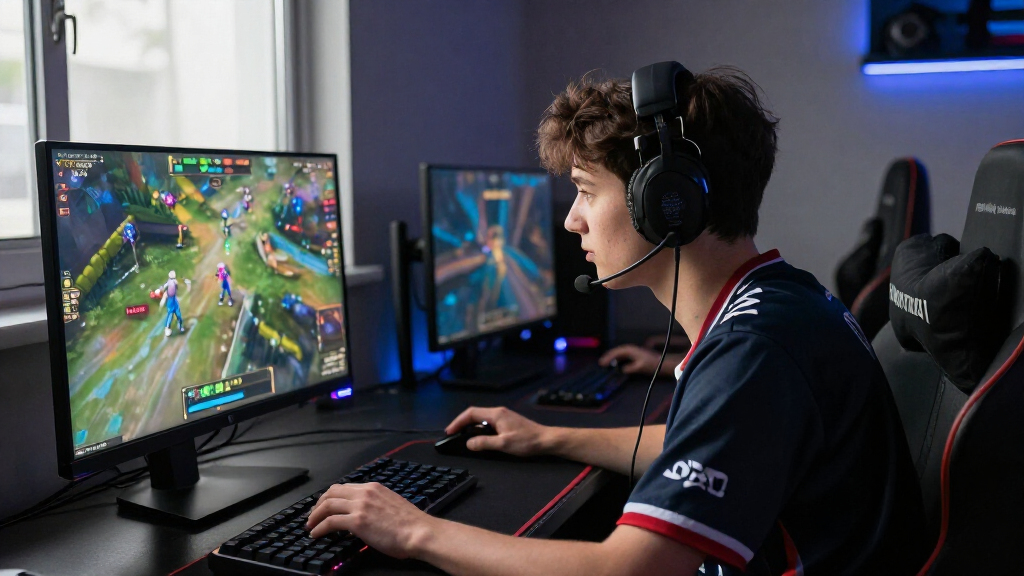
How We Picked
I ranked these monitors around competitive play rather than treating the highest specification as an automatic win. Refresh rate, resolution, panel type, and screen size all affect how quickly motion reads, how much detail is visible, and how demanding the display is on a PC. I gave extra weight to combinations that make sense for fast multiplayer games, such as FHD at high refresh rates or QHD paired with a suitably fast panel.
The order also reflects tradeoffs: the top spots favor clear competitive use cases and a practical balance of speed, screen format, and image quality. Models with higher refresh rates or OLED contrast can be stronger for specific players, but those advantages do not make them the best fit for everyone. I also considered versatility and whether a monitor’s format, such as an ultrawide or a compact 22-inch screen, supports or complicates competitive play. Without verified comparative measurements for every model, I distinguish products by their stated specifications and intended strengths rather than claiming tested performance.
Factors to Consider When Choosing Competitive Gaming Monitors
Choosing a competitive monitor is less about chasing the largest number on a spec sheet and more about matching the screen to your games, PC, and preferred viewing distance. These broader checks can prevent a costly mismatch.
Match Refresh Rate to Your Actual Frame Rate
A high refresh rate can make motion updates appear more frequently, but the benefit depends on your PC producing enough frames and your games supporting them. Before paying for 360Hz or 400Hz, check typical frame rates in the titles you play at your intended settings. If your system often falls well below the monitor’s refresh rate, a lower-refresh option with a resolution or panel you prefer may be a better balance. Competitive players on less powerful hardware may get more from an FHD screen than from QHD if the lower pixel load helps maintain higher frame rates. Also check how the monitor handles variable refresh and which connection supports its maximum refresh rate. Treat the headline number as a capability, not a promise of smoother play in every setup.
Choose Resolution for Both Clarity and PC Load
FHD at 24 or 25 inches is a common speed-first format: it keeps the image manageable to scan and asks less of the graphics card than QHD. QHD at 27 inches provides more detail and desktop room, but rendering those extra pixels can lower frame rates unless the PC has sufficient headroom. For competitive games, sharpness can help with distant details, yet stable performance may matter more than added resolution. Consider whether you also use the monitor for single-player games, school, or work, where QHD can feel more rewarding. A frequent mistake is buying a sharper display without checking whether the graphics card can sustain the frame rates you want. Pick the resolution as a system decision, not a standalone upgrade.
Understand Panel Tradeoffs Before Paying for OLED
Fast IPS, TN, and OLED each prioritize a different mix of motion, color, and contrast. TN models such as the BenQ in this lineup lean toward high-refresh competitive use, while IPS models offer a broader all-round image character. OLED and QD-OLED can deliver deep blacks and vivid contrast, adding visual impact beyond esports titles. Their advantages do not automatically improve reaction time, and long sessions with static interface elements may make OLED care features and usage habits relevant. Check warranty terms and the manufacturer’s display-care guidance before choosing an OLED for mixed desktop use. Pay extra for OLED when its image quality matters to you, not just because it appears on a gaming monitor.
Keep Screen Size and Shape Aligned With Your Play Style
A 24- to 25-inch screen can keep the full action close to the center of your view, which suits players who sit near the display and favor focused competitive sessions. A 27-inch model gives more room for QHD detail, but may require a different viewing distance or more eye movement. Ultrawide screens expand the horizontal view and can be engaging for supported games, yet some competitive titles and play styles are built around standard aspect ratios. Check game compatibility and tournament or team preferences if you compete in organized play. The compact 22-inch option can fit tight desks, though its smaller image may be less comfortable for mixed use. Measure your desk depth and viewing distance before choosing based on diagonal size alone.
Check Setup Details That Affect Everyday Use
Refresh rate and resolution are only useful if your computer and cable can deliver them together. Verify the monitor’s input specifications, the graphics card’s available ports, and any resolution limits attached to individual connections. Stand adjustment matters too: height, tilt, and swivel can help place the screen at a comfortable angle during long sessions, while a VESA mount may offer a workaround if the included stand is restrictive. Built-in speakers can handle basic audio, but they rarely replace a headset for positional cues or team communication. Look at the on-screen controls and any configuration software if you expect to switch frequently between competitive and general-use settings. These practical details can matter more each day than a small difference in peak refresh rate.
Frequently Asked Questions
Should I choose a 400Hz FHD monitor or a 360Hz QHD OLED monitor?
Choose the 400Hz FHD BenQ Zowie XL2566X+ if your main priority is fast competitive play and your PC can produce very high frame rates at FHD. The 360Hz QHD ASUS ROG Strix XG27ACDNG is a better fit if you also value sharper detail, OLED contrast, and a more visually rich experience. The difference is not only 400Hz versus 360Hz: resolution and panel technology change the PC demands and image character. Check your frame rates in your most-played games before making the call. If you cannot use the higher refresh capacity consistently, QHD or OLED benefits may matter more to you.
Is a 27-inch QHD monitor a good choice for competitive gaming?
It can be, especially if you want more detail for mixed gaming and general use, but your PC must be able to maintain strong frame rates at QHD. This roundup includes QHD options at 180Hz, 240Hz, and 360Hz, so the label alone does not describe the monitor’s speed profile. A 27-inch screen may also take up more of your field of view at close range than a 24.5-inch FHD display. Consider your seating distance and whether you favor a broad view of the screen or a tighter focus on the action. For esports-first play on a less powerful system, FHD may be the more practical choice.
Does a higher refresh rate help if my PC cannot reach it?
A monitor can display refreshes only as often as the game and PC provide new frames, so a system far below the monitor’s maximum will not make full use of that ceiling. A high-refresh screen may still suit a future PC upgrade, but it should not take priority over a stable frame rate today. Check real performance in the games you play rather than relying on a graphics card’s general reputation. If your frame rate varies, variable-refresh support can help reduce visible tearing or uneven presentation when compatible with your setup. Choose the screen around your likely sustained performance, not an occasional peak.
Is OLED worth choosing for competitive games?
OLED can be worthwhile if you want deep blacks, strong contrast, and vivid visuals alongside a high refresh rate, as shown by the ASUS ROG Strix and Samsung Odyssey OLED options. Those image qualities can improve enjoyment, but they do not by themselves guarantee a competitive advantage. Think about how much time you spend in games with static HUD elements or on a desktop, and read the maker’s guidance on panel care and warranty coverage. A fast IPS or TN monitor can be a more straightforward choice if speed-focused play is your only priority. Pay for OLED when its visual strengths matter across your use, not only as a spec-sheet upgrade.
Can an ultrawide monitor work for competitive gaming?
It can work well for games that support ultrawide resolutions and suit a broad horizontal view, but it is not the safest format for every competitive setup. Some games restrict aspect ratios or present their competitive modes differently, and a wider screen can require more eye movement during fast action. Check the specific titles you play and whether your preferred competitive settings support the monitor’s native aspect ratio. The Samsung 34-inch Odyssey G5 is the specialized ultrawide pick here, while the 24- to 27-inch models fit more conventional play. If you compete in organized leagues, confirm any display-format rules before buying.
Conclusion
For most speed-focused players, I recommend the Alienware AW2525HM as best overall: its 24.5-inch FHD format and 320Hz refresh rate make a clear competitive-focused pairing. The Acer Nitro KG251Q is my best value-style pick for shoppers who want a high-refresh FHD option, while the ASUS ROG Strix XG27ACDNG is best premium for players who want QHD, 360Hz, and QD-OLED in one display. Beginners choosing a first dedicated gaming screen can start with the ASUS TUF VG259QM5A and its straightforward 24.5-inch FHD, 240Hz format. For a specific need, choose the BenQ Zowie XL2566X+ for its 400Hz competitive focus, the Sceptre 22-inch for a compact desk, or the Samsung 34-inch Odyssey G5 for supported ultrawide play. Match your final choice to your PC’s frame rates, desk, and game library rather than buying the biggest refresh-rate number available.