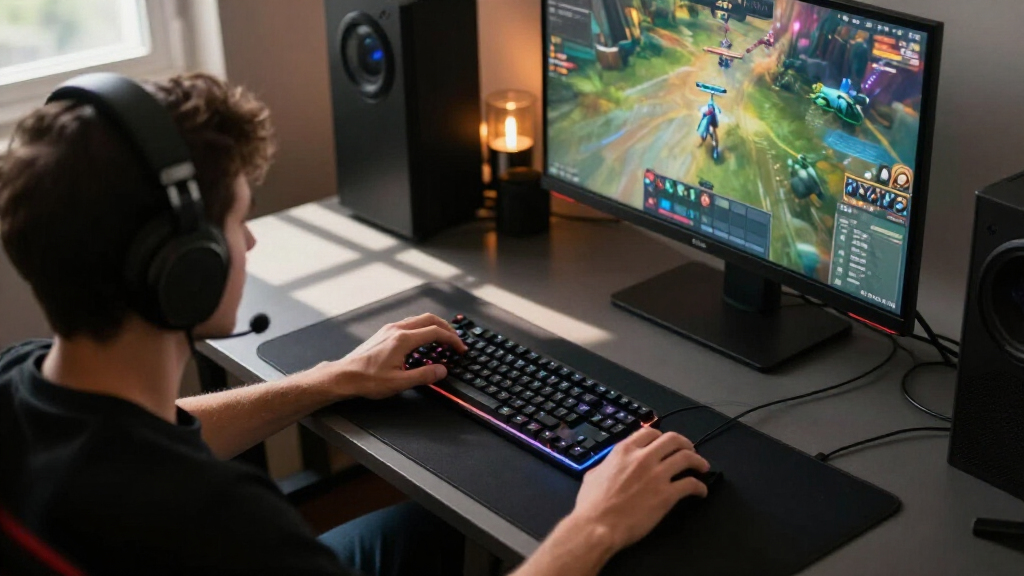

For gaming headsets for competitive play, I’d start with the Razer BlackShark V3 Wireless for players prioritizing a wireless setup, while the Logitech G PRO X and HyperX Cloud III stand out as wired alternatives. The comparison comes down to more than surround sound: dependable positional cues, clear team chat, fit during long sessions, and platform compatibility all affect the choice. Wireless freedom can simplify a setup, while wired models avoid charging and can offer a more straightforward connection. Cheaper headsets may cover the basics but often involve compromises in materials or controls. Read on for the full breakdown and a guide to choosing around your game, platform, and play style.

Play games on Amazon Luna for your game nights, included with Prime
- A rotating selection of games, no download needed
- Play on TV, laptop or phone
- Fast, free delivery for your gear, too
Complete the kit


Key Takeaways
- The shortlist splits by connection: the Razer BlackShark V3 Wireless and HyperX Cloud III S Wireless suit buyers seeking wireless play, while the SteelSeries Arctis Prime, Logitech G PRO X, and HyperX Cloud III offer wired options.
- Competitive audio is not the same as surround effects: a headset’s fit, stereo imaging, and game-specific audio settings can matter more than a virtual surround feature on a product listing.
- Several models target similar wired needs: compare the Cloud III, Cloud II, and Razer BlackShark V2 X by comfort, connection, and included controls rather than assuming their names imply identical performance.
- Budget and entry-level choices call for closer compatibility checks: models such as the BENGOO G9000, WIRWTRU S30, and FIFINE H9 may appeal for basic wired play, but buyers should verify platform connections and microphone controls before choosing.
- Wireless models serve different priorities: the Logitech G733 emphasizes a distinct, lightweight-style setup, while the AOC Captain 100, Captain 300, and NUBWO G06 add more wireless options to compare for connection type and intended platform.
| SteelSeries Arctis Prime Wired Gaming Headset |  | Best for Focused Wired Play | Connectivity: Wired | Connector: 3.5 mm | Driver type: Dynamic | VIEW LATEST PRICE | See Our Full Breakdown |
| HyperX Cloud III Wired Gaming Headset, White |  | Best for Long Practice Sessions | Connectivity: Wired; USB-A, USB-C, and 3.5 mm | Driver size: Angled 53 mm | Microphone: 10 mm noise-cancelling mic with mesh filter and LED mute indicator | VIEW LATEST PRICE | See Our Full Breakdown |
| AOC Captain 100 Wireless Gaming Headset, Black |  | Best Multi-Connection Wireless Pick | Connectivity: 2.4 GHz, Bluetooth 5.4, USB-A, USB-C, and 3.5 mm wired | Bluetooth range: 33 feet | Latency: Up to 20 ms | VIEW LATEST PRICE | See Our Full Breakdown |
| AOC Captain 300 Wireless Gaming Headset |  | Best for Detachable-Mic Flexibility | Connectivity: 2.4 GHz USB dongle, Bluetooth 6.0, and 3.5 mm wired | Wireless latency: ≤20 ms | Driver size: 50 mm | VIEW LATEST PRICE | See Our Full Breakdown |
| Logitech G PRO X Wired Gaming Headset, Black | 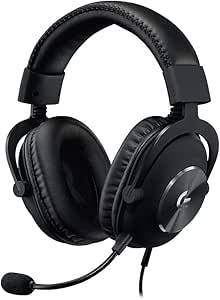 | Best for PC Audio Customization | Connection: Wired | Driver size: 50 mm PRO-G | Impedance: 35 ohms | VIEW LATEST PRICE | See Our Full Breakdown |
| NUBWO G06 Wireless Gaming Headset with Microphone, Orange |  | Best for Multi-Device Flexibility | Wireless: 2.4 GHz and Bluetooth 5.3 | Wired connection: 3.5 mm | Driver size: 50 mm | VIEW LATEST PRICE | See Our Full Breakdown |
| FIFINE H9 Wired Gaming Headset with Microphone |  | Best for Flexible Wired Setup | Connectivity: USB and 3.5 mm | Driver size: 50 mm | Audio: 7.1 surround sound | VIEW LATEST PRICE | See Our Full Breakdown |
| WIRWTRU S30 Wired Gaming Headset |  | Best Lightweight Wired Pick | Weight: 198 g (6.9 oz) | Connection: Wired, 3.5 mm jack | Driver size: 40 mm | VIEW LATEST PRICE | See Our Full Breakdown |
| HyperX Cloud III S Wireless Gaming Headset, Black | 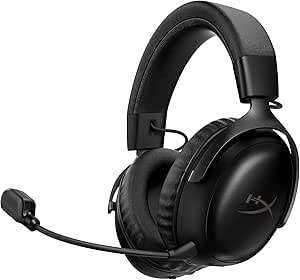 | Best Premium Wireless Battery Life | Connectivity: 2.4 GHz wireless, Bluetooth 5, or Instant Pair with select OMEN laptops | Driver size: 53 mm angled drivers | Microphone: Detachable 10 mm boom microphone | VIEW LATEST PRICE | See Our Full Breakdown |
| BENGOO G9000 Stereo Gaming Headset with Microphone | 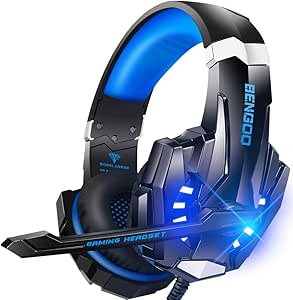 | Best for Broad Console Compatibility | Type: Over-ear gaming headset | Driver size: 40 mm | Sound: 7.1 surround sound | VIEW LATEST PRICE | See Our Full Breakdown |
| Logitech G733 LIGHTSPEED Wireless Gaming Headset, Black |  | Best Lightweight Wireless Pick | Wireless: RF wireless | Wireless range: Up to 20 meters | Battery life: Up to 29 hours | VIEW LATEST PRICE | See Our Full Breakdown |
| Razer BlackShark V3 Wireless PC Gaming Headset, Black |  | Best for Low-Latency Wireless Play | Wireless latency: As low as 10 ms | Connectivity: 2.4 GHz wireless, Bluetooth 5.3, USB wired | Battery life: Up to 70 hours | VIEW LATEST PRICE | See Our Full Breakdown |
| HyperX Cloud II Wired Gaming Headset with 7.1 Virtual Surround Sound, Red | 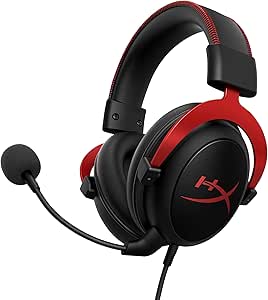 | Best Durable Wired Pick | Fit: Over-ear | Connectivity: Wired USB | Driver size: 53 mm | VIEW LATEST PRICE | See Our Full Breakdown |
| Razer BlackShark V2 X Wired Gaming Headset |  | Best Lightweight Multi-Platform Wired Pick | Weight: 240 g | Driver size: 50 mm | Connectivity: 3.5 mm audio jack | VIEW LATEST PRICE | See Our Full Breakdown |
| Logitech G432 Wired Gaming Headset, Black |  | Best for USB-and-Analog Flexibility | Type: Wired over-ear gaming headset | Driver size: 50 mm | Surround sound: DTS Headphone:X 2.0 | VIEW LATEST PRICE | See Our Full Breakdown |
| gaming headsets for competitive play | Microphone | Driver size | Compatibility | Connectivity |
|---|---|---|---|---|
| SteelSeries Arctis Prime Wired | Noise-canceling, bidirectional | — | Gaming consoles, laptops, and desktops | Wired |
| HyperX Cloud III Wired Gaming | 10 mm noise-cancelling mic with mesh filter and LED mute indicator | Angled 53 mm | PC, PS5, PS4, Xbox Series X|S, Xbox One, Nintendo Switch, Mac, and mobile devices | Wired; USB-A, USB-C, and 3.5 mm |
| AOC Captain 100 Wireless Gamin | Triple-stage noise-canceling boom mic | — | — | 2.4 GHz, Bluetooth 5.4, USB-A, USB-C, and 3.5 mm wired |
| AOC Captain 300 Wireless Gamin | Detachable, omnidirectional, noise-canceling | 50 mm | — | 2.4 GHz USB dongle, Bluetooth 6.0, and 3.5 mm wired |
| Logitech G PRO X Wired Gaming | Detachable boom mic with Blue VO!CE | 50 mm PRO-G | — | — |
| NUBWO G06 Wireless Gaming Head | — | 50 mm | PS5, PS4, PC, mobile devices, and tablets; Xbox Series and Switch via 3.5 mm | — |
| FIFINE H9 Wired Gaming Headset | Detachable boom microphone | 50 mm | PC, PS4, PS5, docked Nintendo Switch, Xbox controllers, phones, and tablets | USB and 3.5 mm |
| WIRWTRU S30 Wired Gaming Heads | Omnidirectional | 40 mm | PS5, PS4, Xbox One, Xbox Series X|S, Nintendo Switch, Steam Deck, PC, Mac, and laptop | — |
| HyperX Cloud III S Wireless Ga | Detachable 10 mm boom microphone | 53 mm angled drivers | PC, PS5, PS4, Nintendo Switch, Mac, and mobile; not compatible with Xbox | 2.4 GHz wireless, Bluetooth 5, or Instant Pair with select OMEN laptops |
| BENGOO G9000 Stereo Gaming Hea | Omnidirectional, noise-cancelling | 40 mm | PS4, PS5, Xbox, Xbox Series X|S, Xbox One, PC, Nintendo 3DS, laptop, PSP, tablet, iPad, and mobile phone | — |
| Logitech G733 LIGHTSPEED Wirel | Blue VO!CE filters | 40 mm PRO-G | PC, PS5, PS4, Nintendo Switch | — |
| Razer BlackShark V3 Wireless P | Detachable HyperClear Super Wideband, 9.9 mm | — | PC, Mac, PlayStation, Nintendo Switch, mobile; not Xbox | 2.4 GHz wireless, Bluetooth 5.3, USB wired |
| HyperX Cloud II Wired Gaming H | Detachable, noise-cancelling | 53 mm | — | Wired USB |
| Razer BlackShark V2 X Wired Ga | Razer HyperClear cardioid | 50 mm | PC, Mac, PS4, Xbox One, Nintendo Switch | 3.5 mm audio jack |
| Logitech G432 Wired Gaming Hea | 6 mm flip-to-mute boom mic | 50 mm | PC, Mac, mobile devices, PS5, PS4, Nintendo Switch | USB DAC and 3.5 mm cable |
More Details on Our Top Picks
SteelSeries Arctis Prime Wired Gaming Headset
The Arctis Prime is the straightforward pick for competitive players who want a wired connection and fewer setup variables. Its passive noise-isolating ear cushions help reduce surrounding distractions, while the bidirectional noise-canceling mic is suited to keeping voice chat clearer. Compared with the AOC Captain 100, it gives up wireless freedom and multi-device connection options, but avoids battery management and offers a simple 3.5 mm connection across consoles and computers. The lightweight metal construction and detachable cable make it easier to live with than a permanently tethered design might suggest. Its main tradeoffs are the lack of wireless play and limited listed feature detail compared with the Logitech G PRO X, whose USB sound card adds Windows-specific tuning options. Choose the Arctis Prime for focused, uncomplicated wired sessions, not feature-rich customization.
Pros:- Passive-isolating ear cushions help limit background distractions
- Noise-canceling bidirectional microphone for team chat
- Lightweight aluminum-and-steel construction
- Detachable 3.5 mm cable and broad platform compatibility
Cons:- Wired-only connection restricts movement
- No USB sound card or software tuning features are listed
- Not water resistant
Best for: Competitive players who want a lightweight 3.5 mm headset for console and PC play without charging or wireless setup.
Not ideal for: Players who need wireless movement, platform-specific audio customization, or water resistance.
- Connectivity:Wired
- Connector:3.5 mm
- Driver type:Dynamic
- Impedance:32 ohm
- Sensitivity:92 dB
- Microphone:Noise-canceling, bidirectional
- Construction:Aluminum and steel
- Compatibility:Gaming consoles, laptops, and desktops
Our verdict“Choose the Arctis Prime for light, distraction-conscious wired play; pick the AOC Captain 100 instead if wireless flexibility matters more.”
HyperX Cloud III Wired Gaming Headset, White
For players who spend hours scrimming or practicing, the Cloud III puts comfort and easy access to controls ahead of wireless freedom. Its memory foam ear cushions and headband are designed for extended wear, while the metal frame is built for regular use. The included USB-A, USB-C, and 3.5 mm connections offer more setup flexibility than the single 3.5 mm connection on the SteelSeries Arctis Prime, and the LED mute indicator makes mic status easier to check mid-match. The angled 53 mm drivers and noise-canceling microphone round out a practical wired setup. That said, the cable still limits movement, and leatherette can feel warm during long sessions. Unlike the Logitech G PRO X, the listed package does not specify a USB sound card with Windows EQ and surround options. This is the comfort-first pick, not the customization pick.
Pros:- Memory foam cushions and headband designed for extended wear
- USB-A, USB-C, and 3.5 mm connection options
- Full metal frame
- On-ear volume and mute controls with an LED mute indicator
Cons:- Wired design limits movement
- Leatherette cushions may feel warm during extended sessions
- No USB sound card or software EQ is specified
Best for: Players who practice for long stretches and want one wired headset with USB-A, USB-C, and 3.5 mm connection options.
Not ideal for: Players who want wireless freedom, cooler-feeling fabric ear pads, or Windows sound-card tuning features.
- Connectivity:Wired; USB-A, USB-C, and 3.5 mm
- Driver size:Angled 53 mm
- Microphone:10 mm noise-cancelling mic with mesh filter and LED mute indicator
- Frame:Full metal
- Earpad and headband material:Memory foam wrapped in leatherette
- Controls:On-ear volume and microphone mute
- Compatibility:PC, PS5, PS4, Xbox Series X|S, Xbox One, Nintendo Switch, Mac, and mobile devices
- Color:White
Our verdict“Pick the Cloud III for long wired practice sessions and flexible connections, but choose the AOC Captain 100 if you need wireless play.”
AOC Captain 100 Wireless Gaming Headset, Black
The AOC Captain 100 is the most connection-flexible option here: it combines 2.4 GHz wireless, Bluetooth 5.4, and 3.5 mm wired use, so players can switch between compatible devices without relying on a single connection type. Its listed latency of up to 20 ms and 50 mm graphene drivers target gaming use, while the triple-stage noise-canceling boom mic supports team communication. Up to 45 hours of battery life also makes it a stronger fit for untethered sessions than the wired HyperX Cloud III. Compatibility needs checking, though: Bluetooth is not supported on PS5 or PS4, and Xbox Series X|S works only over 3.5 mm. The product details also give conflicting charge-time figures. Compared with the AOC Captain 300, this model offers Bluetooth 5.4 rather than 6.0 and does not list a detachable mic, but its connection mix remains useful for players moving between devices.
Pros:- 2.4 GHz, Bluetooth 5.4, and 3.5 mm connection modes
- Up to 45 hours of battery life and use while charging
- Listed latency of up to 20 ms
- Triple-stage noise-canceling boom microphone
Cons:- Bluetooth mode is incompatible with PS5 and PS4
- Xbox Series X|S connection is limited to 3.5 mm wired mode
- Product details conflict on charging time
Best for: Players who use several compatible devices and want 2.4 GHz wireless, Bluetooth, and a wired fallback in one headset.
Not ideal for: PS5 or PS4 players expecting Bluetooth audio, and Xbox Series X|S players who want wireless connectivity.
- Connectivity:2.4 GHz, Bluetooth 5.4, USB-A, USB-C, and 3.5 mm wired
- Bluetooth range:33 feet
- Latency:Up to 20 ms
- Drivers:50 mm graphene diaphragms
- Audio output:96 kHz/24-bit
- Surround sound:7.1 virtual
- Microphone:Triple-stage noise-canceling boom mic
- Battery life:Up to 45 hours
- Weight:239 g
Our verdict“Choose the Captain 100 if your devices suit its connection limits and you want wireless versatility; skip it if you need wireless Xbox or PS5 Bluetooth audio.”
AOC Captain 300 Wireless Gaming Headset
The AOC Captain 300 suits players who want wireless gaming audio but also use a headset for everyday listening. Its 2.4 GHz dongle connection is listed at no more than 20 ms latency, and Bluetooth 6.0 plus 3.5 mm wired mode add ways to connect beyond a gaming session. The detachable noise-canceling microphone is a practical distinction from the AOC Captain 100: remove it when voice chat is not needed. Soft memory-protein cushions and up to 45 hours of battery life support longer stretches, though enabling RGB reduces that figure to 20 hours. Platform limits matter here too: PS5 and PS4 do not support Bluetooth audio with this headset, while Xbox requires the wired 3.5 mm connection. Compared with the wired SteelSeries Arctis Prime, it offers more freedom and connection choices, at the cost of battery upkeep and more compatibility checks.
Pros:- 2.4 GHz, Bluetooth 6.0, and 3.5 mm wired connections
- Detachable noise-canceling microphone
- Up to 45 hours of battery life with RGB off
- Memory-protein ear cushions designed for extended wear
Cons:- Xbox connection is limited to wired 3.5 mm mode
- PS5 and PS4 do not support Bluetooth audio with this headset
- Battery life falls to 20 hours with RGB lighting on
Best for: Players who want a wireless headset with a removable boom mic for both gaming and casual listening on supported devices.
Not ideal for: Xbox players seeking wireless use, or PS5 and PS4 players expecting Bluetooth audio connectivity.
- Connectivity:2.4 GHz USB dongle, Bluetooth 6.0, and 3.5 mm wired
- Wireless latency:≤20 ms
- Driver size:50 mm
- Microphone:Detachable, omnidirectional, noise-canceling
- Battery life:Up to 45 hours; 20 hours with RGB lighting on
- Charging time:3 hours
- Bluetooth range:33 feet
- Compatible platforms:PS5, PS4, PC, Mac, Switch, phones, and tablets; Xbox via 3.5 mm wired connection
Our verdict“Pick the Captain 300 for wireless flexibility and a removable mic on supported platforms, but choose a wired headset if you want to avoid charging and compatibility limits.”
Logitech G PRO X Wired Gaming Headset, Black
For PC competitors who want more control over voice and sound profiles, the Logitech G PRO X is the most customization-oriented wired pick in this group. Its USB sound card enables 7.1 surround sound and EQ profiles on Windows through Logitech G HUB, while Blue VO!CE processing adds options for shaping the detachable mic. Those features are conditional: the surround and microphone tools require a Windows PC and the software, so they do not carry across every platform. The included mobile cable with inline mic provides a simpler connection, and the protective case makes transport easier. Compared with the HyperX Cloud III, the G PRO X offers more specifically listed PC tuning gear but fewer connection types in its wired setup. Players wanting wireless movement should look to the AOC Captain models instead; this Logitech is built for a stationary, configurable PC station.
Pros:- USB sound card enables Windows surround sound and EQ profiles
- Detachable microphone with Blue VO!CE processing
- Memory foam ear cushions with leatherette or velour options
- Includes mobile cable, protective case, and USB sound card
Cons:- Surround and microphone features require Windows, Logitech G HUB, and the USB sound card
- Wired design limits movement
- Extra software setup may not suit players seeking a plug-and-play setup
Best for: PC competitors who want Windows-based EQ, surround sound, and voice-processing controls for team communication.
Not ideal for: Console-first players seeking the same software features across platforms, or anyone who prioritizes wireless movement.
- Connection:Wired
- Driver size:50 mm PRO-G
- Impedance:35 ohms
- Microphone:Detachable boom mic with Blue VO!CE
- Surround sound:7.1; requires USB sound card, Windows PC, and Logitech G HUB
- Construction:Aluminum fork and steel headband
- Included accessories:USB external sound card, mobile cable with inline mic, protective case, ear cushions, Y splitter, and user manual
- Warranty:1-year limited hardware warranty
Our verdict“Choose the G PRO X for PC-focused tuning and voice controls, but pick the HyperX Cloud III for broader listed connection options and simpler wired use.”
NUBWO G06 Wireless Gaming Headset with Microphone, Orange
The NUBWO G06 suits competitive players who split time between console, PC, and mobile audio. Its 2.4 GHz, Bluetooth 5.3, and 3.5 mm connections offer more ways to connect than the wired FIFINE H9, and Bluetooth can pair with a phone while the USB dongle handles game audio. That setup is useful for hearing calls without giving up the primary wireless connection. The advertised up to 100-hour battery life also means fewer charging interruptions, though battery life is a claim rather than a guarantee for every use pattern. For competitive play, the main caveat is platform compatibility: Xbox Series use is limited to the 3.5 mm cable, and the supplied details don’t establish that wireless positioning or latency matches more gaming-focused alternatives. Choose it for connection flexibility, not as a proven latency-first pick.
Pros:- Offers 2.4 GHz wireless, Bluetooth 5.3, and 3.5 mm wired connections.
- Can connect to a smartphone over Bluetooth while using the 2.4 GHz dongle.
- Advertised battery life of up to 100 hours reduces charging frequency.
- Includes a USB dongle, auxiliary cable, and Type-C charging cable.
Cons:- Xbox Series compatibility is limited to the 3.5 mm wired connection.
- Claims of zero latency and uninterrupted connectivity are promotional and not independently established by the supplied details.
Best for: Players who switch among PS5, PC, and mobile devices and want wireless game audio plus a phone connection.
Not ideal for: Xbox Series players who want wireless play, or competitors who prioritize verified low-latency performance over connection options.
- Wireless:2.4 GHz and Bluetooth 5.3
- Wired connection:3.5 mm
- Driver size:50 mm
- Battery capacity:1200 mAh
- Advertised battery life:Up to 100 hours
- Charging time:4 hours
- Compatibility:PS5, PS4, PC, mobile devices, and tablets; Xbox Series and Switch via 3.5 mm
- Included accessories:2.4 GHz USB dongle, 3.5 mm auxiliary cable, Type-C charging cable, and user manual
Our verdict“Pick the G06 if you want several connection choices across platforms, but skip it if Xbox wireless support or proven competitive latency is your priority.”
FIFINE H9 Wired Gaming Headset with Microphone
The FIFINE H9 is a practical pick for competitors who want wired reliability and controls within reach. Its USB and 3.5 mm connections let you choose the setup for the device: USB brings the control box’s volume and mute functions, while 3.5 mm broadens compatibility, including Xbox controllers. That flexibility is more useful for desk-to-console switching than the simpler 3.5 mm-only WIRWTRU S30, though the H9’s USB controls don’t carry over to the analog connection. The detachable boom mic is easy to remove outside team chat, and the 10-foot braided cable gives room to sit back from a desk. Its listed 7.1 surround sound may help with spatial cues on supported setups, but the supplied details don’t specify how it is implemented. A cable remains a constraint compared with wireless options such as the NUBWO G06.
Pros:- USB and 3.5 mm connections support different device setups.
- USB control box provides volume adjustment and microphone mute.
- Detachable boom microphone can be removed when voice chat is not needed.
- Ten-foot braided cable offers useful reach for a wired setup.
Cons:- USB control-box features are unavailable over the 3.5 mm connection.
- The wired design restricts movement compared with wireless picks such as the NUBWO G06.
Best for: PC and console players who want a wired headset with accessible mute and volume controls for desk use.
Not ideal for: Players who need wireless movement or expect USB control-box functions while connected through 3.5 mm.
- Connectivity:USB and 3.5 mm
- Driver size:50 mm
- Audio:7.1 surround sound
- Microphone:Detachable boom microphone
- Cable length:10 ft
- Controls:USB control box with volume controls and mute switch
- Compatibility:PC, PS4, PS5, docked Nintendo Switch, Xbox controllers, phones, and tablets
- Fit:Over-ear
Our verdict“Choose the H9 for a versatile wired setup with convenient USB controls, provided you are comfortable managing a cable.”
WIRWTRU S30 Wired Gaming Headset
At 198 g, the WIRWTRU S30 is the lightest-feeling choice on paper in this group for players who want a simple wired headset for long sessions. Its breathable fabric earcups and adjustable headband target comfort without adding wireless hardware or a control box. Compared with the FIFINE H9, the S30 is lighter by its listed weight and has a straightforward 3.5 mm connection, while the H9 adds USB controls and a detachable microphone. The S30’s omnidirectional mic covers team chat, but the product details provide less mic-control information than the H9’s mute-equipped USB box. Its 40 mm drivers are smaller than the H9’s 50 mm drivers; driver size alone doesn’t establish positional accuracy, so competitive buyers should weigh comfort and fit rather than assume a sound advantage. The fixed wired approach also rules out wireless movement.
Pros:- Listed weight of 198 g makes it a notably lightweight option.
- Breathable fabric earcups and adjustable headband are suited to extended wear.
- 3.5 mm connection supports a broad range of listed consoles and computers.
- Omnidirectional microphone supports voice chat.
Cons:- Wired-only connection limits movement compared with the NUBWO G06.
- No USB control box or dedicated mute control is listed.
- Not water resistant.
Best for: Players seeking a lightweight, uncomplicated 3.5 mm headset for extended sessions across compatible consoles and handhelds.
Not ideal for: Competitors who want wireless freedom, an included USB control box, or clearly specified microphone mute controls.
- Weight:198 g (6.9 oz)
- Connection:Wired, 3.5 mm jack
- Driver size:40 mm
- Impedance:20 ohm
- Frequency response:20 kHz
- Sensitivity:105 dB
- Microphone:Omnidirectional
- Compatibility:PS5, PS4, Xbox One, Xbox Series X|S, Nintendo Switch, Steam Deck, PC, Mac, and laptop
Our verdict“Choose the S30 if low weight and a simple wired connection matter more than wireless freedom or extra controls.”
HyperX Cloud III S Wireless Gaming Headset, Black
The HyperX Cloud III S Wireless is the strongest fit here for competitors who want wireless play without frequent charging. Its listed battery life reaches up to 120 hours on 2.4 GHz and 200 hours over Bluetooth, giving it a much longer stated runtime than the NUBWO G06. The 2.4 GHz mode is the relevant option for gaming; Bluetooth offers a separate long-running connection, while Instant Pair applies only to select OMEN laptops. Angled 53 mm drivers, memory foam cushions, and an aluminum frame round out a more premium construction, though those details alone don’t prove better directional accuracy than the FIFINE H9’s listed 7.1 sound. The detachable mic is practical between matches, but this headset is not compatible with Xbox. At 356 g, it is also heavier than the WIRWTRU S30, so comfort-focused buyers should factor in fit.
Pros:- Advertised battery life reaches up to 120 hours over 2.4 GHz and 200 hours over Bluetooth.
- Supports 2.4 GHz wireless, Bluetooth, and Instant Pair with select OMEN laptops.
- Detachable 10 mm boom microphone includes a mute indicator.
- Memory foam cushions and an aluminum frame add comfort-focused and structural features.
Cons:- Not compatible with Xbox.
- At 356 g, it weighs more than the lightweight WIRWTRU S30.
- Removable earcup plates are sold separately.
Best for: PC, PlayStation, and Switch competitors who want a wireless headset with long stated battery life and a detachable mic.
Not ideal for: Xbox players, or buyers who prefer a lighter headset such as the WIRWTRU S30.
- Connectivity:2.4 GHz wireless, Bluetooth 5, or Instant Pair with select OMEN laptops
- Driver size:53 mm angled drivers
- Microphone:Detachable 10 mm boom microphone
- Battery life:Up to 120 hours on 2.4 GHz; up to 200 hours on Bluetooth
- Weight:356 g
- Bluetooth range:20 meters
- Compatibility:PC, PS5, PS4, Nintendo Switch, Mac, and mobile; not compatible with Xbox
- Warranty:2 years
Our verdict“Pick the Cloud III S for long-running wireless use on supported platforms, but skip it if you play on Xbox or want a lighter headset.”
BENGOO G9000 Stereo Gaming Headset with Microphone
The BENGOO G9000 is a straightforward wired option for players who need one headset to cover several console generations and devices. Its 49-inch braided USB cable includes volume and microphone-mute controls, while the flexible, noise-cancelling microphone is designed for team chat. Compared with the FIFINE H9, the G9000 lists a wider range of console and device compatibility, including Xbox; however, older Xbox One controllers may need a separate Microsoft adapter. The H9 offers both USB and 3.5 mm connections, while the G9000’s listed cable setup is less flexible, so check the connection your device supports before choosing. Its 40 mm drivers and advertised 7.1 surround sound provide a feature set aimed at gaming, but the short cable may limit seating position and the supplied details don’t establish competitive-grade directional precision.
Pros:- Listed compatibility spans PlayStation, Xbox, PC, Nintendo 3DS, and mobile devices.
- Braided 49-inch cable includes volume control and a microphone-mute button.
- Flexible omnidirectional microphone is described as noise-cancelling.
- Over-ear pads and LED earcup lighting add comfort and visual flair.
Cons:- Older Xbox One controllers require a separate Microsoft adapter.
- The 49-inch cable may restrict placement compared with the FIFINE H9’s 10-foot cable.
- Wired connection offers less freedom of movement than the NUBWO G06 or HyperX Cloud III S.
Best for: Players using a mix of consoles and devices who want a wired headset with inline volume and mute controls.
Not ideal for: Players who need wireless movement, a longer cable, or plug-and-play use with older Xbox One controllers.
- Type:Over-ear gaming headset
- Driver size:40 mm
- Sound:7.1 surround sound
- Microphone:Omnidirectional, noise-cancelling
- Cable length:49 inches
- Controls:Volume control and microphone mute
- Compatibility:PS4, PS5, Xbox, Xbox Series X|S, Xbox One, PC, Nintendo 3DS, laptop, PSP, tablet, iPad, and mobile phone
- Warranty:2 years
Our verdict“Choose the G9000 if broad listed device compatibility and inline controls suit your setup, but check Xbox adapter needs and cable reach first.”
Logitech G733 LIGHTSPEED Wireless Gaming Headset, Black
The Logitech G733 suits competitive players who want wireless freedom without a heavy headset. At 278 g, its reversible suspension headband is designed to reduce pressure during long sessions, while the LIGHTSPEED connection has a listed range of up to 20 meters. Its Blue VO!CE microphone filters offer chat-focused voice adjustments, and the 40 mm PRO-G drivers provide the audio foundation for play. Compared with the Razer BlackShark V3, the G733 is a simpler wireless choice: the Razer offers lower stated latency, Bluetooth, and much longer battery life, while the G733 brings customizable dual-zone RGB lighting. The tradeoff is fewer connection options and no stated Bluetooth support. Choose it for comfort and wireless PC or PlayStation gaming, not if your setup depends on broad device switching or the longest battery runtime.
Pros:- Light 278 g build with a reversible suspension headband
- Up to 29 hours of battery life and a listed 20-meter wireless range
- Blue VO!CE microphone filters support voice adjustments
- Customizable dual-zone Lightsync RGB lighting
Cons:- Bluetooth connectivity is not specified, limiting flexibility across devices
- Offers fewer connection modes than the Razer BlackShark V3
- Battery life is substantially shorter than the BlackShark V3’s listed runtime
Best for: PC and PlayStation players who want a lightweight wireless headset for long sessions and value adjustable voice filters and RGB lighting.
Not ideal for: Players who need Bluetooth, Xbox compatibility, or a longer battery runtime than the listed 29 hours.
- Wireless:RF wireless
- Wireless range:Up to 20 meters
- Battery life:Up to 29 hours
- Driver size:40 mm PRO-G
- Weight:278 g
- Microphone:Blue VO!CE filters
- Lighting:Dual-zone Lightsync RGB
- Compatibility:PC, PS5, PS4, Nintendo Switch
Our verdict“Choose the G733 if comfort-focused wireless play and customizable lighting matter more than Bluetooth or extended battery life.”
Razer BlackShark V3 Wireless PC Gaming Headset, Black
For competitive players who want wireless convenience without giving up connection options, the Razer BlackShark V3 is the most versatile pick in this group. Razer lists wireless latency as low as 10 ms, and its 2.4 GHz, Bluetooth 5.3, and USB connections cover gaming and other devices. Simultaneous 2.4 GHz and Bluetooth audio can also keep separate audio sources available. The detachable wideband microphone is practical when you want to pack light, while the listed 70-hour battery life outlasts the Logitech G733’s 29 hours. Its 270 g weight is close to the G733’s, though the Razer has no listed RGB lighting. The major boundary is platform support: it does not work with Xbox, and spatial audio or custom EQ may depend on software support. This is the strongest fit for multi-device PC players, not Xbox households.
Pros:- Listed wireless latency as low as 10 ms
- Up to 70 hours of battery life
- 2.4 GHz, Bluetooth 5.3, and USB connectivity, with simultaneous 2.4 GHz and Bluetooth audio
- Light 270 g design and detachable wideband microphone
Cons:- Not compatible with Xbox consoles
- Surround sound and custom EQ features may depend on software support
- More connection and audio options may be unnecessary for players using a single device
Best for: Competitive PC players who want low-latency wireless audio, Bluetooth for a second device, and long battery life.
Not ideal for: Xbox players or anyone who needs spatial audio and custom EQ to work without software support.
- Wireless latency:As low as 10 ms
- Connectivity:2.4 GHz wireless, Bluetooth 5.3, USB wired
- Battery life:Up to 70 hours
- Driver type:50 mm TriForce Titanium Gen-2
- Weight:270 g
- Microphone:Detachable HyperClear Super Wideband, 9.9 mm
- Audio:THX Spatial Audio, 7.1.4 surround sound
- Compatibility:PC, Mac, PlayStation, Nintendo Switch, mobile; not Xbox
- Warranty:2 years
Our verdict“Pick the BlackShark V3 for low-latency wireless play across supported devices, but skip it if Xbox compatibility is required.”
HyperX Cloud II Wired Gaming Headset with 7.1 Virtual Surround Sound, Red
The HyperX Cloud II is a straightforward choice for players who prefer a wired headset and a sturdier frame over wireless features. Its aluminum construction and memory foam cushions suit long sessions, while the detachable, noise-cancelling microphone can be removed when chat is not needed. A USB sound card enables virtual 7.1 surround sound on PC, Mac, and PS4; on Xbox One, Nintendo Switch, and mobile, the listing specifies stereo audio instead. That limitation matters more than the 53 mm driver size if you compete across several platforms. Compared with the Razer BlackShark V2 X, the Cloud II adds a USB sound card and virtual surround on supported systems, but the Razer’s 3.5 mm connection offers a simpler route across platforms. The Cloud II is a solid fit for desk-based play, though its platform-specific surround and wired connection restrict flexibility.
Pros:- Aluminum frame offers a durable structure
- Memory foam ear cushions and padded headband suit extended sessions
- Detachable noise-cancelling microphone
- Virtual 7.1 surround sound on PC, Mac, and PS4
Cons:- Virtual 7.1 surround sound is limited to PC, Mac, and PS4
- Xbox One may require a Microsoft headset adapter
- Wired USB connection is less flexible than the wireless Razer BlackShark V3
Best for: PC, Mac, and PS4 players who want a durable wired headset, cushioned fit, and virtual surround through the included USB sound card.
Not ideal for: Players who move between consoles and expect the same surround features everywhere, or who want wireless freedom.
- Fit:Over-ear
- Connectivity:Wired USB
- Driver size:53 mm
- Frequency response:15–25 kHz
- Surround sound:Virtual 7.1 on PC, Mac, and PS4
- Frame:Aluminum
- Ear cushions:Memory foam
- Microphone:Detachable, noise-cancelling
- Warranty:2 years
Our verdict“Choose the Cloud II for durable wired use and supported-device surround sound, but not for consistent surround features across consoles.”
Razer BlackShark V2 X Wired Gaming Headset
At 240 g, the Razer BlackShark V2 X is the lightest option in this five-headset group, making it a sensible wired pick for players who want less weight on their head. Its closed earcups and breathable foam cushions are intended to help isolate game audio, while the cardioid microphone focuses on voice pickup. The standard 3.5 mm jack works across PC, Mac, PS4, Xbox One, and Nintendo Switch, so it is simpler to move between platforms than the USB-focused HyperX Cloud II. Razer’s software-enabled 7.1 surround sound is limited to 64-bit Windows 10, however; console players should not choose it for that feature. Compared with the Logitech G432, it is lighter and lists wider console compatibility, while the G432 offers both USB and 3.5 mm connections. The V2 X’s appeal is uncomplicated wired use, not connection variety.
Pros:- Lightweight 240 g design
- 3.5 mm connection supports PC, Mac, PS4, Xbox One, and Nintendo Switch
- Closed earcups and breathable foam cushions help isolate sound
- Cardioid microphone is designed to focus on the player’s voice
Cons:- Software-enabled 7.1 surround sound is limited to 64-bit Windows 10
- Xbox One may require a separately sold stereo adapter
- Single 3.5 mm connection offers less flexibility than the Logitech G432’s USB and 3.5 mm options
Best for: Players who use a 3.5 mm headset across PC and multiple consoles and prioritize a light fit over wireless features.
Not ideal for: Players who want surround sound on consoles, need USB connectivity, or use a Windows version outside the listed 64-bit Windows 10 support.
- Weight:240 g
- Driver size:50 mm
- Connectivity:3.5 mm audio jack
- Earpiece design:Over-ear
- Microphone:Razer HyperClear cardioid
- Surround sound:Software-enabled 7.1 on 64-bit Windows 10
- Compatibility:PC, Mac, PS4, Xbox One, Nintendo Switch
- Warranty:2 years
Our verdict“The BlackShark V2 X is a good fit for lightweight, cross-platform wired play if you do not need USB or console surround sound.”
Logitech G432 Wired Gaming Headset, Black
The Logitech G432 makes the most sense for players who want a wired headset that can connect by either USB or 3.5 mm. That dual connection setup gives it more setup flexibility than the single-jack Razer BlackShark V2 X, while its DTS Headphone:X 2.0 aims to add positional cues for compatible gaming. The 50 mm drivers and flip-to-mute 6 mm boom mic cover familiar competitive needs, and the rotating leatherette ear cups can sit flatter when the headset is put away. The tradeoff is that DTS processing requires Logitech G HUB, so the surround feature is not simply available through every connection or platform. The listing also flags audio-mode limitations on PlayStation and Nintendo Switch. Pick the G432 when connection options matter more than low weight: at 240 g, the BlackShark V2 X is the lighter alternative.
Pros:- USB DAC and 3.5 mm cable provide two connection options
- DTS Headphone:X 2.0 offers positional surround sound through supported setup
- Flip-to-mute 6 mm boom microphone is quick to silence
- Ear cups rotate up to 90 degrees for easier storage
Cons:- DTS Headphone:X 2.0 requires Logitech G HUB software
- PlayStation and Nintendo Switch compatibility has audio-mode limitations
- Heavier than the 240 g Razer BlackShark V2 X
Best for: PC and console players who want one wired headset with both USB and 3.5 mm connection options and an easy flip-to-mute mic.
Not ideal for: Players who do not want software-dependent surround sound, need consistent audio modes across platforms, or prioritize a particularly light headset.
- Type:Wired over-ear gaming headset
- Driver size:50 mm
- Surround sound:DTS Headphone:X 2.0
- Microphone:6 mm flip-to-mute boom mic
- Connectivity:USB DAC and 3.5 mm cable
- Ear-cup rotation:Up to 90 degrees
- Ear placement:Over-ear
- Compatibility:PC, Mac, mobile devices, PS5, PS4, Nintendo Switch
Our verdict“Choose the G432 if USB and 3.5 mm flexibility matter more than a lighter build or software-free surround sound.”
How We Picked
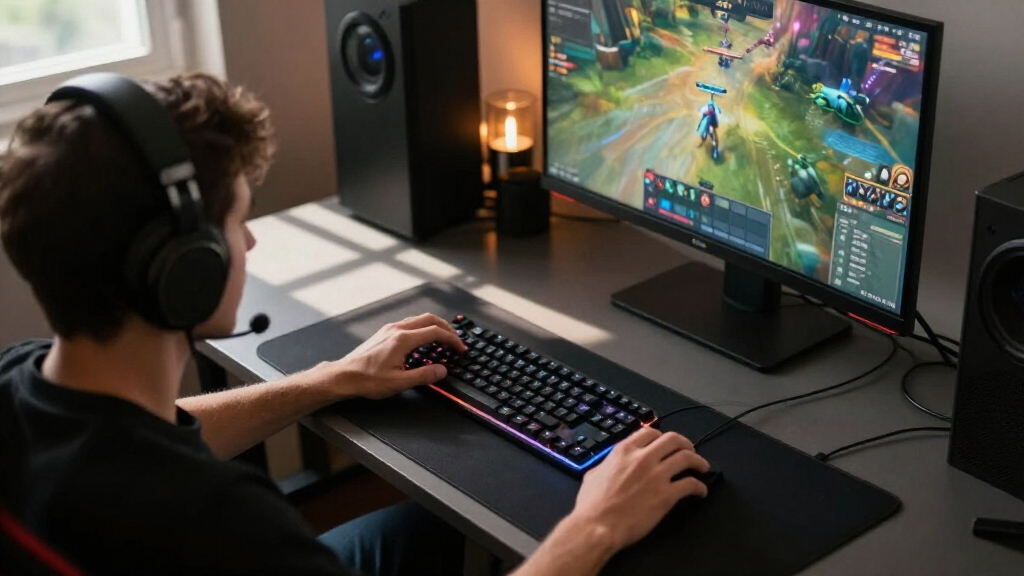
I ranked these headsets around the needs that can change a competitive match: consistent positional audio, clear voice communication, comfortable fit over long sessions, and a connection that suits the player’s platform. I also weighed practical details such as microphone arrangement, onboard controls, wired or wireless operation, and how much flexibility each model appears to offer. Features only matter when they help a player locate opponents, communicate, or keep the setup convenient.
The order reflects how directly each headset appears to address competitive play, balanced against its tradeoffs and likely audience. Wireless options earn a place when freedom from a cable is a meaningful benefit, but they are not automatically ranked above wired models, which avoid charging and may suit focused desk setups. Budget-oriented and less clearly specified products remain useful alternatives, though buyers should verify compatibility and controls before choosing them for tournament-style play. I have not treated virtual surround claims or feature counts as a substitute for a well-matched fit and reliable communication.
Factors to Consider When Choosing Gaming Headsets For Competitive Play
Competitive headset shopping is easier when you decide what problem you want to solve before comparing feature lists. I’d start with platform, game, and connection needs, then weigh fit and microphone usability; those choices can matter more during a long session than a headline audio feature.
Prioritize Clear Positional Cues Over Extra Effects
In competitive games, the goal is to distinguish direction and distance well enough to make a quick decision, not to make every sound feel cinematic. Virtual surround processing can help some listeners, but it can also change the character of game audio or make cues less familiar. Start with the game’s own audio mix and test stereo output before adding software effects. Avoid choosing a headset based only on a channel-count claim. A comfortable fit and consistent sound presentation can be more useful than a feature you end up disabling. If possible, check whether the headset’s companion software is required for the audio options you want.
Choose Wired or Wireless Around Your Setup
A wired headset removes battery management and can be a sensible choice for a fixed PC or console station. Wireless models reduce cable clutter and make it easier to move, but connection method, battery routine, and device support deserve attention. Do not assume that a wireless headset works with every console or that every wireless feature is available on every platform. Check whether it connects through USB, a dedicated adapter, Bluetooth, or more than one method. Players who compete for long stretches should think through charging habits before giving up a cable. The right choice is the one that stays dependable within your actual setup.
Treat Fit as Part of Performance
Pressure from a tight headband, heat around the ears, or glasses discomfort can become distracting well before a match ends. Headset weight alone does not predict comfort, since clamping force, cushion shape, and adjustment range all affect the fit. If you wear glasses or play in long blocks, look for return options and check the product’s dimensions or fit notes before buying. A headset that needs frequent repositioning can interrupt focus even if its audio features look strong on paper. Do not confuse soft padding with a guaranteed comfortable fit for every head shape. Comfort is a performance factor when the session is long.
Check Microphone and Controls for Team Play
Team communication depends on intelligible speech and controls you can operate without breaking concentration. A flip-to-mute or easy-to-reach mute control may be more useful than a microphone feature you rarely adjust. Confirm that the microphone works with your platform and chat application, especially if the headset relies on a particular cable or adapter. If you play in a noisy room, investigate microphone positioning and any available noise-handling features rather than assuming a headset will remove background sound. Listen for whether your voice remains clear at a natural speaking level. A headset that makes muting and volume changes awkward can slow down routine communication.
Match the Connection to Every Device You Use
Many buyers switch between a PC, console, handheld, or phone, and headset compatibility can change across those devices. A 3.5 mm connection may be convenient for broad use, while USB or a wireless adapter can add features but limit where they work. Check whether a controller, splitter, or adapter is needed and whether it is included. Also confirm that the microphone and volume controls remain available on the target device. Do not infer full compatibility from a broad platform label; feature support can differ by connection. A quick check of the exact model and platform can prevent a headset from becoming a one-device purchase by accident.
Pay for Useful Improvements, Not a Longer Feature List
Paying more makes sense when the added benefit solves a real problem, such as wireless convenience, improved adjustability, or controls that fit your routine. It is less compelling when the upgrade is mainly a collection of software effects you will not use. Compare the headset’s connection, fit, microphone access, and support for your devices before treating premium branding as proof of competitive advantage. For a new player, a straightforward wired model may leave more room to learn what sound profile and fit they prefer. Experienced players with a settled setup may value a specific convenience more. Set your priorities first, then spend on the features that meet them.
Frequently Asked Questions
Is a wired headset a safer choice for competitive play?
A wired headset avoids charging and removes battery life as a concern during long sessions, which makes it a straightforward pick for a fixed setup. That does not automatically make it more accurate or better for every player; fit, audio tuning, and microphone clarity still matter. Wireless can be a practical choice if cable movement or desk clutter disrupts your play. Check the connection your platform supports before deciding. For tournament or practice use, consistency and comfort should guide the choice more than the connection label alone.
Should I turn on virtual surround sound for competitive games?
Not necessarily. Virtual surround can change how game audio is presented, and some players may prefer the game’s own stereo mix for familiar positional cues. Try the headset’s standard output first, then compare effects using the same game and settings. Keep the mode that makes directions easier for you to identify without muddying important sounds. Also check whether the feature requires software or is available on your console. A surround label by itself does not promise an advantage.
How can I tell whether a headset will work with my console and PC?
Check the exact model’s supported platforms and connection methods, not just the product family name. Note whether it uses a 3.5 mm plug, USB, a wireless adapter, or Bluetooth, and confirm which of those connections your devices accept. Some features or controls may work on one platform but not another. Look for any required adapters and verify whether they are included. If you switch devices often, a simpler connection can be more convenient than a feature-rich option with platform limits.
What matters more for team play: microphone quality or surround sound?
Neither feature can be judged in isolation, but clear communication is a direct requirement when teammates need to understand callouts. Positional audio helps you interpret what is happening in the game, while the microphone carries your information to the team. Consider how often you use voice chat, whether your room is noisy, and how easy it is to mute yourself. A headset with a convenient microphone and dependable audio can serve competitive play better than one focused on effects alone. Check that the mic works as expected on your specific platform.
When is it worth choosing a wireless headset over a less complicated wired model?
Wireless is worth choosing when freedom from a cable makes your setup easier or more comfortable and the headset’s connection supports your devices. It may be a poor fit if you do not want to track battery charge or if the model’s wireless method is incompatible with your console. Compare the controls and microphone operation as well as the connection itself. A wired option can be the simpler choice for a stationary desk, while wireless can suit players who move around. Choose based on a convenience you will use regularly, not on wireless capability alone.
Conclusion
For a balanced competitive setup, I’d make the Razer BlackShark V3 Wireless the overall pick for players who want a wireless option, while the HyperX Cloud III is a strong wired alternative. For value, compare the Razer BlackShark V2 X and FIFINE H9 against your platform needs before paying for features you may not use. Players seeking a more premium wireless setup can look first at the Logitech G733 and HyperX Cloud III S, checking connection support and fit closely. For beginners, a straightforward wired model such as the HyperX Cloud II can keep setup simple, provided its connection suits your devices. If your specific priority is a cable-free setup, compare the AOC Captain 100, Captain 300, and NUBWO G06; if you need a wired headset, narrow the field to the Logitech G PRO X, SteelSeries Arctis Prime, and Cloud III based on fit, microphone use, and compatibility. The best choice is the one that stays comfortable and works reliably with the games and devices you actually use.
Halloween Picks
halloween
As an affiliate, we earn on qualifying purchases.