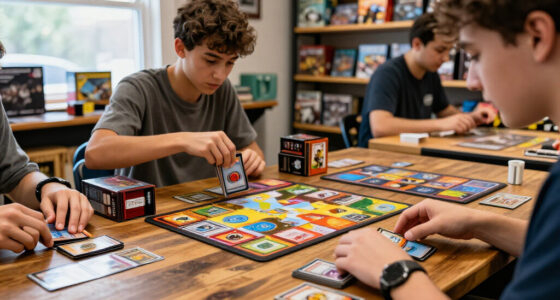

Choosing trading card game singles is easiest when the lot matches the game you actually play—and when you know whether you are buying a defined card or a randomized assortment. My strongest pick for a more predictable mix is the Magic: The Gathering 50-Card Collection, which specifies at least 25 rares or uncommons and a stated condition range. For One Piece, The Gaming Emporium 50-Card Assorted Lot offers the largest card count, while the Gundam 25-Card Assorted Lot is the more exploratory option for a newer game and may include several rarities.

Play games on Amazon Luna for your game nights, included with Prime
- A rotating selection of games, no download needed
- Play on TV, laptop or phone
- Fast, free delivery for your gear, too
These are not named, individually selected singles: all three are assorted lots, and none guarantees a particular character, set, or card. I rank them by how clearly each lot defines what arrives, how useful that information is to a buyer, and how well the format suits collection growth or casual deck building. The key tradeoff is between a specified card mix and the uncertainty that comes with random assortment; card count alone does not tell you whether a lot will improve a particular deck.
Complete the kit

Key Takeaways
- The Magic lot is the clearest choice when rarity mix and stated condition matter: at least 25 of its 50 cards are rares or uncommons, though exact cards are not named.
- The One Piece lot provides 50 Common and Uncommon cards, but it does not promise specific characters, colors, sets, or a duplicate-free mix.
- The Gundam lot contains 25 assorted cards and may include Rare, LR, or foil cards; the wording does not guarantee any of those higher-rarity inclusions.
- None of these options is a reliable route to a specific deck upgrade, because all three are randomized and may include duplicates.
- For targeted deck construction, I would identify the exact card and edition needed rather than depend on an assorted lot; these picks suit broad collection building better.
| Magic: The Gathering 50-Card Collection with at Least 25 Rares or Uncommons |  | Best Overall — clearest stated mix | Game: Magic: The Gathering | Card count: 50 | Rarity minimum: At least 25 rares or uncommons | VIEW LATEST PRICE | See Our Full Breakdown |
| The Gaming Emporium 50-Card Assorted One Piece Trading Card Lot |  | Best for One Piece collection building | Brand: The Gaming Emporium | Game: One Piece Card Game | Card count: 50 | VIEW LATEST PRICE | See Our Full Breakdown |
| 25-Card Assorted Trading Card Lot for Gundam Card Game – Common & Uncommon Rare C/U/R/LR Foil Cards |  | Best for exploring Gundam cards | Game: Gundam Card Game | Card count: 25 | Possible rarities: Common, Uncommon, Rare, and LR; distribution not guaranteed | VIEW LATEST PRICE | See Our Full Breakdown |
| trading card game single | Game | Card count | Assortment |
|---|---|---|---|
| Magic: The Gathering 50-Card C | Magic: The Gathering | 50 | — |
| The Gaming Emporium 50-Card As | One Piece Card Game | 50 | Randomly selected; duplicates may be included |
| 25-Card Assorted Trading Card | Gundam Card Game | 25 | Randomly selected from available inventory |
More Details on Our Top Picks
Magic: The Gathering 50-Card Collection with at Least 25 Rares or Uncommons
I place this Magic collection first because its description gives buyers a meaningful minimum: at least 25 of the 50 cards are rares or uncommons. That does not make the lot predictable card by card, but it is a firmer expectation than the One Piece lot’s all-Common-and-Uncommon range or the Gundam lot’s list of rarities that may appear. The stated mint or excellent condition also gives it a useful advantage for collectors who care about presentation as well as playability.
The description says cards may come from Beta through current sets and may include foils or mythics. I would treat both as possibilities, not reasons to buy: neither is guaranteed, and the listing does not identify specific cards or sets. It excludes basic lands, foreign-language cards, and silver- or gold-bordered cards, which narrows the contents in ways some buyers will welcome. Compared with the One Piece lot, this is the better-defined assortment; compared with Gundam, it offers a stated minimum rarity threshold rather than only a possible higher-rarity mix.
Its weakness is the same one shared by all three picks: random contents are not targeted deck upgrades. A rare card is not necessarily useful in a particular format or strategy, and a collection spanning many sets may not form a coherent deck. I would choose this for a Magic player who enjoys sorting and evaluating a mixed pool, not for someone who needs a named card or wants every included card to fit one build. Among the options here, it offers the most legible balance of count, rarity floor, and condition information.
Pros:- Includes 50 Magic cards, with at least 25 rares or uncommons.
- Cards are described as mint or excellent condition.
- May include foils or mythics, though neither is promised.
- Exclusions are stated, including basic lands and silver- or gold-bordered cards.
Cons:- Specific cards, sets, and deck synergies are not guaranteed.
- Foils and mythics are possible rather than assured.
- The broad Beta-to-current set range may produce cards with varied format usefulness.
Best for: Magic players and collectors who want a 50-card assortment with a stated minimum of rares or uncommons and a condition description.
Not ideal for: Buyers seeking a particular Magic card, format-legal deck pieces, guaranteed foils or mythics, or a lot made up of one coordinated strategy.
- Game:Magic: The Gathering
- Card count:50
- Rarity minimum:At least 25 rares or uncommons
- Condition:Mint or excellent
- Possible inclusions:Foils or mythics may appear; not guaranteed
- Set range:Beta to current sets
- Listed exclusions:Basic lands, foreign-language cards, and silver- or gold-bordered cards
- Manufacturer:Wizards of the Coast
Our verdict“I rank this first for its stated rarity minimum and condition details, while still treating it as a randomized collection rather than a source for exact singles.”
The Gaming Emporium 50-Card Assorted One Piece Trading Card Lot
This is the straightforward volume pick: 50 One Piece Card Game cards, all described as Common or Uncommon. I rank it behind the Magic collection because it does not state a minimum of higher rarities, but it may suit a buyer who prefers a defined rarity band and a larger pool for sorting, casual play, or trading. Compared with Gundam’s 25-card lot, it provides twice as many cards, although that numerical advantage does not guarantee more useful cards for a specific deck.
The assortment can vary by character, color, type, and set, and duplicates may be included within a lot or across multiple lots. That makes this a better fit for someone who enjoys discovering a broad spread of cards than for a player trying to finish a particular list. The listing does not promise a certain character, card type, or set, so buyers should not treat the lot as a targeted way to collect favorite characters. Its Common-and-Uncommon range is more explicit than Gundam’s possible mix of Common, Uncommon, Rare, LR, and foil cards, but it also leaves out any stated prospect of higher rarities.
I see the main appeal as a larger, lower-rarity card pool for a new or casual One Piece player to review and organize. That can be more useful than a smaller random lot when the goal is simply to add cards, but it is not the same as receiving a balanced or ready-to-play deck. Against the Magic option, it has a less informative rarity promise; against Gundam, it has a clearer rarity band and a higher count. Skip it if you need particular colors, characters, or deck components, since the description expressly withholds those guarantees.
Pros:- Provides 50 cards for collection expansion or casual sorting.
- The stated rarity range is Common and Uncommon.
- Cards may vary by character, color, type, and set.
- Can suit beginners, players, and collectors who accept random contents.
Cons:- Specific cards, characters, colors, sets, and artwork are not guaranteed.
- Duplicates may appear within a lot or across multiple purchases.
- No rare-card or foil inclusion is specified.
Best for: New or casual One Piece Card Game players and collectors who want a 50-card Common-and-Uncommon assortment to sort, trade, or add to a general collection.
Not ideal for: Players hunting for a specific character, color, set, rare card, or carefully balanced deck list.
- Brand:The Gaming Emporium
- Game:One Piece Card Game
- Card count:50
- Rarity:Common and Uncommon
- Assortment:Randomly selected; duplicates may be included
- Model year:2025
- Manufacturer part number:TGEOP50
- Minimum age:180 months
Our verdict“I recommend this for One Piece buyers who value a larger, clearly bounded Common-and-Uncommon pool more than specific cards or guaranteed higher rarities.”
25-Card Assorted Trading Card Lot for Gundam Card Game – Common & Uncommon Rare C/U/R/LR Foil Cards
The Gundam lot is my pick for a buyer who wants to explore the game’s card pool, rather than a buyer who needs a dependable rarity result. It supplies 25 assorted cards from available inventory and may include Common, Uncommon, Rare, LR, and foil cards. That range sounds broad, but the description does not promise how many of each rarity will arrive—or that any Rare, LR, or foil card will appear. I rank it third because that uncertainty is greater than the Magic collection’s stated rarity minimum and the One Piece lot’s defined Common-and-Uncommon range.
Its appeal is tied to the game and assortment: cards may come from different Gundam releases and can include characters, units, commands, bases, and other card types. That gives a new collector several kinds of card to discover, but it also means the lot may not match a single deck plan. Compared with the One Piece option, it has fewer cards and a less definite rarity composition; compared with Magic, it offers no stated condition grade or minimum count of higher-rarity cards. Its possible LR or foil inclusions are best treated as upside, not as the core reason to buy.
I would choose this if the Gundam Card Game itself is the priority and a small random assortment sounds useful for starting a collection, trading, or browsing different card types. I would not choose it as a shortcut to a particular deck, character, set, or foil. Duplicates are possible, including across multiple lots. Since no exact contents are guaranteed, a player who needs a precise card should search for that named single instead of relying on this assortment.
Pros:- Includes 25 Gundam Card Game cards from assorted inventory.
- May include several card types, such as characters, units, commands, and bases.
- Possible rarities include Common, Uncommon, Rare, and LR.
- Foil cards may be included, and the lot is aimed at players and collectors.
Cons:- No exact rarity distribution or higher-rarity card is guaranteed.
- Specific cards, sets, characters, and foils are not promised.
- Duplicates may occur within or across multiple lots.
- The 25-card count is lower than the two 50-card options.
Best for: Gundam Card Game newcomers and collectors who want a modest assortment across card types and are comfortable with uncertain rarity distribution.
Not ideal for: Buyers who require guaranteed Rare, LR, or foil cards, a particular Gundam character or set, a stated condition grade, or cards selected for a specific deck.
- Game:Gundam Card Game
- Card count:25
- Possible rarities:Common, Uncommon, Rare, and LR; distribution not guaranteed
- Foils:May be included; not guaranteed
- Possible card types:Characters, units, commands, bases, and others
- Set selection:May include different releases
- Assortment:Randomly selected from available inventory
- Duplicates:Possible, including across multiple lots
Our verdict“I recommend this as a small Gundam discovery lot, not as a reliable source of higher-rarity cards or targeted deck upgrades.”

How We Picked
I ranked these products for buyers searching for trading card game singles, while recognizing that the supplied listings describe randomized lots rather than individually named singles. That difference matters: a buyer seeking one exact card cannot judge success by the advertised card count alone. I focused on what each description commits to, what remains uncertain, and whether the product is a sensible fit for collection growth, casual play, or a new player looking for a pool of cards.
The Magic collection ranks first because it states a minimum share of rares or uncommons, gives a condition description, and lists exclusions. Those details make the expected contents easier to evaluate than a lot that only names broad rarity possibilities. The One Piece lot ranks next for its larger count and clearly stated Common and Uncommon range, although it offers no stated rare-card upside and warns that duplicates may appear. Gundam ranks third, not because the game or cards are inherently less worthwhile, but because its 25-card lot has the least certain rarity outcome: Rare, LR, and foil cards are possibilities rather than promises.
I also weighed whether the product description supports a buyer’s intended use. A randomized lot can provide variety for browsing, trading, or casual experimentation, but it cannot promise synergy, legality for a particular deck, or a needed card. Specific-card certainty therefore remains a limitation across the whole lineup. I have not treated possible foils, mythics, higher rarities, or broad set ranges as guaranteed inclusions. The ranking favors disclosed minimums and practical clarity over optimistic possibilities.
| trading card game single | Game | Assortment |
|---|---|---|
| Magic: The Gathering 50-Card C | Magic: The Gathering | — |
| The Gaming Emporium 50-Card As | One Piece Card Game | Randomly selected; duplicates may be included |
| 25-Card Assorted Trading Card | Gundam Card Game | Randomly selected from available inventory |
Factors to Consider When Choosing Trading Card Game Singles
These listings use the language of card singles, but each product is an assorted lot with random contents. I would choose among them by deciding what matters most: a defined minimum rarity mix, a larger number of lower-rarity cards, or the chance to sample a particular game. If you are shopping for an exact card, a randomized bundle is the wrong tool; search by card name, set, and version instead.
Start with the game, not the card count
Magic, One Piece, and Gundam cards are not interchangeable, and each lot serves a different collection. The Magic option is relevant only if you play or collect Magic; the One Piece lot is restricted to One Piece Card Game cards; and the Gundam assortment is for Gundam Card Game buyers. I would first match the product to the game and then decide whether random additions have value. A bigger stack cannot help a deck from another game, and even within the right game, random cards may not support your chosen strategy.
Treat rarity language as a promise only when it states a minimum
The Magic listing sets the clearest floor: at least 25 of 50 cards are rares or uncommons. One Piece states that the lot contains Common and Uncommon cards, which defines a band but not an amount of each rarity. Gundam lists Common, Uncommon, Rare, LR, and foil possibilities, while explicitly leaving the distribution uncertain. I would distinguish guaranteed minimums from possible inclusions. Words such as “may include” do not mean a particular rarity or foil will arrive.
Decide whether random variety is useful to you
Random lots make the most sense when the destination is an expanding collection, a sorting session, casual experimentation, or a pool of cards for trading. They make less sense when you are completing a deck list. The One Piece assortment varies by character, color, type, and set; the Gundam assortment can span releases and card types; Magic can cover a wide set range. That variety can be enjoyable, but it can also mean cards that do not work together. I would buy for the experience of adding unknown cards, not for a promised gameplay result.
Account for duplicates before buying multiple lots
Both the One Piece and Gundam descriptions explicitly warn that duplicates can occur, including between separate purchases. The Magic description also does not promise a unique-card assortment, so I would not assume a duplicate-free result there either. Repeated cards are less of a concern for a collector who wants a broad stack or trades extras, but they can frustrate someone seeking maximum variety. If unique copies matter, look for an exact list or a seller who guarantees no duplicates rather than assuming separate lots will differ.
Condition and exclusions affect collection fit
Only the Magic listing supplies a stated condition range: mint or excellent. It also excludes basic lands, foreign-language cards, and silver- or gold-bordered cards. The other two descriptions do not provide an equivalent condition grade in the supplied details, so I would not infer one. Buyers who display cards or require particular language, border treatment, or condition should read those limits closely and seek product-specific confirmation where the listing does not give an answer.
Buy exact singles for targeted deck upgrades
If a deck needs one card, an exact single provides a much clearer match than a randomized lot. Check the card name, set or printing, language, condition, and any format requirements before buying. A rare card is not automatically a useful card for your build, and a foil is not automatically the version you want. I would reserve these three products for broad collection growth or discovery, and use a named-card listing when deck consistency is the priority.
Frequently Asked Questions
Are any of these products a guaranteed single card?
No. Each listing describes a randomized assortment: 50 Magic cards, 50 One Piece cards, or 25 Gundam cards. None names a guaranteed individual card. I would treat them as lots for collection expansion, not as listings for a specific single. If a particular card is your goal, search for its exact name and verify the version and condition in that listing.
Which option gives the clearest rarity expectation?
The Magic collection gives the clearest minimum, with at least 25 of its 50 cards described as rares or uncommons. One Piece specifies Common and Uncommon cards but does not give a breakdown between those rarities. Gundam lists several possible rarities, including Rare and LR, but does not guarantee a distribution. I would not count on a foil or mythic in either listing that describes those cards as possible.
Can I use these lots to build a complete deck?
I would not rely on any of these lots for a complete or carefully tuned deck. Their contents are random, and the descriptions do not guarantee card combinations, format legality, or strategic fit. A lot may add cards to a collection or give a beginner material to sort, but targeted deck building is better served by selecting named cards against a deck list and checking the relevant game rules.
Are duplicates possible?
Yes. The One Piece and Gundam listings explicitly state that duplicates may occur, including when multiple lots are purchased. The Magic listing does not promise a unique-card mix, so I would avoid assuming that every card will be different there as well. Buyers who value variety should treat duplicate risk as part of the random-lot format.
Which lot should a new player choose?
I would choose based on the game the new player wants to learn. For Magic, the collection has the clearest rarity minimum and a stated condition range. For One Piece, the 50-card Common-and-Uncommon assortment gives a larger pool with a defined rarity band. For Gundam, the 25-card lot suits someone curious about different card types and willing to accept uncertain rarities. None guarantees a ready-to-play deck, so a beginner who needs structured instruction may be better served by a game-specific starter product.
Conclusion
My overall pick is the Magic: The Gathering 50-Card Collection for buyers who value a stated rarity minimum and condition information. I would choose the One Piece 50-card lot if the goal is to add a larger Common-and-Uncommon pool to a One Piece collection, and the Gundam 25-card lot for a player who wants to explore assorted Gundam card types and accepts that higher rarities are not promised. For anyone pursuing a specific deck upgrade, character, or printing, I recommend buying the exact named single instead. These lots are best judged as randomized collection additions—not guarantees of the cards you need.