The best factory building board games turn making, moving, or converting goods into the heart of play, but they differ in how much planning and table space they ask of you. Fantastic Factories is my best overall pick for players who want an engine-building puzzle with meaningful choices, while Factory Funner stands out for spatial production-line planning and Little Factory offers a lighter card-driven route. The main tradeoff is between deeper planning and quick, approachable turns; the kid-focused HABA Fast Factory also serves a very different audience from the strategy games. Read on for the full breakdown, including which options fit beginners, families, and players seeking a tougher factory puzzle.

Play games on Amazon Luna for your game nights, included with Prime
- A rotating selection of games, no download needed
- Play on TV, laptop or phone
- Fast, free delivery for your gear, too
Complete the kit


Key Takeaways
- Fantastic Factories leads for players seeking a developed engine-building experience; its appeal rests on combining worker placement with production planning.
- Factory Funner makes spatial layout the central challenge, so it suits players who enjoy arranging production lines more than building an engine through cards.
- Little Factory is the lighter resource-management choice, a better fit for shorter, more accessible play than a heavier strategy session.
- HABA Fast Factory is designed for children and quick sequence play, making it a poor substitute for an adult engine-building game but a distinct family option.
- Monster Factory and Cheese Factory use factory themes in different ways; compare their actual mechanisms and audience fit rather than assuming the shared label means similar gameplay.
| Fantastic Factories Board Game |  | Best Overall | Players: 1–5 | Playing time: 60 minutes | Recommended age: 14 years and up | VIEW LATEST PRICE | See Our Full Breakdown |
| Little Factory – Resource Management & Building Card Game |  | Best for Beginners | Players: 2–4 | Playing time: Approximately 30–45 minutes | Recommended age: 10+ | VIEW LATEST PRICE | See Our Full Breakdown |
| Cheese Factory Card Game |  | Best for Silly Theme Fans | Players: 2–4 | Recommended age: 15 years and up | Game type: Engine building and set collecting | VIEW LATEST PRICE | See Our Full Breakdown |
| Monster Factory Board Game |  | Best for Young Families | Players: 2–6 | Recommended age: 5 years and up | Playing time: 30 minutes | VIEW LATEST PRICE | See Our Full Breakdown |
| Factory Funner Board Game |  | Best for Real-Time Factory Design | Players: 1–6 | Playing time: 20–40 minutes | Game type: Factory-building board game | VIEW LATEST PRICE | See Our Full Breakdown |
| HABA Fast Factory – Robot-Themed Sequence Board Game for Kids 8 and Up |  | Best for Kids and Team Play | Brand: HABA | Genre: Dexterity | Players: 6 | VIEW LATEST PRICE | See Our Full Breakdown |
| factory building board game | Players | Recommended age | Playing time | Genre |
|---|---|---|---|---|
| Fantastic Factories Board Game | 1–5 | 14 years and up | 60 minutes | Strategy |
| Little Factory | 2–4 | 10+ | Approximately 30–45 minutes | — |
| Cheese Factory Card Game | 2–4 | 15 years and up | — | — |
| Monster Factory Board Game | 2–6 | 5 years and up | 30 minutes | Tactical |
| Factory Funner Board Game | 1–6 | — | 20–40 minutes | — |
| HABA Fast Factory | 6 | 8 years and up | — | Dexterity |
More Details on Our Top Picks
Fantastic Factories Board Game
Fantastic Factories earns my Best Overall spot by pairing approachable dice placement with satisfying factory-engine decisions. Players assign workers, manipulate dice, and chain actions across 40+ unique cards, so building an efficient production system stays the focus without requiring a long campaign. Its roughly 60-minute sessions make it a fuller strategy choice than Little Factory, which aims for a shorter, lighter resource-building game. The double-layered player boards give dice a stable place during planning, and solo play plus support for up to five players make it flexible across game nights. The tradeoff is time: with a larger group, a session can use most of an hour. Choose it for replayable engine-building; skip it if your group needs a reliably quick game.
Pros:- Dice placement and manipulation create meaningful worker-allocation choices
- More than 40 unique cards support varied factory builds
- Supports solo play and groups of up to five
- Double-layered player boards help keep dice in place
Cons:- Sessions can approach an hour, particularly with more players
- Its planning and action chains ask more of players than the lighter Little Factory
Best for: Strategy groups looking for a replayable factory engine game with solo and larger-group options
Not ideal for: Players who want a consistently short session, especially with a full table
- Players:1–5
- Playing time:60 minutes
- Recommended age:14 years and up
- Genre:Strategy
- Language:English
- Edition:Standard Edition
- Model number:FSK-FF0103
- Brand:Deep Water Games
Our verdict“Choose Fantastic Factories for flexible, replayable dice-driven engine building if your group can spare about an hour.”
Little Factory – Resource Management & Building Card Game
Little Factory is my pick for newcomers who want the satisfaction of building a production engine without a demanding rules load. Players trade coins for resources across three levels, then construct cards that provide points and open up further actions; reaching 10 victory points ends the race. That clear goal and roughly 30–45-minute play window make it easier to bring to a family table than Fantastic Factories, whose dice manipulation offers more room for tactical planning. The familiar Little Town setting and Sabrina Miramon’s illustrations add an inviting touch. Simplicity is the compromise: experienced strategists may find its choices less layered, and the first player to hit the target can end the game abruptly. I’d choose it for an accessible introduction, not for deep optimization.
Pros:- Resource exchanges make the engine-building theme easy to follow
- Three levels of resource complexity offer a clear progression
- A 10-point finish gives new players an understandable objective
- Little Town setting and Sabrina Miramon illustrations add familiar character
Cons:- The straightforward decisions may feel light to experienced strategy gamers
- The game can end suddenly when a player reaches 10 points
Best for: Families and first-time engine-building players seeking a clear, shorter card game for ages 10 and up
Not ideal for: Experienced strategy players who want layered planning or a gradual endgame
- Players:2–4
- Playing time:Approximately 30–45 minutes
- Recommended age:10+
- Game type:Resource management and engine-building card game
- Publisher:Iello Games
- Win condition:First player to reach 10 victory points
- Illustrator:Sabrina Miramon
Our verdict“Pick Little Factory to introduce families to resource engines in a compact, easy-to-follow card game.”
Cheese Factory Card Game
Cheese Factory Card Game brings a playful twist to factory building: players assemble cheese-making engines, collect sets, and may even start cheese fires. Four chefs with distinct abilities give players a reason to try different approaches, while the linen-finished cards and box add a tactile detail to a game built around cards. Compared with Little Factory, which frames resource management around a clear points race, Cheese Factory leans into its comic theme and combines engine building with set collection. That makes it a better fit for a group that enjoys oddball humor than for players seeking a tightly specified industrial puzzle. Its listed age is 15 and up, and it supports only two to four players, so it is less suited to younger family tables or larger gatherings.
Pros:- Four chefs provide distinct special abilities
- Combines engine building with set collection
- Cheese-making and cheese-fire theme gives it a clear comic identity
- Linen finish is specified for both the box and cards
Cons:- Listed for ages 15 and up, which limits younger-family appeal
- The player count stops at four
- Its playful theme may not satisfy players looking for a more serious factory puzzle
Best for: Small groups of older teens and adults who enjoy comic themes, card-driven engines, and set collection
Not ideal for: Families with younger children or groups needing a game for more than four players
- Players:2–4
- Recommended age:15 years and up
- Game type:Engine building and set collecting
- Included components:Cards
- Material:Paper
- Designer:Jason Anarchy
- Artwork:Tiny Snek Comics
- Finish:Linen-finished box and cards
Our verdict“Choose Cheese Factory for a small older group that wants comic card-driven engine building over a serious production puzzle.”
Monster Factory Board Game
Monster Factory takes the factory idea in a lighter, more visual direction: players draw and place tiles to assemble colorful monsters, adding to their own creations or challenging opponents. Its simple, tactical format, age recommendation of five and up, and roughly 30-minute play time make it the most family-oriented pick here. That gives it a different audience from Fantastic Factories, where dice and card combinations ask players to plan an efficient production engine. Monster Factory instead gives younger players a hands-on placement activity and room for creative choices. The tradeoff is focus: buyers wanting machinery, resource chains, or a detailed factory optimization puzzle should look elsewhere. Tile placement is central, and the listed information does not include a manufacturer warranty.
Pros:- Accessible age recommendation of five and up
- Supports groups of up to six players
- Short listed playing time of about 30 minutes
- Monster assembly encourages creative and tactical tile placement
Cons:- Tile placement may not suit players who prefer other mechanics
- Offers a lighter factory-building experience than Fantastic Factories
- No manufacturer warranty is listed
Best for: Families with children ages five and up who want a short, creative tile-placement game
Not ideal for: Factory-engine fans seeking resource chains, or players who do not enjoy placing tiles
- Players:2–6
- Recommended age:5 years and up
- Playing time:30 minutes
- Genre:Tactical
- Edition:Standard Edition
- Brand:Rio Grande Games
- UPC:655132004671
Our verdict“Pick Monster Factory for a short, creative game with young children when tile placement matters more than engine optimization.”
Factory Funner Board Game
Factory Funner is the lineup’s clearest pick for players who want to design a physical production layout. You draft machines and connect them with pipes and reservoirs on a hexagonal board, turning spatial fit into the main puzzle. Its real-time mode rewards quick decisions, while the non-real-time rules give groups a calmer way to play; solo mode and a one-to-six player range add flexibility. Compared with Fantastic Factories, which builds an engine through dice placement and cards, Factory Funner asks players to make the factory itself work as a connected arrangement. Fast drafting can produce awkward machine choices, though, and its real-time pace may frustrate players who prefer careful turns. Choose it for spatial construction, with the alternate mode available when speed is not the right fit.
Pros:- Machine drafting and pipe connections make factory layout the central puzzle
- Hexagonal spaces allow varied arrangements
- Real-time and non-real-time modes serve different group preferences
- Supports solo play and groups of up to six
Cons:- Real-time decisions can feel rushed
- Quick drafting can leave players with machines that do not fit their layout
- The spatial puzzle may appeal less to players who prefer card or dice-driven engines
Best for: Players who enjoy spatial machine layouts and want a choice between timed, untimed, and solo play
Not ideal for: Groups that dislike real-time pressure or want a slower, highly deliberative decision pace
- Players:1–6
- Playing time:20–40 minutes
- Game type:Factory-building board game
- Modes:Real-time, non-real-time, and solo
- Layout:Hexagonal
Our verdict“Choose Factory Funner if you want to connect machines into a working layout and value having both timed and relaxed modes.”
HABA Fast Factory – Robot-Themed Sequence Board Game for Kids 8 and Up
Fast Factory earns its place in a factory-building roundup as a quick, hands-on team challenge for children, rather than a deep production-planning game. Players act as assembly robots, moving, stacking, and nesting wooden components to match tasks on challenge cards. Its short rules and two difficulty levels make it easier to bring to the table than Fantastic Factories, which is aimed at players who want more involved engine building. The tradeoff is that Fast Factory focuses on dexterity and cooperation, so it offers less room for long-term strategy than resource-management picks such as Little Factory. The listing describes 40 challenges, though the included-component details specify 20 challenge cards; buyers should treat the challenge total as the advertised count, not 40 separate cards. It suits family sessions where active teamwork matters more than complex factory optimization.
Pros:- Simple rules make it approachable for younger players and mixed-age family groups.
- Moving, stacking, and nesting components gives the factory theme a tactile dexterity focus.
- Easy and difficult challenge modes offer a way to adjust the task difficulty.
- Wood and cardboard components are suited to repeated tabletop play.
Cons:- Dexterity challenges provide less strategic depth than games such as Fantastic Factories or Little Factory.
- The listed player count is six, which limits flexibility for smaller groups if played as designed.
- The description says 40 challenges while the component list identifies 20 challenge cards, leaving the challenge-card contents somewhat unclear.
Best for: Families with children aged 8 and up who want a cooperative, hands-on factory challenge with quick rules.
Not ideal for: Strategy gamers and older groups seeking resource conversion, engine building, or substantial decisions across a longer game.
- Brand:HABA
- Genre:Dexterity
- Players:6
- Recommended age:8 years and up
- Materials:Cardboard and wood
- Included components:2 assembly lines; 8 components; punch press with frame, pressing plate, and wooden rod; 20 challenge cards; 3 golden tickets; rulebook
- Challenge modes:Easy and difficult
- Manufacturer part number:2011822002
Our verdict“Choose Fast Factory for lively team play with children, and choose Fantastic Factories or Little Factory if your group wants deeper production strategy.”
How We Picked
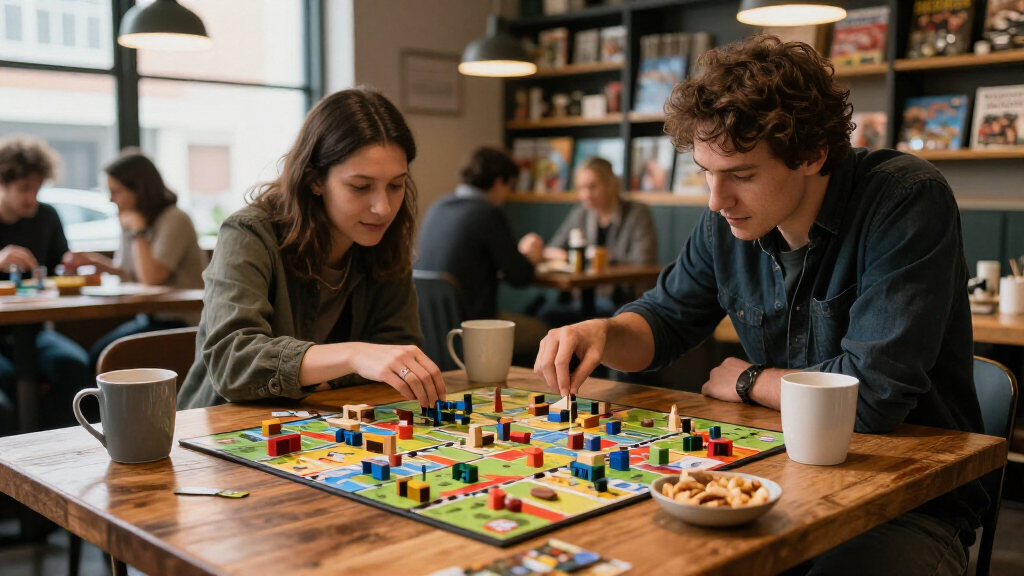
I ranked these games by how directly factory building shapes the decisions players make: planning production, managing resources, arranging processes, or completing sequences. I also weighed rules weight, accessibility for the intended audience, and whether the central puzzle offers enough variety to suit repeat plays. A factory theme alone did not earn a high position; the game needed to make production or construction matter at the table.
Fantastic Factories ranks first for the breadth of its engine-building decisions. Factory Funner follows for a more focused spatial puzzle, while Little Factory favors approachability over depth. The remaining games serve narrower audiences or lean on different interpretations of the theme, so their placement depends on finding the right group rather than matching the top picks’ strategy focus. Product names and editions can vary, so check the listed age range, player count, and rules summary before buying.
| factory building board game | Genre | Brand | Game type |
|---|---|---|---|
| Fantastic Factories Board Game | Strategy | Deep Water Games | — |
| Little Factory | — | — | Resource management and engine-building card game |
| Cheese Factory Card Game | — | — | Engine building and set collecting |
| Monster Factory Board Game | Tactical | Rio Grande Games | — |
| Factory Funner Board Game | — | — | Factory-building board game |
| HABA Fast Factory | Dexterity | HABA | — |
Factors to Consider When Choosing Best Factory Building Board Games
Factory games can share a theme while asking for very different kinds of thinking. I would start with the experience your group wants, then check practical details that often matter more than the factory artwork.
Choose the kind of factory puzzle you enjoy
Some games focus on building an engine that converts resources into more productive turns; others ask you to connect or arrange production steps. Those styles reward different habits: engine builders favor long-range planning, while spatial puzzles test how well you organize a limited layout. A common mistake is choosing by theme alone and finding that the core puzzle does not suit the group. Before buying, read how a turn works and identify what players spend most of their time deciding. If your group likes improving a system over several rounds, prioritize engine growth; if they prefer visible construction challenges, look for spatial planning.
Match rules weight to your regular group
A complex ruleset can reward repeat sessions, but it can slow down a casual gathering or make it harder for new players to join. Lighter card or sequence games can get a family playing quickly, though experienced strategy fans may want more long-term choices. Consider who will explain the rules and whether the same people will return for another session. Do not assume a child-friendly theme means the game is simple for every age; age guidance and reading demands matter too. A game that reaches the table often can be a better fit than one with more mechanisms that your group rarely has time to learn.
Check player interaction before you buy
Factory building can be mostly about improving your own operation, or it can involve competition for shared opportunities and resources. Groups who enjoy direct competition may find solitary optimization less engaging, while players who prefer calm puzzles may dislike having their plans disrupted. Look for descriptions of shared boards, contested actions, turn order, and player blocking. These details reveal whether the game creates tension between players or mainly compares personal engines at the end. Match that interaction level to your table instead of treating “strategy” as a single style.
Think about setup, space, and upkeep
Production games can involve boards, cards, tokens, or layouts that spread across a table. A compact box does not always mean a compact playing area, especially when players build individual production systems. If your table is small, check component counts and photos of a typical setup where available. Also consider how much sorting and resetting your group will tolerate between sessions. A more involved game may be worth that effort for a regular game night, while a quick family game benefits from a setup that stays simple.
Pay for depth only when your group will use it
More rules and systems can create richer decisions, but they also add teaching time and can make a game less flexible for mixed-experience groups. If your group meets often and enjoys learning systems, depth may provide a better long-term fit. For occasional play, accessible rules and a clear central puzzle may matter more than extra layers. Compare what the game adds: meaningful choices, varied plans, or simply more steps to manage. Treat the intended audience and replay style as better signals than component volume or theme when judging whether a premium option suits your table.
Frequently Asked Questions
Which of these games is the best starting point for adults new to factory games?
Little Factory is the clearest starting point if your group wants resource management without committing to a heavier strategy session. If players are comfortable learning several connected systems, Fantastic Factories offers more room to plan an engine. The right choice depends on how much rules teaching your group enjoys. Check the current edition’s rules overview and age guidance before deciding, since product listings can differ.
Is HABA Fast Factory a strategy game for adults?
HABA Fast Factory is presented as a robot-themed sequence game for children ages eight and up, so I would choose it primarily for a child-focused or family table. Its appeal is quick, accessible play rather than the layered engine planning associated with titles such as Fantastic Factories. Adults looking for a substantial factory-building strategy game may find that distinction important. Review the listed mechanics and intended age range to see whether its pace matches your group.
Which pick suits players who like arranging production lines?
Factory Funner is the most direct fit in this lineup for players drawn to spatial production planning. That makes it a different kind of challenge from Fantastic Factories, where the draw is developing an engine through several linked decisions. Consider whether your group likes visual layout puzzles and adapting a plan as space fills. If they prefer resource conversion and long-term growth, the engine-building option may be a stronger match.
Can I choose between these games based on the factory theme alone?
I would not, because the titles cover distinct styles and audiences. A game can use factory imagery while focusing on resource management, spatial planning, collecting, or sequencing. Check the core turn, player interaction, and intended age range before buying. That quick comparison helps avoid picking a game whose theme appeals but whose actual decisions do not.
What should I check before buying a factory game as a family gift?
Start with the youngest player’s age and comfort with reading, arithmetic, and multi-step rules. Then check player count, typical play time, and whether the game calls for a large shared table or an individual layout for each player. A child-oriented sequence game can be a better fit for mixed ages than a strategy title, even when adults prefer deeper planning. For a gift, confirm the exact edition and included components in the seller’s listing, since listings may describe different versions.
Conclusion
For the best overall strategy choice, I recommend Fantastic Factories because it offers the most developed engine-building focus in this lineup. For a spatial production puzzle, choose Factory Funner; for a lighter resource-management game, look at Little Factory, which is my value-oriented pick for groups prioritizing accessible play. For beginners and family sessions with children, HABA Fast Factory serves the clearest age-specific need, while Monster Factory and Cheese Factory are worth comparing when their particular mechanics appeal to your group. For a premium strategy session, favor the game with the strongest fit for your group’s appetite for rules and repeat play, rather than choosing by theme or component count alone.
Fall Picks
fall essentials
As an affiliate, we earn on qualifying purchases.