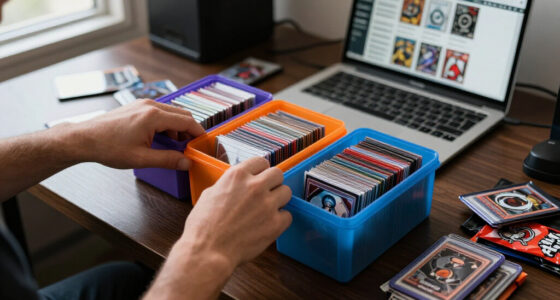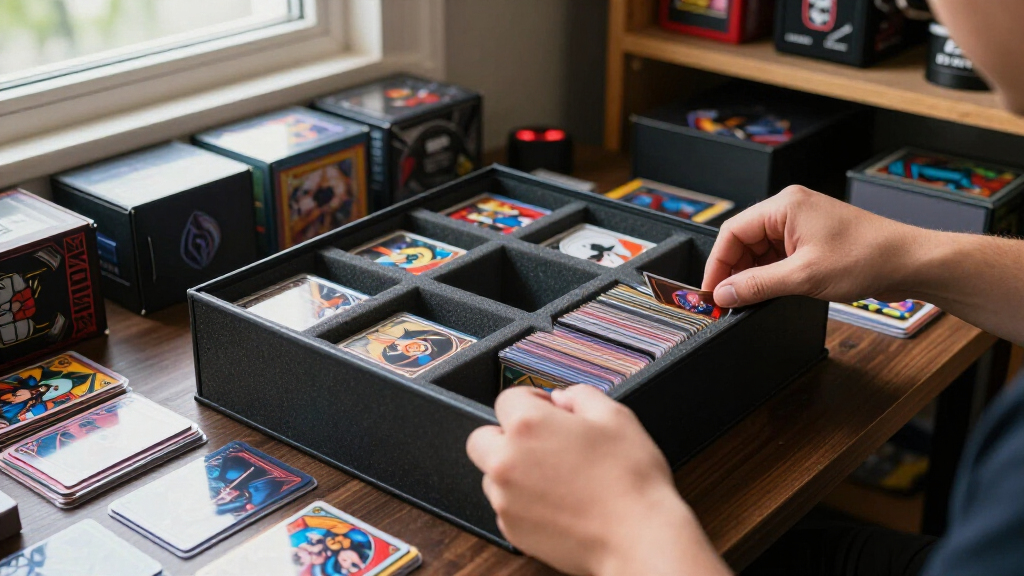

Storing trading cards properly helps preserve their condition, maintain organization, and prevent damage. This guide is for collectors or enthusiasts who want a clear method to store their cards in boxes. It covers selecting the right storage boxes, preparing cards, and organizing them efficiently. Follow these steps to ensure your collection remains in top condition for years to come, whether you’re a casual collector or serious enthusiast.

Play games on Amazon Luna for your game nights, included with Prime
- A rotating selection of games, no download needed
- Play on TV, laptop or phone
- Fast, free delivery for your gear, too

Trading Card Storage Box, 10-Pack, 1100 Count, White Corrugated Cardboard
- ✔ Quantity: 10-pack
- ✔ Capacity per box: 1100 cards
- ✔ Material: Double-sided corrugated cardboard

5-Pack Toploader Trading Card Storage Box, 4 Row, 3200 Capacity
- ✔ Capacity: 3200+ unsleeved cards, 2200+ single-sleeved, 1500+ double-sleeved, 700+ toploaders
- ✔ External Dimensions: 13.26 × 13.26 × 2.04 inches
- ✔ Internal Dimensions: 12.79 × 12.79 × 4.13 inches

8 Pack Trading Card Storage Box, Sports Card Organizer
- ✔ Material: 4-layer corrugated cardboard with laminated surface
- ✔ Capacity: Up to 1100 cards per box
- ✔ Size Compatibility: Standard 3.5"×2.5" cards
Difficulty: Beginner | Time: 30-60 minutes
What You’ll Need
Tools & Materials:
- trading card storage boxes
- sleeves or top loaders
- labels or markers
- clean workspace
Knowledge:
- basic understanding of trading card care
- ability to handle cards carefully
Trading Card Storage Box, 10-Pack, 1100 Count, White Corrugated Cardboard
<p>This set stands out for its affordability and capacity, offering ten large boxes capable of storing up to 1100 cards each. Made from sturdy double-sided corrugated cardboard, these boxes are easy to assemble and provide reliable protection from dust and minor impacts. Compared with high-end plastic options, this set is less durable but excels in bulk storage affordability. It’s ideal for collectors who need to store thousands of cards without worrying about display or premium protection. However, it’s not suitable for toploaders or magnetic holders, and lacks waterproofing, which can be a concern for long-term storage.</p>
Pros:
- Large capacity for bulk storage
- Easy to assemble with pre-folded design
- Durable and pressure-resistant construction
Cons:
- Not suitable for toploaders or magnetic holders
- Limited to standard card sizes
- No waterproof features
Best for: Bulk storage of large collections on a budget
Not ideal for: Collectors needing waterproof or magnetic card support
Bottom line: A cost-effective, high-capacity bulk storage option best suited for collectors who prioritize volume and affordability over premium protection.
“A cost-effective, high-capacity bulk storage option best suited for collectors who prioritize volume and affordability over premium protection.”
5-Pack Toploader Trading Card Storage Box, 4 Row, 3200 Capacity
<p>This high-capacity box shines for its ability to hold over 3,200 unsleeved cards or 700+ toploaders across four compartments, making it perfect for serious collectors or competitive players. Its sturdy, double-sided white 4-layer cardboard construction offers excellent protection against dust and minor impacts. Compared to basic bulk boxes, this model provides compartmentalization, helping organize different card types or sets. However, its bulkiness makes it less portable and more cumbersome in small spaces, and it’s incompatible with magnetic holders or oversized cards. This pick is ideal for those who want to store extensive collections in a single, organized container.</p>
Pros:
- Huge capacity for extensive collections
- Easy to assemble without tools
- Provides excellent protection and organization
Cons:
- Not suitable for magnetic or oversized cards
- Bulky for small storage spaces
Best for: Large, organized collections requiring compartmentalization
Not ideal for: Collectors with limited space or needing waterproof solutions
Bottom line: A robust, high-capacity storage solution perfect for serious collectors who value organization and protection over portability.
“A robust, high-capacity storage solution perfect for serious collectors who value organization and protection over portability.”
8 Pack Trading Card Storage Box, Sports Card Organizer
<p>This set offers a practical solution for collectors looking for moisture-proof, dustproof storage in a compact form. Each box holds up to 1100 standard cards, and the laminated four-layer corrugated cardboard enhances durability against environmental damage. Its space-efficient design makes it easy to store when flattened, ideal for those with limited room or who prefer to keep collections neatly tucked away. Compared to bulk or multi-compartment options, this set sacrifices some capacity for moisture resistance and portability, but it’s less durable than plastic or metal options and doesn’t lock securely. It’s perfect for casual collectors or those who want reliable storage without taking up much space.</p>
Pros:
- Dustproof and moisture-resistant
- Easy to assemble and space-saving when flattened
- Suitable for various trading and sports cards
Cons:
- Made of cardboard, less durable than plastic or metal
- Limited to standard-sized cards
- No locking mechanism for lids
Best for: Enthusiasts needing moisture-resistant, space-efficient storage
Not ideal for: Collectors with oversized or magnetic cards, or seeking ultra-durable solutions
Bottom line: A versatile, space-efficient storage box that offers moisture protection, ideal for casual collectors or those with limited storage space.
“A versatile, space-efficient storage box that offers moisture protection, ideal for casual collectors or those with limited storage space.”
As an Amazon Associate we earn from qualifying purchases.
Before You Start
Ensure your hands are clean and dry before handling cards to prevent dirt or oils from damaging them. Confirm you have enough storage boxes for your entire collection. Decide on an organizational system—by set, rarity, or player name—before starting. Avoid handling cards in areas prone to dust or static. If you have valuable or rare cards, consider using protective sleeves before storing them in boxes.
Step-by-Step Instructions
Step 1: Select appropriate storage boxes
Choose storage boxes made specifically for trading cards, ideally acid-free and with snug compartments for your card sizes. Flat, stackable boxes with dividers help keep cards organized and prevent bending or warping. Make sure the box capacity matches your collection size or future expansion plans.
Tip: Opt for boxes with clear lids for easy identification without opening. Avoid using generic containers like shoeboxes which may cause damage or lack proper support.
Check: The selected boxes fit your cards comfortably, with enough room to add more without overcrowding, and are sturdy enough to stack safely.
Step 2: Sort your cards
Organize your cards based on your preferred system—by set, year, player, or rarity. Spread cards on a clean surface and group them accordingly. Remove any damaged or heavily worn cards for separate storage or disposal.
Tip: Use small containers or dividers to keep groups separated during sorting. Handle cards by edges to avoid fingerprints and smudges.
Check: Cards are grouped neatly in your chosen categories, and you can easily locate specific cards during storage or future retrieval.
Step 3: Insert cards into protective sleeves or top loaders
Place each card into a protective sleeve or top loader suited for trading cards. Insert cards carefully, avoiding bending or forcing them into sleeves. If using top loaders, ensure they are snug but not tight.
Tip: Use soft, acid-free sleeves for general storage; top loaders are ideal for valuable or rare cards. Handle cards by edges to prevent fingerprints.
Check: Cards slide smoothly into sleeves or loaders without bending, and are fully protected from surface damage.
Step 4: Place cards into storage boxes
Arrange sleeved or top-loaded cards into the storage boxes, placing them upright or flat depending on box design. Use dividers or separators if available to keep categories distinct. Fill the box evenly to avoid shifting during movement.
Tip: Avoid overstuffing boxes; leave some space to prevent bending or pressure damage. Keep heavier boxes on the bottom if stacking.
Check: Cards fit securely within the box, with labels visible for identification, and no risk of bending or crushing during stacking.
Step 5: Label each storage box
Use labels or markers to clearly mark each box with its contents, such as set name, date, or category. Attach labels to the outside of the box for easy identification without opening.
Tip: Write legibly and consider color-coding for categories, which speeds up locating cards later.
Check: All boxes are labeled clearly, enabling quick identification of contents without opening each container.
Step 6: Store boxes in a safe, climate-controlled location
Place the storage boxes in a cool, dry, and stable environment away from direct sunlight, humidity, and temperature fluctuations. Keep boxes on shelves or in cabinets that prevent accidental falls or crushing.
Tip: Avoid attics, basements, or garages prone to extreme conditions. Use moisture absorbers if needed to control humidity.
Check: Boxes remain in good condition over time, with no signs of warping, moisture damage, or fading.
Common Mistakes to Avoid
- Using non-archival or cheap storage containers — Choose acid-free, archival-quality boxes specifically designed for trading cards to prevent chemical damage.
- Handling cards without protection — Always handle cards by edges and use sleeves or top loaders to prevent surface damage and fingerprints.
- Overstuffing boxes or packing cards too tightly — Fill boxes to capacity but avoid forcing cards in, which can cause bending or warping.
Troubleshooting
Problem: Cards are sticking together or are difficult to remove from sleeves
Solution: Use high-quality, acid-free sleeves, and handle cards gently. Store in a cool, dry place to prevent warping.
Problem: Boxes are getting dusty or moldy
Solution: Store boxes in a clean, dry environment, and consider using silica gel packs or moisture absorbers.
Problem: Cards are bending or warping inside the box
Solution: Ensure boxes are not overfilled and are stored upright on stable surfaces. Use rigid storage options if necessary.
What Success Looks Like
The collection is organized, with each card protected in sleeves or loaders, stored securely in labeled boxes, and kept in a stable environment. You can quickly locate any card based on the labeling system, and cards show no signs of damage or deterioration.
Next Steps
Regularly review your collection, update labels as needed, and maintain a consistent storage environment. When adding new cards, follow the same steps to keep everything organized. Consider creating digital inventories for larger collections to streamline management.
Frequently Asked Questions
What size storage box should I use for standard trading cards?
Use boxes designed specifically for standard trading cards, typically holding 100 to 400 cards. Ensure the box dimensions match your card size, usually 3.5 x 2.5 inches.
How do I protect valuable or rare cards during storage?
Place valuable cards in high-quality, acid-free sleeves or top loaders before storing them in labeled boxes. Keep these boxes in climate-controlled areas to prevent damage.
Can I store different sets or categories together in one box?
Yes, but use dividers or separate compartments within the box to prevent mixing and make retrieval easier. Label each section clearly.
How often should I check on my stored cards?
Inspect your collection at least once a year to check for signs of damage, mold, or moisture. Reorganize or replace storage materials as needed.
Fall Picks
fall essentials
As an affiliate, we earn on qualifying purchases.