TL;DR

Play games on Amazon Luna for your game nights, included with Prime
- A rotating selection of games, no download needed
- Play on TV, laptop or phone
- Fast, free delivery for your gear, too
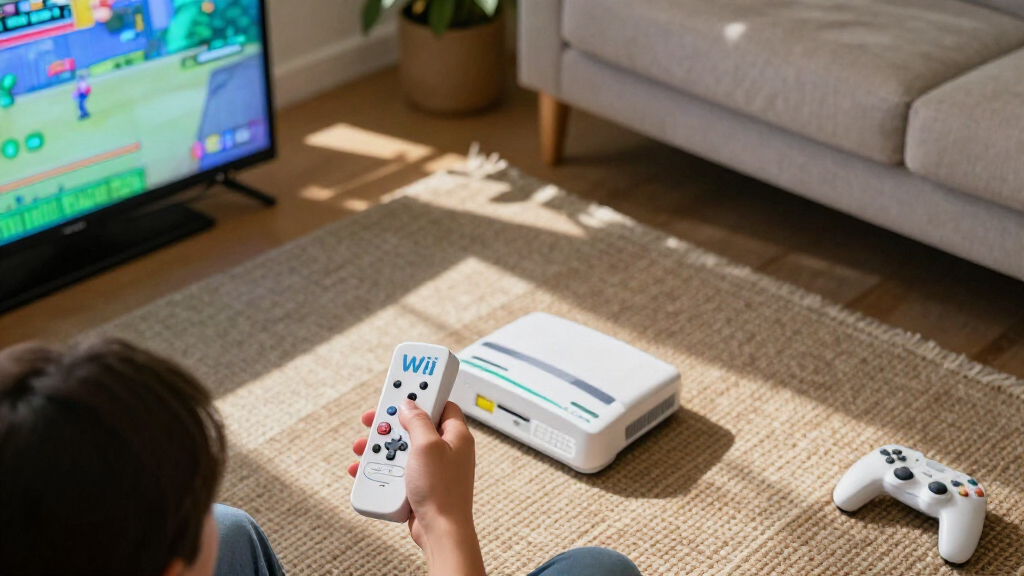
Developer Rairii says a personal project has booted classic Mac OS 7.6 and 9.2.2 to the desktop on Nintendo Wii hardware. The port remains far from public release and involves adapting OpenBIOS, the Mac boot process and system memory mappings to Nintendo’s hardware.
Developer Rairii says a project to run classic Mac OS on Nintendo’s PowerPC hardware has reached the desktop on a Nintendo Wii, with Mac OS 7.6 and Mac OS 9.2.2 shown booting. The milestone is an early technical demonstration, not a public release: Rairii says the work is nowhere near ready for distribution.
In a guest report published by Virtually Fun on October 29, 2026, Rairii described adapting classic Mac OS for systems using Nintendo’s ArtX-derived chipsets. The stated scope includes the GameCube and Wii, with the Wii U as a possible later target. The desktop milestone is the first result reported for this project; the author characterizes it as likely the first time since the CHRP clone era that someone outside Apple brought classic Mac OS to a desktop on a new system. That comparison is the author’s assessment, not an independently verified historical finding.
The port begins with the Mac OS “Trampoline” bootloader, which expects an Open Firmware environment. Rairii says the project uses a port of OpenBIOS and adapts the loader and kernel for Nintendo hardware, whose physical memory layout differs from the assumptions in the Mac startup code. The developer patched address calculations and memory mappings, among other changes, to get the operating system through startup.
For early testing, Rairii placed the Mac OS ROM file on a FAT-formatted storage device for OpenBIOS to load. The report also describes work on drivers for devices connected through the consoles’ EXI bus, including an SD adapter and an IDE device. Rairii cautions that the IDE driver is not accurate to real hardware and is being tested against an emulation setup. The report does not establish that all components, storage configurations or software work reliably on a physical Wii.
Classic Mac OS on Wii Hardware
The result shows that software written for Apple’s PowerPC-era computers can be made to start on a very different PowerPC platform, given enough work on firmware, memory handling and device support. It is a notable compatibility and preservation experiment, especially for people interested in older operating systems and console hardware.
It also gives the project a concrete milestone: reaching the desktop is a step beyond merely loading a bootloader or kernel. But it does not by itself show that the system is stable, fully usable, or capable of running a broad range of Mac applications. The developer’s caveat about release readiness is central to understanding what the demonstration does—and does not—establish.
Products Worth Considering

Logitech MX Brio Ultra HD 4K Webcam, Graphite

Bose SoundLink Flex (2nd Gen) Portable Bluetooth Speaker, Black

Amazon Kindle Paperwhite Signature Edition (12th Generation, 2024), 32 GB, Metallic Black
As an affiliate, we earn on qualifying purchases.
From OpenBIOS to the Mac Desktop
Rairii says the project began on June 22, 2025, when they forked the upstream OpenBIOS code. The developer had previously worked on porting Windows NT to PowerPC hardware, including Nintendo systems and Mac laptops. That experience informed the new effort, while the author says familiarity with classic Mac OS prompted the port.
The report credits work by developer Goldfish64 on an OpenBIOS port associated with a separate Mac OS X project for Wii and Wii U. Rairii says some drivers from that work were useful, but the project was structured to target GameCube as well. The author also says the coding, reverse engineering and debugging were done personally, without coding agents or large language models. That is the developer’s account of their process.
Stability and Release Status
The report does not specify how much of Mac OS 7.6 or 9.2.2 is functional after reaching the desktop, whether the demonstration used only emulation or also physical hardware, or which applications and peripherals have been tested. It gives no public release date, installation instructions, or compatibility list. The author’s statement that the port is far from release means desktop booting should not be read as a finished port.
Support for GameCube and Wii U remains part of the project’s stated direction, not a demonstrated outcome in the material provided. Further hardware-specific work may change the current memory-mapping approach, particularly for Wii U. The report does not say when or whether those targets will reach the same milestone.
Further Porting Work Ahead
Rairii’s report focuses on the engineering challenges encountered so far and does not announce a release or a firm schedule. The next steps described are continued work on hardware assumptions, memory mappings and device support, with the developer noting that parts of the implementation may change as the project develops.
Readers should watch for future project updates that identify which console models and operating-system versions have been tested, how much of the system is usable, and whether the work becomes available to others. Until those details are published, the confirmed news is limited to the developer’s report of reaching the desktop with Mac OS 7.6 and 9.2.2 on Wii hardware.
Key Questions
Which classic Mac OS versions have reached the desktop?
Rairii’s report shows Mac OS 7.6 and Mac OS 9.2.2 booting to the desktop on the Wii.
Is the Wii port available to download?
No public release is announced. Rairii says the project is not ready for public release.
Does the project support the GameCube and Wii U?
The developer says the project aims to cover GameCube and Wii, with Wii U as a possible later target. The supplied report does not confirm desktop boots on GameCube or Wii U.
Does reaching the desktop mean Mac applications work?
Not necessarily. The report confirms a desktop milestone but does not provide a list of tested applications or establish broad software compatibility or system stability.
Source: virtuallyfun.com