The best trading card game starter deck overall is Pokémon TCG Battle Academy, since its three decks and guided play support learning with another person. For a two-player first session, Disney Lorcana: Wilds Unknown 2-Player Starter Deck offers a ready-made head-to-head entry point, while Magic: The Gathering — Final Fantasy Starter Kit suits players drawn to a familiar franchise and a traditional duel. The main tradeoff is between guided, immediately playable sets and single-theme decks that may offer a clearer path into a particular game or character. Deck size, rules complexity, and whether you need one or two players to start all affect the fit. Read on for the full breakdown of these 13 trading card game starter decks and the buyer each one suits best.

Play games on Amazon Luna for your game nights, included with Prime
- A rotating selection of games, no download needed
- Play on TV, laptop or phone
- Fast, free delivery for your gear, too
Complete the kit

Key Takeaways
- Battle Academy is the strongest learning setup: three decks and guided play make it easier to teach and replay than a single-deck purchase.
- Two-player readiness is a real separator: the Lorcana Wilds Unknown set and Star Wars: Unlimited Intro Battle: Hoth give buyers a direct route to a shared first game.
- Franchise appeal and gameplay fit are different priorities: Final Fantasy and Hunter x Hunter decks may draw fans in, but the rules and play style still need to suit the player.
- The One Piece decks offer several distinct entry points: Luffy, Zoro, Kuzan, and Sabo differ by color and character focus, so fans should choose for play style rather than title alone.
- Not every starter set is equally beginner-directed: guided, multi-deck products are more approachable for teaching, while single-deck options suit buyers who already know which game they want to learn.
| Digimon Card Game Starter Deck: Dragon of Courage |  | Best for a Ready-to-Play Setup | Game: Digimon Card Game | Deck: Dragon of Courage (ST15) | Cards: 54 | VIEW LATEST PRICE | See Our Full Breakdown |
| Ravensburger Disney Lorcana: Rise of the Floodborn Amber & Sapphire Starter Deck |  | Best for Starter Extras | Game: Disney Lorcana TCG | Set: Rise of the Floodborn | Deck colors: Amber and Sapphire | VIEW LATEST PRICE | See Our Full Breakdown |
| One Piece Card Game Starter Deck ST-33: Blue Kuzan |  | Best for Blue Kuzan Fans | Game: One Piece Card Game | Model: ST-33 | Theme: Blue Kuzan | VIEW LATEST PRICE | See Our Full Breakdown |
| One Piece Card Game Starter Deck ST-31: Red Monkey D. Luffy |  | Best for Luffy-Themed Play | Game: One Piece Card Game | Deck theme: Red Monkey D. Luffy | Set name: Time of Battle | VIEW LATEST PRICE | See Our Full Breakdown |
| CookieRun TCG: Glorious Moonlight Legendary Purple Starter Deck |  | Best for Approachable Two-Player Battles | Game: CookieRun: Braverse Trading Card Game | Deck theme: Glorious Moonlight Legendary Purple Cookie | Set: Legendary Starter Deck Assortment | VIEW LATEST PRICE | See Our Full Breakdown |
| Ravensburger Disney Lorcana Wilds Unknown 2-Player Starter Deck |  | Best for Learning Together | Brand: Ravensburger | Game: Disney Lorcana Trading Card Game | Set: Wilds Unknown | VIEW LATEST PRICE | See Our Full Breakdown |
| Yu-Gi-Oh! Trading Card Game Starter Deck: Codebreaker |  | Best for Learning Link Summoning | Brand: Yu-Gi-Oh! | Manufacturer: Konami | Set name: Codebreaker | VIEW LATEST PRICE | See Our Full Breakdown |
| Magic: The Gathering — Final Fantasy Starter Kit |  | Best for Tabletop and Online Play | Brand: Magic: The Gathering | Set: Final Fantasy Starter Kit | Model year: 2025 | VIEW LATEST PRICE | See Our Full Breakdown |
| Bandai Union Arena Hunter x Hunter English Trading Card Game Starter Deck |  | Best for Hunter x Hunter Fans | Brand: Bandai | Game: Union Arena | Series: Hunter x Hunter | VIEW LATEST PRICE | See Our Full Breakdown |
| One Piece Card Game Starter Deck ST-35: Red & Black Sabo |  | Best for Sabo Collectors and Fans | Brand: BANDAI | Product: One Piece Card Game Starter Deck ST-35 | Character: Sabo | VIEW LATEST PRICE | See Our Full Breakdown |
| Star Wars: Unlimited Intro Battle: Hoth |  | Best Guided Two-Player Introduction | Game: Star Wars: Unlimited | Brand: Asmodee | Included components: 104 cards, 6 reference cards, 1 game board, 1 info sheet, 1 rulebook, 57 damage counters, 2 epic action counters, 1 initiative counter | VIEW LATEST PRICE | See Our Full Breakdown |
| One Piece Card Game Starter Deck ST-32: Green Roronoa Zoro |  | Best Character-Themed One Piece Pick | Game: One Piece Card Game | Deck: ST-32 Green Roronoa Zoro | Brand: BANDAI | VIEW LATEST PRICE | See Our Full Breakdown |
| Pokémon TCG Battle Academy 2022 Deck Set, 3 Decks, 180 Cards |  | Best for Learning with Deck Variety | Game: Pokémon Trading Card Game | Model year: 2022 | Decks: 3 | VIEW LATEST PRICE | See Our Full Breakdown |
| trading card game starter deck | Game | Brand | Age range | Included components |
|---|---|---|---|---|
| Digimon Card Game Starter Deck | Digimon Card Game | BANDAI | — | — |
| Ravensburger Disney Lorcana: R | Disney Lorcana TCG | — | 8+ | — |
| One Piece Card Game Starter De | One Piece Card Game | — | 6 years and up | Booster packs (as listed) |
| One Piece Card Game Starter De | One Piece Card Game | — | 6 years and up | Booster packs (as listed) |
| CookieRun TCG: Glorious Moonli | CookieRun: Braverse Trading Card Game | — | — | — |
| Ravensburger Disney Lorcana Wi | Disney Lorcana Trading Card Game | Ravensburger | 8 years and up | 13 damage markers, 2 lore trackers, 1 rulebook |
| Yu-Gi-Oh! Trading Card Game St | — | Yu-Gi-Oh! | 156 months and up | Trading cards |
| Magic: The Gathering | — | Magic: The Gathering | 13+ | 2 deck boxes, 1 play guide booklet, 4 double-sided tokens, 2 double-sided reference cards, 2 Arena code cards |
| Bandai Union Arena Hunter x Hu | Union Arena | Bandai | — | 50-card deck, 3 Action Point cards, playsheet |
| One Piece Card Game Starter De | — | BANDAI | 6 years and up | — |
| Star Wars: Unlimited Intro Bat | Star Wars: Unlimited | Asmodee | 12+ | 104 cards, 6 reference cards, 1 game board, 1 info sheet, 1 rulebook, 57 damage counters, 2 epic action counters, 1 initiative counter |
| One Piece Card Game Starter De | One Piece Card Game | BANDAI | — | Booster packs |
| Pokémon TCG Battle Academy 202 | Pokémon Trading Card Game | — | — | — |
More Details on Our Top Picks
Digimon Card Game Starter Deck: Dragon of Courage
Dragon of Courage is a straightforward pick for someone who wants a complete Digimon starting point rather than a bundle built around extra random cards. Its 54-card deck comes with memory gauge cards, index cards, and a playsheet, so the box supplies useful play aids alongside the cards. Compared with the Disney Lorcana Rise of the Floodborn Amber & Sapphire Starter Deck, it skips a randomized booster pack and has fewer listed cards, but its contents are consistent from box to box. That predictability is handy for learning or replacing a starter, though repeated cards limit variety and every copy has the same contents. Choose it for a focused first step into Digimon; skip it if opening boosters or getting varied deck contents is part of the appeal.
Pros:- Ready-to-play 54-card deck
- Includes two memory gauge cards and four index cards
- Playsheet provides an additional aid for learning play
- Consistent contents make the starter’s contents predictable
Cons:- Some cards are identical, limiting variety within the deck
- Every box has the same contents
- No booster pack is listed
Best for: New Digimon players who want a ready-to-play deck with reference and gameplay aids included.
Not ideal for: Collectors seeking varied contents or players who want a booster pack included for additional card variety.
- Game:Digimon Card Game
- Deck:Dragon of Courage (ST15)
- Cards:54
- Memory gauge cards:2
- Index cards:4
- Playsheet:1
- Players:2
- Brand:BANDAI
Our verdict“Choose Dragon of Courage for a predictable Digimon starter with useful play aids, not for randomized extras or varied box contents.”
Ravensburger Disney Lorcana: Rise of the Floodborn Amber & Sapphire Starter Deck
Rise of the Floodborn Amber & Sapphire stands out when a first deck should come with more than a stack of cards: the box includes a 60-card starter deck, a 12-card randomized booster pack, a paper playmat, damage counters, a tracker token, and rules. That bundle gives newcomers several pieces for getting a two-player session started and adds a small element of discovery. Compared with Dragon of Courage, it has a larger listed deck and a booster, but its randomized pack makes the contents less predictable, and the product is not a solo game. Its two-color theme also gives players a defined starting identity rather than a blank deck-building slate. I’d pick it for Disney fans who want an all-in-one Lorcana entry; skip it if you need solo play or want a fixed, fully specified collection.
Pros:- Includes a 60-card starter deck and 12-card randomized booster pack
- Two foil cards are included in the deck
- Paper playmat, damage counters, tracker token, and rules sheet support setup
- Made for players ages 8 and up
Cons:- Designed for two or more players, not solo play
- Randomized booster contents are not predictable
- More included components may be unnecessary for players who only want a deck
Best for: Disney fans and new Lorcana players who want a starter deck, play aids, rules, and a booster in one box.
Not ideal for: Solo players or buyers who prefer a fully predictable box without randomized booster contents.
- Game:Disney Lorcana TCG
- Set:Rise of the Floodborn
- Deck colors:Amber and Sapphire
- Cards:60, including 2 foil cards
- Booster pack:12 randomized cards
- Players:2 or more
- Age range:8+
- Included play aids:11 damage counters, paper playmat, tracker token, and rules sheet
Our verdict“Pick this Lorcana deck if you want a beginner-friendly bundle with a booster and play aids, and can play with another person.”
One Piece Card Game Starter Deck ST-33: Blue Kuzan
ST-33 Blue Kuzan makes the most sense for buyers drawn to its character theme and a pre-constructed blue strategy. The product description says its cards are designed to work together and that it is ready to play out of the box, which gives a fan a more coherent starting point than buying unrelated cards individually. Compared with the ST-31 Red Monkey D. Luffy deck, the main distinction here is the blue Kuzan identity, not a clearly documented difference in card count or included play aids. That missing detail is the tradeoff: the listing does not specify the exact deck contents, and its included-components field says “booster packs,” leaving the package contents unclear. I’d choose it for theme-first One Piece players comfortable checking contents before purchase; beginners who need a fully itemized starter should favor a clearer listing.
Pros:- Pre-constructed deck is described as ready to play
- Blue Kuzan theme gives the deck a distinct character focus
- Cards are described as designed to work together
- Can suit both new players and existing collectors
Cons:- Exact card count and card list are not specified
- Included components are listed as booster packs, which makes the package contents unclear
- The available details do not explain the blue strategy for new players
Best for: One Piece fans who specifically want a blue Kuzan-themed pre-built deck and are comfortable with limited listing detail.
Not ideal for: First-time buyers who need an exact card count, card list, or clearly itemized package contents before choosing a starter.
- Game:One Piece Card Game
- Model:ST-33
- Theme:Blue Kuzan
- Set name:Time of battle
- Included components:Booster packs (as listed)
- Age range:6 years and up
- Dimensions:7.5 x 4.5 x 1 inches
- Item weight:4.8 ounces
Our verdict“Choose ST-33 for its Blue Kuzan theme, but favor a more fully documented starter if exact contents matter to you.”
One Piece Card Game Starter Deck ST-31: Red Monkey D. Luffy
ST-31 Red Monkey D. Luffy is the character-led choice among these One Piece options: its appeal is a pre-built red deck centered on Luffy, rather than the blue Kuzan theme of ST-33. The ready-to-play format gives newcomers a direct way to start with a named character, while established players can use it as a themed base for further deck customization. Compared with ST-33 Blue Kuzan, this listing provides a card size but still does not state the deck’s exact card count or list; both require buyers to accept limited content detail. The product also lists booster packs as included components without explaining their quantity or role. That ambiguity makes it less reassuring as a fully specified starter than the Lorcana option, which lists its deck size and play aids. Pick ST-31 for Luffy affinity, not for a transparent inventory.
Pros:- Pre-built deck is described as ready to play
- Monkey D. Luffy theme gives fans a clear reason to choose it over ST-33 Blue Kuzan
- Standard-size cards are specified
- Listing presents it as suitable for new and experienced players
Cons:- Exact card count and deck list are not provided
- Booster packs are listed without a clear quantity or explanation
- Customization may be needed for players pursuing a specific strategy
Best for: One Piece fans who want a ready-to-play red deck built around Monkey D. Luffy and may customize it later.
Not ideal for: Buyers who need a confirmed card count and full deck list, or who want clearly described starter accessories.
- Game:One Piece Card Game
- Deck theme:Red Monkey D. Luffy
- Set name:Time of Battle
- Model year:2026
- Included components:Booster packs (as listed)
- Age range:6 years and up
- Card size:Standard
- Dimensions:7.5 x 4.5 x 1 inches
Our verdict“Choose ST-31 if Luffy and a red deck are your priority, but not if you need detailed contents before buying.”
CookieRun TCG: Glorious Moonlight Legendary Purple Starter Deck
Glorious Moonlight Legendary Purple offers a clearly packaged first step into CookieRun: Braverse, with a 60-card deck, promotional card, rules guide, and playmat. Its approachable rules and two-player focus make it a natural fit for beginners who want a defined game night setup rather than a deck alone. Compared with the Disney Lorcana Rise of the Floodborn Starter Deck, it lists a promotional card and a playmat but does not list a randomized booster; its playmat is also described as single-player despite the deck being designed for two-player battles. That mismatch may leave players wanting a second mat, and the listing says there is no manufacturer warranty. The purple Legendary Cookie theme will also matter more to CookieRun fans than to buyers choosing a starter purely for broad familiarity. I’d pick it for its bundled learning aids and focused two-player format.
Pros:- Ready-to-play 60-card deck
- Includes a promotional card and rules guide
- Playmat adds a setup aid for learning the game
- Designed for two-player competitive play with approachable rules
Cons:- Included playmat is listed as single-player, despite the two-player focus
- No manufacturer warranty is listed
- No booster pack is specified
Best for: CookieRun fans and beginners who want a defined two-player TCG starter with a rules guide and playmat included.
Not ideal for: Players seeking a second playmat in the box, a randomized booster, or a manufacturer warranty.
- Game:CookieRun: Braverse Trading Card Game
- Deck theme:Glorious Moonlight Legendary Purple Cookie
- Set:Legendary Starter Deck Assortment
- Deck size:60 cards
- Additional card:1 promotion card
- Included materials:Single-player playmat and rules guide
- Players:2
- Minimum age:72 months
Our verdict“Choose this CookieRun starter for a ready-to-play two-player introduction with a promo and rules guide, while accounting for its single-player mat.”
Ravensburger Disney Lorcana Wilds Unknown 2-Player Starter Deck
I’d choose this set when two newcomers want to learn Disney Lorcana at the same time. Its two distinct, ready-to-play 60-card decks let players start together, while the rulebook, lore trackers, and damage markers cover the basics without requiring a separate purchase. Compared with the Magic: The Gathering — Final Fantasy Starter Kit, this is the more direct Disney Lorcana entry point; the Magic kit adds Arena codes for online play, while Wilds Unknown focuses on a supplied tabletop match. The main tradeoff is that it supports a two-player introduction, not a wider group or a deep deck-building project. With only two beginner-oriented lists, players seeking more advanced play or many deck choices may outgrow the included setup.
Pros:- Two different prebuilt decks make a first head-to-head game possible out of the box.
- Rulebook, lore trackers, and damage markers supply key learning and gameplay tools.
- Two foil cards per deck add a collectible element without changing the beginner-focused setup.
- Designed to introduce new players to Disney Lorcana.
Cons:- Only two decks are included, so additional players need another set or deck.
- The beginner and casual focus may not satisfy players seeking deeper deck-building options.
Best for: Two Disney Lorcana newcomers who want a complete tabletop learning set and decks to play against each other.
Not ideal for: Players who need decks for more than two people or want advanced, customizable lists from the start.
- Brand:Ravensburger
- Game:Disney Lorcana Trading Card Game
- Set:Wilds Unknown
- Decks:2 prebuilt decks, 60 cards each
- Included components:13 damage markers, 2 lore trackers, 1 rulebook
- Foil cards:2 per deck
- Age range:8 years and up
- Model year:2026
Our verdict“Pick Wilds Unknown if two beginners want to learn Disney Lorcana together with the core play accessories included.”
Yu-Gi-Oh! Trading Card Game Starter Deck: Codebreaker
Codebreaker is the pick here for a new Yu-Gi-Oh! player who wants a starter deck with a specific teaching focus: basic Dueling and Link Summoning. Its approachable cards introduce Code Talker Link Monsters, giving the deck a clearer learning goal than a theme-first product such as the One Piece Card Game Starter Deck ST-35: Red & Black Sabo. It can also serve as a starting point for a Cyberse or Code Talker build, but that path depends on adding cards from other releases. Unlike the Wilds Unknown 2-Player Starter Deck, Codebreaker is listed as trading cards only, so buyers shouldn’t expect a rulebook or play accessories in the box. Its 2018 model year also makes this a more focused, older entry point rather than a newer all-in-one learning kit.
Pros:- Introduces basic Yu-Gi-Oh! Dueling through beginner-oriented cards.
- Provides a focused introduction to Link Summoning and Code Talker Link Monsters.
- Can act as a starting base for a Cyberse or Code Talker deck.
- Designed for two-player gameplay.
Cons:- Expanding the deck into a custom build requires cards from other releases.
- The listed contents are trading cards, without a rulebook or play accessories.
- Its 2018 model year makes it an older entry point than the 2025 Final Fantasy Starter Kit.
Best for: A new Yu-Gi-Oh! player who wants to learn Link Summoning and may later build around Cyberse or Code Talker cards.
Not ideal for: Buyers who want two complete starter decks, a teaching booklet, or a deck that can expand without collecting cards from other releases.
- Brand:Yu-Gi-Oh!
- Manufacturer:Konami
- Set name:Codebreaker
- Model year:2018
- Included components:Trading cards
- Age range:156 months and up
- Number of players:2
- Dimensions:4 x 1 x 6 inches
Our verdict“Choose Codebreaker if learning Link Summoning is the priority and you’re willing to source extra cards for future deck building.”
Magic: The Gathering — Final Fantasy Starter Kit
I’d rank this kit highly for a pair who want a guided first match and the option to continue playing online. It includes two ready-to-play 60-card decks, a play guide, reference cards, tokens, deck boxes, and Arena codes for both decks. That makes it more versatile than the Yu-Gi-Oh! Codebreaker, which centers on a single card-based deck foundation and doesn’t list comparable learning accessories. The Final Fantasy theme also gives fans a clear reason to pick it over a general Magic introduction, while the guide and reference cards support players new to the rules. The tradeoff is that Arena codes require account registration and expire on September 1, 2030. At age 13+, it is also aimed at older players than Wilds Unknown.
Pros:- Two 60-card decks let two people start playing together.
- Play guide and reference cards support learning Magic’s rules.
- Deck boxes and tokens provide useful tabletop accessories.
- Arena codes let players access both decks digitally.
Cons:- Arena codes require account registration.
- Arena codes expire September 1, 2030.
- The age guidance is 13+, making it less suited to younger beginners than Wilds Unknown.
Best for: Final Fantasy fans aged 13 and up who want two beginner-friendly Magic decks for tabletop play, with an online option.
Not ideal for: Younger players, or buyers who don’t want to register an Arena account or care about playing digitally.
- Brand:Magic: The Gathering
- Set:Final Fantasy Starter Kit
- Model year:2025
- Decks:2 ready-to-play 60-card decks
- Included components:2 deck boxes, 1 play guide booklet, 4 double-sided tokens, 2 double-sided reference cards, 2 Arena code cards
- Age range:13+
- Item weight:10.4 ounces
- Manufacturer:Wizards of the Coast
- Model number:D38540000
Our verdict“Choose this kit if you want Final Fantasy-themed Magic decks for both tabletop learning and online play.”
Bandai Union Arena Hunter x Hunter English Trading Card Game Starter Deck
This starter deck suits a Hunter x Hunter fan who wants a series-themed Union Arena entry point rather than a box built around teaching two players. The 50-card deck comes with three Action Point cards and a playsheet, so the supplied materials give a new player a starting structure for learning the game. Its strongest distinction from the Ravensburger Disney Lorcana Wilds Unknown 2-Player Starter Deck is the shared Union Arena rule system across different titles: that can make future interest in other Union Arena series more relevant, while Lorcana’s kit is explicitly prepared for a two-deck learning match. The main limitation is that this box lists one deck and is described as for single-player use, which may leave buyers needing a separate opponent’s deck. It also lacks the broader two-player teaching setup found in the Magic Final Fantasy kit.
Pros:- Includes a ready-to-play 50-card Hunter x Hunter deck.
- Three Action Point cards and a playsheet are included.
- English-language cards suit players seeking an English Union Arena product.
- Shared Union Arena rules may ease interest in other titles using the same system.
Cons:- Only one deck is listed, so it does not provide a complete two-player starter matchup.
- The product is listed for single-player use, which may limit immediate play options.
- It lacks the two-deck learning accessories included with the Magic Final Fantasy kit.
Best for: Hunter x Hunter fans who want an English-language Union Arena deck and a playsheet to get started.
Not ideal for: Two people looking for a complete head-to-head starter bundle, since only one deck is listed.
- Brand:Bandai
- Game:Union Arena
- Series:Hunter x Hunter
- Language:English
- Deck size:50 cards
- Included components:50-card deck, 3 Action Point cards, playsheet
- Recommended age:13 years and up
- Model:UE02ST
Our verdict“Pick this deck if Hunter x Hunter is your draw and you already have a way to play against another Union Arena deck.”
One Piece Card Game Starter Deck ST-35: Red & Black Sabo
ST-35 is a straightforward choice for One Piece fans drawn to Sabo and the red-and-black deck identity. The deck is pre-constructed and described as ready to play, so it serves as a more direct themed entry than the Yu-Gi-Oh! Codebreaker, which highlights learning a particular summoning mechanic and building further with cards from other releases. Compared with the two-deck Wilds Unknown and Magic: The Gathering — Final Fantasy Starter Kit, though, ST-35 is listed as one item and doesn’t include a second deck or a teaching guide. The product details also provide fewer specifics about deck size and included accessories, so buyers have less information to judge the complete starter experience. It makes the most sense when the character theme is a priority, not when a fully supplied learning bundle is the goal.
Pros:- Pre-constructed deck is described as ready to play.
- Sabo theme gives One Piece fans a clear character-based reason to choose it.
- Red-and-black color combination distinguishes it from the other listed One Piece starter decks.
- Compact listed dimensions of 7.5 x 4.5 x 1 inches.
Cons:- Only one item is listed, unlike the two-deck Lorcana and Magic starter kits.
- The supplied details do not state deck size or specific included accessories.
- The product description emphasizes theme and beginner use but gives little guidance on its teaching materials.
Best for: One Piece fans and Sabo collectors who want a themed, pre-constructed deck that is described as ready to play.
Not ideal for: Two beginners who need two decks, a rulebook, or detailed component information in a single starter purchase.
- Brand:BANDAI
- Product:One Piece Card Game Starter Deck ST-35
- Character:Sabo
- Color:Red and black
- Number of items:1
- Age range:6 years and up
- Item weight:4.8 ounces
- Item dimensions:7.5 x 4.5 x 1 inches
Our verdict“Choose ST-35 if Sabo and its red-and-black theme matter more to you than a two-player teaching bundle.”
Star Wars: Unlimited Intro Battle: Hoth
Two ready-made decks, a board, and a detailed rulebook make Intro Battle: Hoth a more guided first game than the One Piece Card Game Starter Deck ST-32: Green Roronoa Zoro, whose supplied contents are less clearly itemized. Its Battle of Hoth setting gives the match a recognizable theme, while the reference cards and counters help players follow the action without assembling extra materials. A listed play time of 20 minutes also suits a short learning session. The tradeoff is a firm two-player focus: unlike Pokémon TCG Battle Academy’s three decks, this set does not offer a third deck for rotating players. Its 12+ age guidance also makes it a less natural choice for younger children. I’d choose it for two Star Wars fans who want a structured way to learn together, not for solo play or a group needing more decks.
Pros:- Two pre-built decks allow players to begin without building lists first.
- Game board, rulebook, and six reference cards support learning the rules.
- Battle of Hoth theme gives the starter game a recognizable story setting.
- Listed 20-minute play time suits a short introductory session.
Cons:- The two-deck setup does not provide a third deck for a rotating group.
- The 12+ age guidance excludes younger children from its intended audience.
Best for: Two Star Wars fans aged 12 or older who want pre-built decks, teaching materials, and a themed first match in one box.
Not ideal for: Younger children, solo learners, or groups that need three playable decks; it is designed around two-player battles and lists an age range of 12+.
- Game:Star Wars: Unlimited
- Brand:Asmodee
- Included components:104 cards, 6 reference cards, 1 game board, 1 info sheet, 1 rulebook, 57 damage counters, 2 epic action counters, 1 initiative counter
- Players:2+
- Play time:20 minutes
- Age range:12+
- Model year:2025
Our verdict“Pick this for a pair of older Star Wars fans who value a guided, ready-to-play introduction over extra decks or younger-child accessibility.”
One Piece Card Game Starter Deck ST-32: Green Roronoa Zoro
Roronoa Zoro and a green deck identity give ST-32 a clear appeal for One Piece fans choosing a first deck around a favorite character. It is presented as ready to play, so it has a more focused single-deck role than Star Wars: Unlimited Intro Battle: Hoth, which supplies two decks and teaching materials for a head-to-head introduction. The age guidance of 6 years and up also reaches younger players than Hoth’s 12+ guidance. There is a notable information gap, though: the listing does not provide an exact card list, and it names booster packs as the included components rather than clearly detailing a complete starter deck. That makes it harder to know precisely what arrives or how the deck is configured. I’d favor this for a Zoro fan comfortable with that uncertainty, rather than a buyer who needs a clearly documented learning kit.
Pros:- Roronoa Zoro theme gives fans a specific character-led reason to choose it.
- Green color identity distinguishes it from other One Piece starter options.
- Described as ready to play for new players.
- Age guidance starts at 6 years and up.
Cons:- No exact card list is provided in the product details.
- Included components are described as booster packs, leaving the starter-deck contents unclear.
- The listing does not specify a rulebook or other learning aids.
Best for: One Piece fans aged 6 and up who want a Zoro-themed green deck and are comfortable checking package contents before buying.
Not ideal for: First-time buyers who need a fully itemized card list or clearly described teaching materials; the provided listing identifies booster packs but does not spell out the exact deck contents.
- Game:One Piece Card Game
- Deck:ST-32 Green Roronoa Zoro
- Brand:BANDAI
- Included components:Booster packs
- Recommended age:6 years and up
- Package dimensions:7.5 x 4.5 x 1 inches
- Item weight:4.8 ounces
Our verdict“Choose ST-32 for its Zoro theme and green identity if the incomplete contents description is acceptable to you.”
Pokémon TCG Battle Academy 2022 Deck Set, 3 Decks, 180 Cards
Three decks and 180 cards make Battle Academy the broadest learning set among these three picks. That extra deck gives a two-player group another option to rotate in, unlike Star Wars: Unlimited Intro Battle: Hoth, which centers on one prepared matchup. The included rulebook is meant to teach Pokémon TCG play, so the set has a stronger group-learning angle than One Piece Card Game Starter Deck ST-32: Green Roronoa Zoro, whose listing does not specify teaching materials or an exact card list. The main tradeoff is its footprint: at nearly 12 inches across and weighing 2.5 pounds, it is a larger boxed set rather than a compact single-deck starter. The supplied details also describe gameplay for two players, not a three-player match. I’d pick it for households that want deck variety for learning, while buyers seeking a small, focused deck should look elsewhere.
Pros:- Three decks provide more choice and rotation than the two-deck Hoth set.
- 180 total cards give learners several ready-made options to explore.
- Included rulebook supports learning the Pokémon TCG.
- Designed for two-player gameplay.
Cons:- The large box and 2.5-pound weight make it less convenient to carry than a compact deck.
- Although it includes three decks, the listed play setup is for two players.
- The product details do not specify an exact age range beyond a broad 12 months and up recommendation.
Best for: Households teaching Pokémon TCG to two players who want three decks available for practice and variety.
Not ideal for: Travel-focused buyers or anyone seeking a compact single-deck starter; the box is nearly 12 inches across and weighs 2.5 pounds.
- Game:Pokémon Trading Card Game
- Model year:2022
- Decks:3
- Total cards:180
- Players:2
- Rulebook:Included
- Item weight:2.5 pounds
- Dimensions:11.85 x 11.73 x 2.64 inches
Our verdict“Choose Battle Academy for two-player Pokémon lessons with multiple decks to rotate, but skip it if portability matters more than variety.”
How We Picked
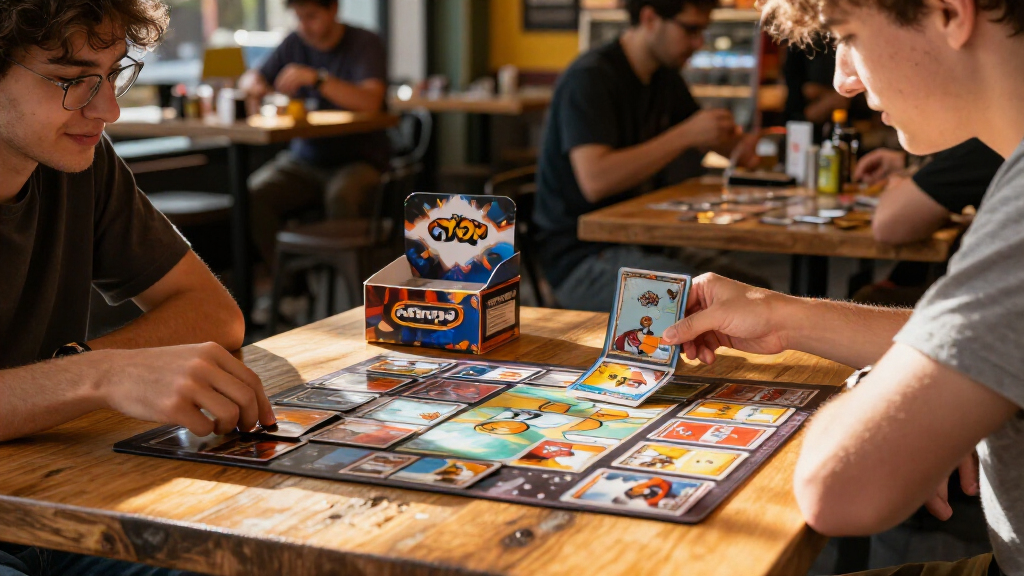
I compared these trading card game starter decks by how easily a new player can get into a first game, how clearly each product supports a first purchase, and whether it gives one or two players a practical starting point. I also weighed the value of the included play experience: guided learning, a second deck for an opponent, or a focused game identity can each matter more than card quantity alone.
The ranking favors products that remove setup and teaching friction without losing their appeal after the first session. That puts Battle Academy and the two-player-focused options ahead for household learning, while franchise-specific and single-deck products rank better for buyers already drawn to a particular game. I treated tradeoffs openly: a recognizable theme cannot make up for a poor fit in complexity, and a focused deck is less useful when a new player has nobody ready to play.
| trading card game starter deck | Brand |
|---|---|
| Digimon Card Game Starter Deck | BANDAI |
| Ravensburger Disney Lorcana: R | — |
| One Piece Card Game Starter De | — |
| One Piece Card Game Starter De | — |
| CookieRun TCG: Glorious Moonli | — |
| Ravensburger Disney Lorcana Wi | Ravensburger |
| Yu-Gi-Oh! Trading Card Game St | Yu-Gi-Oh! |
| Magic: The Gathering | Magic: The Gathering |
| Bandai Union Arena Hunter x Hu | Bandai |
| One Piece Card Game Starter De | BANDAI |
| Star Wars: Unlimited Intro Bat | Asmodee |
| One Piece Card Game Starter De | BANDAI |
| Pokémon TCG Battle Academy 202 | — |
Factors to Consider When Choosing Trading Card Game Starter Decks
Before choosing a deck, I would match the product to the first game you actually expect to play. A starter set can teach rules, supply an opponent, or introduce a specific game, but one product may not do all three equally well.
Check Whether You Need One Deck or Two
A starter deck does not always mean two people can start playing immediately. If you are buying for a household, check whether the box supplies two playable decks or whether you need another product to provide an opponent. A single deck can still be the right choice for a player joining an existing group, where other decks are already available. Buying a second copy without checking the contents can leave you with duplicate cards rather than a better teaching setup. For a first purchase shared by two new players, favor products that make the second seat part of the package.
Choose a Teaching Path That Matches the Players
Some products are built around guided learning, while others expect players to learn from a rulebook, video, or experienced opponent. For children or adults new to card games, short instructions and clear turn structure can matter more than how closely a deck resembles competitive play. If one player already knows the game, a more focused starter can work because they can teach the other person as they play. A common mistake is choosing a complex game solely for its theme, then discovering that the first session spends more time on rules than decisions. Match the teaching burden to the patience and experience at the table.
Separate Franchise Interest From Gameplay Interest
Recognizable characters can make a deck a more inviting gift, but a favorite series does not guarantee a player will enjoy the game’s pace or strategy. Think about whether the recipient likes quick turns, planning ahead, collecting, or learning detailed interactions. A theme-led choice makes the most sense when the player already wants to spend time with that world and is open to its game system. If the player cares more about learning card games generally, clear instruction and a playable second deck may serve them better. When possible, explain the game style alongside the character or franchise.
Look Beyond the Card Count
A large number of included cards can sound like strong value, but it does not tell you how much of the box is ready for a first match. A smaller, curated set may be easier to learn if it includes clear play aids and decks designed to face each other. Check whether the cards form complete playable decks, whether any learning materials are included, and whether the product is intended for one or multiple players. Extra cards are most useful when the owner already plans to build or customize decks. For a first-time player, straightforward setup may contribute more than a bigger stack.
Decide How Much Room to Grow You Want
Starter products vary in how much they serve as a first lesson versus a foundation for continued play. If the player wants to join a local game group or explore deck-building later, choose a game they are motivated to keep learning rather than buying solely for the easiest first match. On the other hand, a family looking for occasional play may get more from a self-contained, guided set than from a product that invites ongoing expansion. Avoid treating every starter deck as a complete long-term collection. First decide whether the goal is a one-time introduction, repeat casual games, or entry into a wider game community.
Frequently Asked Questions
Which starter deck is easiest to use for teaching two new players?
I would start with a product that gives both players a ready-to-play deck and supports learning, rather than assuming a single starter deck will teach the whole game. Pokémon TCG Battle Academy stands out for a guided, multi-deck introduction, while Disney Lorcana: Wilds Unknown and Star Wars: Unlimited Intro Battle: Hoth are purpose-built options for a shared match. Check the contents and instructions before buying, since not every product in this roundup supplies the same kind of teaching support. If both players are entirely new, a clear first-game path usually matters more than choosing a deck with the most elaborate theme.
Can one person start playing with a single starter deck?
Usually, a single deck is enough only if another player can bring a compatible deck or the product includes a separate way to play. Many starter decks are designed for head-to-head games, so a lone deck may not provide a complete first session. Before purchasing, check the player count and whether the contents include an opponent’s deck, a second playable list, or just one deck. If you are buying for someone who has no gaming partner yet, a two-player set is a safer starting point. A single-deck product is a better fit when the buyer is joining an established game group.
Should I choose a deck from a franchise the player already likes?
A familiar franchise can make the first purchase feel personal and help a new player connect with the cards. Still, the theme should not be the only deciding factor: the player also needs to enjoy the game’s rules, pace, and level of strategy. For a dedicated fan who wants to learn that specific game, a themed deck can be a strong entry. For someone curious about card games but not committed to a franchise, guided play or an included opponent may be more useful. I would treat theme as a tie-breaker after checking how the first game will work.
Are single-deck starters a poor choice for beginners?
Not necessarily. A single-deck starter can suit a beginner who already has a teacher, a local group, or a clear interest in that particular game. The drawback is that the buyer may need a second deck or other support before playing at home with another newcomer. Multi-deck learning sets reduce that friction, but they may be less focused on one character or game identity. Choose a single deck when the player has a path to an opponent and wants that specific game; choose a two-player set when the first match needs to happen straight from the box.
What should I buy if I want the starter set to stay useful after the first lesson?
Start with the player’s likely next step: repeating casual games, exploring deck customization, or joining other players. A guided set can remain useful for teaching a second person, while a focused deck can be a more direct introduction to a game the buyer intends to keep playing. Do not assume that more cards automatically create more long-term play; the cards need to fit a game the owner wants to learn. Check whether the starter product is meant as a self-contained introduction or a first step into a broader game. The best choice is the one that matches the buyer’s real plans after the first session.
Conclusion
For the widest beginner-friendly learning setup, I recommend Pokémon TCG Battle Academy as the best overall pick and the strongest value for teaching and replaying with others. Disney Lorcana: Wilds Unknown 2-Player Starter Deck is my best choice for buyers who want a themed head-to-head start, while Magic: The Gathering — Final Fantasy Starter Kit is the best premium-style fit for players drawn to Final Fantasy and a traditional duel. For beginners who want guided play, Battle Academy is the clearest match; for an immediate shared battle, consider Lorcana or Star Wars: Unlimited Intro Battle: Hoth. One Piece fans should choose among the Luffy, Zoro, Kuzan, and Sabo decks by character and preferred color identity, while Digimon, CookieRun, Yu-Gi-Oh!, and Hunter x Hunter are best for buyers already interested in those specific games. My final rule is simple: buy for the players, the opponent available, and the kind of first session you want—not just the artwork on the box.
Fall Picks
fall essentials
As an affiliate, we earn on qualifying purchases.